TVCs of the Week: 28 July
Tower Insurance, 2degrees, LG and Burger King deserve a pat on the back this week.
The latest agency news, campaigns and client wins (and losses) making headlines across Aotearoa.
Tower Insurance, 2degrees, LG and Burger King deserve a pat on the back this week.
2degrees has managed to secure around 1.3 million mobile customers since it launched in 2009. But if it wanted to play with the grown-up telcos, it knew it needed to become full-service. That became a reality after purchasing Snap internet earlier this year. And after discovering that Kiwis find the various plans and jargon a bit confusing, it’s aiming to remove the complexity by offering just two plans, something it’s focusing on in its launch campaign.
Following on from a story we wrote today which delves into the discrimination against gingers, nor should male cheerleaders be put down, as humorously explored by this Foster’s ad which provides an autobiographical account of the life of the male cheerleader.
They [some arbitrary people] say things come around in cycles and it appears to be true, particularly of fashion. Who thought we’d see the likes of platform shoes again (let alone silver ones) or those tattoo-chokers which were popular in the 90s and most recently flares have also started making a come back. Who woulda thunk it. But what else is making a come back is ginger, the hideous root as well as the golden follicle, which for the purposes of this article, we shall dub the gingernaissance. One brand which has cottoned on to the trend is Karma Cola which has even released a zine about ginger/gingers to celebrate its Gingerella Ginger Ale concoction.
Burger King has been getting a fair bit of love on Facebook for its Joseph Parker promos, which involve a couple of stereotypical marketing lackeys begrudgingly acquiescing to the boxer’s demands and aim to reward customers with special short-term deals if he wins. And Burger King and Colenso BBDO are continuing to have a laugh at their own expense with an ad that riffs on the fast food industry’s penchant for stretching the truth in its ads. PLUS: Parker’s latest spot ahead of his fight on Saturday.
News is bad, mmmmmkay. And the often negative, simplistic and sensationalist stories favoured by the media—and the ‘if it bleeds it leads’ mentality that was skewered brilliantly in Nightcrawler—often clouds the fact that, by many measures, there has never been a better time to be alive. There have been plenty of efforts at focusing on good news rather than bad, like The Philosopher’s Mail or, more virally, Upworthy. And, as part of its ‘Is Mankind? campaign, Airbnb is trying to do the same by producing the ‘Daily Kindness Bulletin’ and showcasing what it feels is some much-needed positivity.
Over 9000 designs were submitted online as part of the government’s $27 million flag consideration campaign (and many of them were ‘avin’ a laff). But businessman and philanthropist Gareth Morgan, who is a big proponent of changing the flag—”to bury this artefact that tells a lie and is an insult to Maoridom”—didn’t feel the brief was adequate, didn’t feel people understood the history of the existing flag and didn’t feel the Treaty of Waitangi was being placed at the core of the process. So he decided to stump up $20k for an alternative competition and incentivise designers to come up with something that would tell the story of New Zealand. And Auckland design agency Studio Alexander beat out around 1000 entries for the prize with ‘Wā kāinga / Home’.
Two of the country’s most successful trade titles, New Zealand Doctor and Pharmacy Today, have changed hands.
Mediaworks has released its promo for its highly-anticipated new current affairs show Story, set to debut next month. PLUS ratings for Seven Sharp and Come Dine with Me.
For the 14th time, New Zealand’s most trusted brands have been named by Reader’s Digest and the top three—Whittaker’s, Dettol and Toyota—remains unchanged from last year, with Whittaker’s making it four years on the trot at the top.
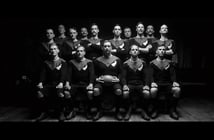
When I was about six (after sneakily watching one-too-many scary movies) I thought I could turn myself into a cool vampire with a special potion made out of potato chips and juice that had been left on a window sill overnight to gain extra “power”. Turns out old Raro and soggy chicken chips only makes you spew, yet I still had the confidence and imagination to try. And that’s the message this new ad by Tower is getting across by asking children the rather odd question: “What would you do if a penguin stole your bike?”
The best outdoor and print ads are simple, visually arresting and try to create a smile in the mind. And natural health company Red Seal has managed to do just that with a campaign that illustrates its product-development philosophy of combining scientific research and naturopathic knowledge.
As has been the case in previous years, we have whittled down the numerous weekly winners since our last survey to 52 contenders, from which an overall winner and the People’s Champion will be selected.
When we think about domestic abuse, examples that readily come to mind are likely the physical and verbal kind. Women’s Refuge is highlighting the fact that these aren’t the only concerns with its latest campaign which aims to fight against and raise awareness of technology’s role in abuse.
Tourism New Zealand has taken the unique approach of teaming up with Facebook and production company Symphony to create an online series for its latest campaign which follows the adventures of a young couple travelling around the country in a Kombi.
Modern media is awash in restructures. NZME is currently grappling with a multi-headed beast. MediaWorks TV is haemorraging viewers at primetime and trying to integrate its various platforms. Fairfax is in the throes of its News Rewired programme. And TVNZ, despite benefitting from the troubles of its free-to-air broadcast rival and clocking in with record share for One News and Seven Sharp, obviously doesn’t want to miss out, so it has embarked on a proposed restructure that aims to make it a fully digital media business and those changes are set to affect approximately 30 roles.
After 12 years of business, Consortium has closed its doors after losing the AUT business. And Young & Shand has taken over its sole account, Lightbox, as well as four of its staff. PLUS: Young & Shand’s other business wins and staff announcements.
Our weekly wrap of good things, strange things, funny things and other things from inside the intertubes.
Whether it’s a tipi, a treehouse or a big boot, there are plenty of strange Airbnb rentals available. But a spot in a stadium is one we haven’t seen before. That’s what Airbnb and NZ Rugby have done to celebrate the Bledisloe Cup Match on August 15, with a competition offering four people the chance to win an overnight stay in a remodelled, All Blacks-themed box. PLUS: Airbnb’s new ad and the ensuing parodies.
Shoplifters are the scourge of retailers and, according to Retail NZ, theft from customers and staff was costing local businesses $1 billion a year in 2013. But Harvey Nichols has decided to put the kleptos to good use for an ad campaign that uses real CCTV footage spliced with villainous cartoon heads for a campaign offering customers legal freebies.
For four years, the Red Bull Trolley Grand Prix has drawn the crowds and the competitors to the Auckland Domain with its heady brew of speed, creativity, dubious engineering and, ideally, low-level injury resulting from spectacular crashes. The gravity-fuelled competition is back for its fifth run on November 22 and Red Bull and Special Group have created a clever ‘interactive’ call for entries campaign to get more teams interested in competing (and, presumably, more sadists interested in watching them).
Powershop has ruffled a few feathers once again with an ad by Doublefish playing on the Greek crisis to promote its referral scheme for existing customers, but its flagrant use of advertising seems to be working as though its CEO admits the market is tough he says Powershop is holding its own.
I can still remember when I first began noticing Spotify back in 2012. Perhaps I was a little late in the game, but I didn’t start paying attention until my Facebook feed became filled with “[Insert friend’s name] listened to [insert track] on Spotify”. At first I found this mildly annoying thinking “What the hell is Spotify” while simultaneously feeling shocked to discover some of the crap my friends were listening to. But soon enough I found myself on the platform, figuring out what it was all about, running to my computer like most early users to turn down the blaring ads and like most other early users I was pretty adamant I wouldn’t be paying for it. But things change and New Zealand has embraced the service with open arms as one of the highest growing streaming markets in the world. We had the rare opportunity to have a chat with Spotify about how it’s doing in New Zealand, its branding partnerships, New Zealand’s piracy problem, the threat of Apple Music and more.
When it comes to surprises, the most you’re likely to get from the established taxi industry is another arbitrary fee ($3 extra to pay using EFTPOS? Come on). But, in keeping with its desire to turn the transport industry upside down, Uber often looks to surprise its existing users—and add more new ones—by delivering more than just humans. So, as part of a global campaign that is set to deliver ice cream to 253 cities on Friday, inhabitants of Auckland, Hamilton, Wellington, Christchurch and Queenstown will be able to request a tub of Giapo’s hokey pokey gelato. And it’s working with Hyundai on the promotion as well.
In a bid to assist mothers who have heard the Frozen soundtrack once too many times but don’t really want navigate the online catalogues of children’s music, Pandora has teamed up with Huggies to develop a radio station dedicated to musical tastes of the youngest of young’uns.
Big data is being hyped by pretty much every marketer at the moment. But the phrase itself has for some time been a bit of a misnomer, because what we understand as ‘big data’ can these days be carried around in a flash drive smaller than pen. As it turns out, this hasn’t always been the case. In its early days, data storage quite literally necessitated a big solution. Pictures taken in 1956 illustrate just how burdensome it was for IBM to transport the now measly 3.75 megabytes of storage space.
Paul Blomfield, better-known for his work in public relations with the fashion industry, has teamed up with an IT specialist in start-up Jucebox, a company they hope will become a lynch-pin in the fast-growing Internet of Things (IoT).
It’s no secret that the consumption of online video content has ballooned over the last year. Facebook, YouTube, Lightbox, Neon, Quickflix, 3Now, TVNZ OnDemand and Netflix (the list goes on) are all driving this consumption by providing Kiwis with instant access to more content than Kiwis will ever be able to consume in their average 81.16 years on the planet. And now, Yahoo is also entering this already cluttered space by launching Yahoo TV, a new hub dedicated to on-demand content.
As evidenced by the Shot on iPhone 6 campaign, or GoPro’s range of impressive clips, just because a camera is small and relatively inexpensive doesn’t mean it can’t shoot good quality video. And LG has aimed to prove that with a new campaign that uses its new G4 smartphone to cover four crafty Kiwi businesses in glory.
Instead of bussing tables and tediously tending to customers, there are a number of enterprising youths who are turning to a new avenue of employment: YouTube. What are these kids thinking?
Zane Furtado, the programmatic director at Acquire Online, recently put his skills to good use by bidding on the phrase ‘Best programmatic specialist in New Zealand’ and then serving an ad with his personal details attached.
Snapchat has fast become a popular way for brands to reach out to a younger audience. ASB, Vodafone, Spark the NZTA and a number of other brands and organisations have seen merit in using the platform and have reported successful results. And while a little late in the game, Stuff has just jumped on the Snapchat bandwagon and only three days since launching its account, it already has a few thousand ‘friends’, and counting.
Nielsen research director Tony Boyte advises brands and retailers to develop both digital and physical platforms, as consumers are becoming less likely to distinguish been the two. This insight follows on from the latest study conducted by the research company, showing that nearly two million New Zealanders are shopping online. The research shows reveals a 40:40:20 rule is at play, with 40 percent of respondents saying that they were shopping online because of convenience, 40 percent being drawn to the e-commerce prices and 20 percent claiming that they get good value online. And these findings come at a time when Facebook is trialling a ‘buy and sell’ feature in the Auckland market.
Land Rover is sending one lucky Kiwi kid to Wembley Stadium to act as a New Zealand team mascot at the Rugby World Cup 2015, but only if his or her relative owns a Landy.
The first edition of the FIFA video game series was released in 1993. Over the years, the annual release of the latest edition has become something of an event in the gaming community, with aficionados of the franchise eagerly awaiting the updated version of the game. In all the years since the launch of the first edition of the game, various biggest football stars of the moment have appeared on the cover to entice sports fans to make the purchase. And this year, for the first time, the coveted cover feature a woman as US forward Alexandra Morgan will share the space with Argentine forward Lionel Messi in the US version of the game. Australia and Canada will also follow suit, featuring Steph Catley and Christine Sinclair respectively.
Last week, radio personalities PJ Harding and Jase Hawkins introduced the world to a culinary abomination called Sushiwi, a disturbing conflation of a pie with a sushi roll. So in light of this unorthodox use of the humble pie, we look at some other examples of pies appearing in unexpected places.