
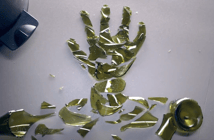
Capri reaches out a helping hand in its latest spot
Private mental health, drug and alcohol centre Capri Hospital has released four new ads in conjunction with its brand refresh, with the help of Lachlan McPherson & Friends.

The latest agency news, campaigns and client wins (and losses) making headlines across Aotearoa.
Private mental health, drug and alcohol centre Capri Hospital has released four new ads in conjunction with its brand refresh, with the help of Lachlan McPherson & Friends.
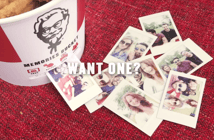
Worried about putting your greasy mitts all over your phone to take a photo while you’re munching on some dirty bird? Then this invention is not for you.

Like many entrepreneurs, Kirsten Taylor served as the guinea pig during the testing phase for her product. And after being impressed by the results, she decided to make it available to consumers.

“Is your skin colour holding you back? Are you tired of systemic prejudice ruining your day?”
Our weekly wrap of good things, strange things, funny things and other things from inside the intertubes.

Burger joints appear to be popping up left right and centre, emerging as a better quality alternative to traditional fast-food chains. And Britomart-based Better Burger is trying to create a point of difference with its eye-catching branding.
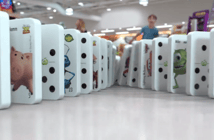
The human urge to collect is a powerful one (and makes for excellent television). And our local supermarkets have been tapping into this urge in recent years, whether through tiny groceries or animal cards. In pretty much every case, the nation seems to have gone completely mad for them, with swap meets being organised, black markets being established and kids regularly tugging on parents’ pants demanding the full set and the associated plastic tat. Now Countdown has struck up a deal with Disney Pixar for its latest collectables campaign, Domino Stars.

Bauer’s Fashion Quarterly released its latest offering Fashion Quarterly Life this month which includes content about stylish interiors, health and well-being, wine trends, inspiring people and more. We had a chat with Fashion Quarterly’s editor Sally-Ann Mullin to find out why it decided to release the issue in an already crowded home and lifestyle market and to see what feedback has been like so far.

As the world becomes increasingly digital and intuition steadily gets banished to the naughty corner, data has become a new currency—and a language that needs to be learned by marketers. And Krunch, a “data-centric agency” being run by ex-auto marketer Darren Kirkland is hoping it can teach clients how to speak it.
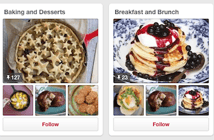
While some big brands have been successfully using the likes of Snapchat and Instagram to market themselves, it would appear that Pinterest has been a little slower to take off here in New Zealand compared to abroad. However, with Pinterest announcing its Buyable Pins which began rolling out last month, we imagine many more brands will jump onboard once they’re available here. Here’s a look at the platform and a rundown of which New Zealand brands are using it.
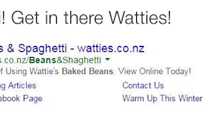
Providing Kiwi families with everything from baby food to its classic tomato sauce, Wattie’s has a place in the heart of many New Zealand families. However, with its latest Google ad, it appears that Wattie’s has slightly changed its marketing strategy and is prepared to launch a new R-rated product.
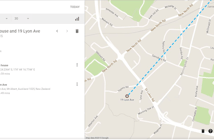
With Google continuing its delve into Skynet territory, the internet conglomerate has brought us a new feature to “reminisce” over.

Agencies have many ways of wooing clients. They wine and dine them. They try to win awards. They send out press releases to trade media. They try to destabilise the incumbents. They invest in fancy offices to create the perception of success should they visit. And they also show off their work, their strategy and their talent to online visitors. The agency website is basically a digital shopfront and it’s often seen as an indication of the type of work it might be able to do for clients. Many agencies are guilty of creating boring and/or unfunctional sites and regularly slipping into cliche. But there are some good ones out there. So here are a few of our local favourites.
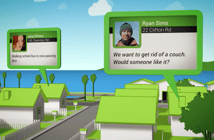
After launching halfway through last year Neighbourly is growing quickly, with 142,000 households now signed up and a number of big brands getting onboard too. Having just launched its business platform, we thought it was about time we caught up with Neighbourly to see what it’s up to and how these brand partnerships are coming along.

ANZ has released a (very) short movie commissioned from award-winning filmmaker Jane Campion to coincide with the launch of the bank’s Wise Women website and #equalfuture social media campaign, which aims to highlight the dismal stats around the male/female pay gap and the average woman’s woeful lack of preparedness for retirement.
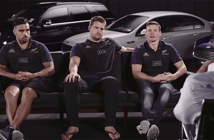
New Zealanders are well-accustomed to getting whacked over the head with rugby ads and sponsorship activations. And that only increases in the lead up to—and during—the Rugby World Cup. Many of the tournament sponsors like Land Rover, Heineken, Mastercard and Coca-Cola have played their first promotional hands. And, among the All Blacks sponsors, Adidas has embraced the players’ inner animals for Force of Black, Air New Zealand has upped its sponsorship and its efforts around the #crazyaboutrugby platform, Steinlager has teased the return of the white can and NZ Rugby even decided to do its own campaign. Now Ford and JWT have joined in with an online video campaign called The Driven that talks to three All Blacks about their driving habits and their favourite models.

The second episode of Kiwibank’s KB Series featuring Jamie Curry is out. In this episode, Curry has moved into her new flat in Auckland and is attempting to navigate herself through the beginnings of adult life, which she does with much uncertainty and awkwardness.

Despite all the hype, reality food show Masterchef NZ’s first episode of the season has failed to deliver in the ratings department, no doubt another blow to Mediaworks as it struggles to compete with TVNZ which is still dominating with the most-watched shows on television.
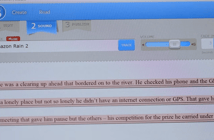
Book snobs, cover your ears. Booktrack, the platform that provides intelligent synced audio content to e-books has just secured another NZ$7.5M in funding. And the education market is where much of the potential looks to be.
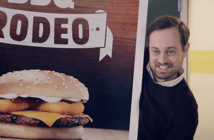
Tower Insurance, 2degrees, LG and Burger King deserve a pat on the back this week.
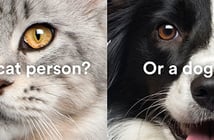
2degrees has managed to secure around 1.3 million mobile customers since it launched in 2009. But if it wanted to play with the grown-up telcos, it knew it needed to become full-service. That became a reality after purchasing Snap internet earlier this year. And after discovering that Kiwis find the various plans and jargon a bit confusing, it’s aiming to remove the complexity by offering just two plans, something it’s focusing on in its launch campaign.
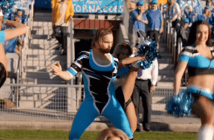
Following on from a story we wrote today which delves into the discrimination against gingers, nor should male cheerleaders be put down, as humorously explored by this Foster’s ad which provides an autobiographical account of the life of the male cheerleader.
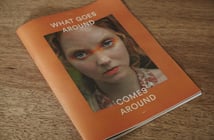
They [some arbitrary people] say things come around in cycles and it appears to be true, particularly of fashion. Who thought we’d see the likes of platform shoes again (let alone silver ones) or those tattoo-chokers which were popular in the 90s and most recently flares have also started making a come back. Who woulda thunk it. But what else is making a come back is ginger, the hideous root as well as the golden follicle, which for the purposes of this article, we shall dub the gingernaissance. One brand which has cottoned on to the trend is Karma Cola which has even released a zine about ginger/gingers to celebrate its Gingerella Ginger Ale concoction.
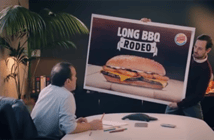
Burger King has been getting a fair bit of love on Facebook for its Joseph Parker promos, which involve a couple of stereotypical marketing lackeys begrudgingly acquiescing to the boxer’s demands and aim to reward customers with special short-term deals if he wins. And Burger King and Colenso BBDO are continuing to have a laugh at their own expense with an ad that riffs on the fast food industry’s penchant for stretching the truth in its ads. PLUS: Parker’s latest spot ahead of his fight on Saturday.

News is bad, mmmmmkay. And the often negative, simplistic and sensationalist stories favoured by the media—and the ‘if it bleeds it leads’ mentality that was skewered brilliantly in Nightcrawler—often clouds the fact that, by many measures, there has never been a better time to be alive. There have been plenty of efforts at focusing on good news rather than bad, like The Philosopher’s Mail or, more virally, Upworthy. And, as part of its ‘Is Mankind? campaign, Airbnb is trying to do the same by producing the ‘Daily Kindness Bulletin’ and showcasing what it feels is some much-needed positivity.
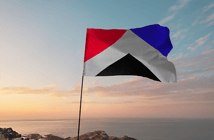
Over 9000 designs were submitted online as part of the government’s $27 million flag consideration campaign (and many of them were ‘avin’ a laff). But businessman and philanthropist Gareth Morgan, who is a big proponent of changing the flag—”to bury this artefact that tells a lie and is an insult to Maoridom”—didn’t feel the brief was adequate, didn’t feel people understood the history of the existing flag and didn’t feel the Treaty of Waitangi was being placed at the core of the process. So he decided to stump up $20k for an alternative competition and incentivise designers to come up with something that would tell the story of New Zealand. And Auckland design agency Studio Alexander beat out around 1000 entries for the prize with ‘Wā kāinga / Home’.

Two of the country’s most successful trade titles, New Zealand Doctor and Pharmacy Today, have changed hands.
Mediaworks has released its promo for its highly-anticipated new current affairs show Story, set to debut next month. PLUS ratings for Seven Sharp and Come Dine with Me.
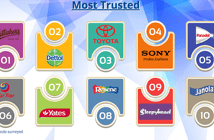
For the 14th time, New Zealand’s most trusted brands have been named by Reader’s Digest and the top three—Whittaker’s, Dettol and Toyota—remains unchanged from last year, with Whittaker’s making it four years on the trot at the top.
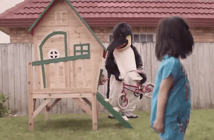
When I was about six (after sneakily watching one-too-many scary movies) I thought I could turn myself into a cool vampire with a special potion made out of potato chips and juice that had been left on a window sill overnight to gain extra “power”. Turns out old Raro and soggy chicken chips only makes you spew, yet I still had the confidence and imagination to try. And that’s the message this new ad by Tower is getting across by asking children the rather odd question: “What would you do if a penguin stole your bike?”
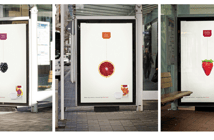
The best outdoor and print ads are simple, visually arresting and try to create a smile in the mind. And natural health company Red Seal has managed to do just that with a campaign that illustrates its product-development philosophy of combining scientific research and naturopathic knowledge.

As has been the case in previous years, we have whittled down the numerous weekly winners since our last survey to 52 contenders, from which an overall winner and the People’s Champion will be selected.

When we think about domestic abuse, examples that readily come to mind are likely the physical and verbal kind. Women’s Refuge is highlighting the fact that these aren’t the only concerns with its latest campaign which aims to fight against and raise awareness of technology’s role in abuse.

Tourism New Zealand has taken the unique approach of teaming up with Facebook and production company Symphony to create an online series for its latest campaign which follows the adventures of a young couple travelling around the country in a Kombi.

Modern media is awash in restructures. NZME is currently grappling with a multi-headed beast. MediaWorks TV is haemorraging viewers at primetime and trying to integrate its various platforms. Fairfax is in the throes of its News Rewired programme. And TVNZ, despite benefitting from the troubles of its free-to-air broadcast rival and clocking in with record share for One News and Seven Sharp, obviously doesn’t want to miss out, so it has embarked on a proposed restructure that aims to make it a fully digital media business and those changes are set to affect approximately 30 roles.

After 12 years of business, Consortium has closed its doors after losing the AUT business. And Young & Shand has taken over its sole account, Lightbox, as well as four of its staff. PLUS: Young & Shand’s other business wins and staff announcements.