

The Compendium: 24 July
Our weekly wrap of good things, strange things, funny things and other things from inside the intertubes.

The latest agency news, campaigns and client wins (and losses) making headlines across Aotearoa.
Our weekly wrap of good things, strange things, funny things and other things from inside the intertubes.

Whether it’s a tipi, a treehouse or a big boot, there are plenty of strange Airbnb rentals available. But a spot in a stadium is one we haven’t seen before. That’s what Airbnb and NZ Rugby have done to celebrate the Bledisloe Cup Match on August 15, with a competition offering four people the chance to win an overnight stay in a remodelled, All Blacks-themed box. PLUS: Airbnb’s new ad and the ensuing parodies.

Shoplifters are the scourge of retailers and, according to Retail NZ, theft from customers and staff was costing local businesses $1 billion a year in 2013. But Harvey Nichols has decided to put the kleptos to good use for an ad campaign that uses real CCTV footage spliced with villainous cartoon heads for a campaign offering customers legal freebies.
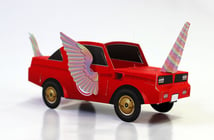
For four years, the Red Bull Trolley Grand Prix has drawn the crowds and the competitors to the Auckland Domain with its heady brew of speed, creativity, dubious engineering and, ideally, low-level injury resulting from spectacular crashes. The gravity-fuelled competition is back for its fifth run on November 22 and Red Bull and Special Group have created a clever ‘interactive’ call for entries campaign to get more teams interested in competing (and, presumably, more sadists interested in watching them).

Powershop has ruffled a few feathers once again with an ad by Doublefish playing on the Greek crisis to promote its referral scheme for existing customers, but its flagrant use of advertising seems to be working as though its CEO admits the market is tough he says Powershop is holding its own.

I can still remember when I first began noticing Spotify back in 2012. Perhaps I was a little late in the game, but I didn’t start paying attention until my Facebook feed became filled with “[Insert friend’s name] listened to [insert track] on Spotify”. At first I found this mildly annoying thinking “What the hell is Spotify” while simultaneously feeling shocked to discover some of the crap my friends were listening to. But soon enough I found myself on the platform, figuring out what it was all about, running to my computer like most early users to turn down the blaring ads and like most other early users I was pretty adamant I wouldn’t be paying for it. But things change and New Zealand has embraced the service with open arms as one of the highest growing streaming markets in the world. We had the rare opportunity to have a chat with Spotify about how it’s doing in New Zealand, its branding partnerships, New Zealand’s piracy problem, the threat of Apple Music and more.

When it comes to surprises, the most you’re likely to get from the established taxi industry is another arbitrary fee ($3 extra to pay using EFTPOS? Come on). But, in keeping with its desire to turn the transport industry upside down, Uber often looks to surprise its existing users—and add more new ones—by delivering more than just humans. So, as part of a global campaign that is set to deliver ice cream to 253 cities on Friday, inhabitants of Auckland, Hamilton, Wellington, Christchurch and Queenstown will be able to request a tub of Giapo’s hokey pokey gelato. And it’s working with Hyundai on the promotion as well.
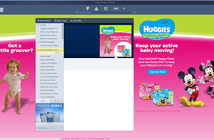
In a bid to assist mothers who have heard the Frozen soundtrack once too many times but don’t really want navigate the online catalogues of children’s music, Pandora has teamed up with Huggies to develop a radio station dedicated to musical tastes of the youngest of young’uns.

Big data is being hyped by pretty much every marketer at the moment. But the phrase itself has for some time been a bit of a misnomer, because what we understand as ‘big data’ can these days be carried around in a flash drive smaller than pen. As it turns out, this hasn’t always been the case. In its early days, data storage quite literally necessitated a big solution. Pictures taken in 1956 illustrate just how burdensome it was for IBM to transport the now measly 3.75 megabytes of storage space.

Paul Blomfield, better-known for his work in public relations with the fashion industry, has teamed up with an IT specialist in start-up Jucebox, a company they hope will become a lynch-pin in the fast-growing Internet of Things (IoT).
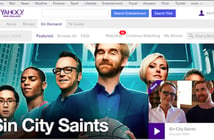
It’s no secret that the consumption of online video content has ballooned over the last year. Facebook, YouTube, Lightbox, Neon, Quickflix, 3Now, TVNZ OnDemand and Netflix (the list goes on) are all driving this consumption by providing Kiwis with instant access to more content than Kiwis will ever be able to consume in their average 81.16 years on the planet. And now, Yahoo is also entering this already cluttered space by launching Yahoo TV, a new hub dedicated to on-demand content.

As evidenced by the Shot on iPhone 6 campaign, or GoPro’s range of impressive clips, just because a camera is small and relatively inexpensive doesn’t mean it can’t shoot good quality video. And LG has aimed to prove that with a new campaign that uses its new G4 smartphone to cover four crafty Kiwi businesses in glory.

Instead of bussing tables and tediously tending to customers, there are a number of enterprising youths who are turning to a new avenue of employment: YouTube. What are these kids thinking?
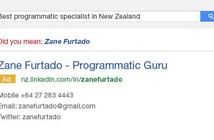
Zane Furtado, the programmatic director at Acquire Online, recently put his skills to good use by bidding on the phrase ‘Best programmatic specialist in New Zealand’ and then serving an ad with his personal details attached.

Snapchat has fast become a popular way for brands to reach out to a younger audience. ASB, Vodafone, Spark the NZTA and a number of other brands and organisations have seen merit in using the platform and have reported successful results. And while a little late in the game, Stuff has just jumped on the Snapchat bandwagon and only three days since launching its account, it already has a few thousand ‘friends’, and counting.
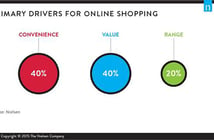
Nielsen research director Tony Boyte advises brands and retailers to develop both digital and physical platforms, as consumers are becoming less likely to distinguish been the two. This insight follows on from the latest study conducted by the research company, showing that nearly two million New Zealanders are shopping online. The research shows reveals a 40:40:20 rule is at play, with 40 percent of respondents saying that they were shopping online because of convenience, 40 percent being drawn to the e-commerce prices and 20 percent claiming that they get good value online. And these findings come at a time when Facebook is trialling a ‘buy and sell’ feature in the Auckland market.
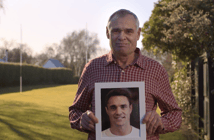
Land Rover is sending one lucky Kiwi kid to Wembley Stadium to act as a New Zealand team mascot at the Rugby World Cup 2015, but only if his or her relative owns a Landy.
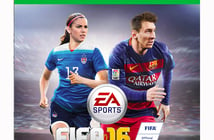
The first edition of the FIFA video game series was released in 1993. Over the years, the annual release of the latest edition has become something of an event in the gaming community, with aficionados of the franchise eagerly awaiting the updated version of the game. In all the years since the launch of the first edition of the game, various biggest football stars of the moment have appeared on the cover to entice sports fans to make the purchase. And this year, for the first time, the coveted cover feature a woman as US forward Alexandra Morgan will share the space with Argentine forward Lionel Messi in the US version of the game. Australia and Canada will also follow suit, featuring Steph Catley and Christine Sinclair respectively.
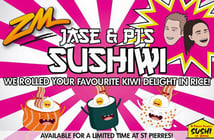
Last week, radio personalities PJ Harding and Jase Hawkins introduced the world to a culinary abomination called Sushiwi, a disturbing conflation of a pie with a sushi roll. So in light of this unorthodox use of the humble pie, we look at some other examples of pies appearing in unexpected places.

A round of applause for Kiwibank, Cadbury and TVNZ.

In a new series, StopPress talks to a range of newsmakers currently trying to shine lights into dark places while also keeping their own lights on and looks at whether commercial realities are leading to editorial compromise. Next up, Damien Venuto talks with Bernadette Courtney, Fairfax’s editor in chief for the central region, on the thinking behind the recent revamp of the community papers.

Google has released its half-yearly list of the most watched YouTube ads by New Zealanders, with Hyundai being the most eyeballed by us. An ad by FCB New Zealand also made it onto the list with its ad for Sony featuring Rambo the ‘octographer’.

Kiwibank has released a new campaign with Assignment Group and OMD for its Kiwi Wealth KiwiSaver product which targets women, and to get their attention it has channelled the Magic Mike XXL frenzy creating a special instalment ‘Indepen-dance’ videos to screen in cinemas nationwide before the film.
Brands are always pissing people off whether intentionally or unintentionally. One only need look at Hell’s Pizza’s or Tui’s advertising to know that. But as that old saying goes “There’s no such thing as bad publicity”, and in light of Burgerfuel’s billboard being taken down recently, we thought we’d look into whether that’s really true. Here are a few case studies and some insights from a PR company’s perspective.
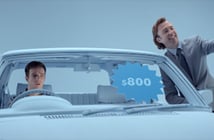
Every once in a while, brands jump onto their promotional soapboxes and take aim at what they see as their competitors’ flaws. And while this type of comparative advertising has existed for as long as competing brands have been being sharing shelf space, the Kiwi advertising space has served up a few interesting battles over the last few months.

Honda has tested our limits with a new ad called ‘Keep Up (faster)’ which literally makes the viewer keep up.

Our weekly wrap of good things, strange things, funny things and other things from inside the intertubes.

“It’s not digital vs newspapers,” says NZME commercial director Sandra King. “It’s about the client having as many touch points as possible. If you miss the newspaper pipe, you’re actually missing a great deal of reach and frequency.”
The All Blacks brand has become a huge commercial force in recent years and the players are regularly wheeled out to participate in campaigns for New Zealand Rugby’s sponsors. While there a whole host of fairly strict rules around those appearances, those campaigns still have an agenda attached. And while we’ve seen work like Telecom/Spark’s Backing Black or, further back in time, Steinlager’s Stand by Me aiming to galvanise fan support around the team, New Zealand Rugby hasn’t done a campaign for themselves (aside from a few Super Rugby efforts). But as the All Blacks prepare to defend the Rugby World Cup, that’s changed with ‘Belong’, an initiative aimed at getting fans to show their love for the team and join the “online clubroom” Team All Blacks.
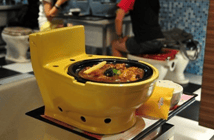
Upon the launch of the alcohol-free TAP bar in Auckland recently, we wondered how far other bars and restaurants go around the world in order to stand out. And there were some truly bizarre hospitality joints. A bathroom-themed restaurant? Check. A natural-disaster-themed café? Check. A bar where monkeys serve you? Check.

We’re sure by now many must be aware of Cadbury’s new fusion with its other product offering, Jaffas, as the new chocolate currently appears to be advertised in every supermarket aisle. And now a new TVC has been released by DDB promoting the chocolate which shows the mixing of the two products, but not in the way you might expect.

Damien Venuto chats to the team in the capital about what this win means for a brand moving away from its previously conservative image.
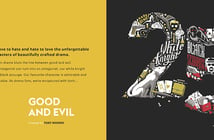
While Sky was officially founded 28 years ago in 1987, it was first beamed into New Zealand households 25 years ago. And to celebrate the silver anniversary it’s got a bunch of artists to capture the essence of why we watch TV. And it’s also repaying the loyalty of subscribers by offering them an opportunity to win one of 25 fan experiences in New Zealand and around the world.
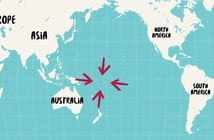
To promote the Samsung Smart TV range, Grey Argentina registered the domain name lgsmarttv.tv. And in doing so, came to the realisation that .tv doesn’t stand for television as they initially thought. It’s actually the domain address for the small South Pacific island nation of Tuvalu. Having serendipitously been made aware of the existence of the island, the creatives at the agency centred the entire campaign on the island, drawing attention to how its very existence was threatened by climate change.

The Matrix made hackers cool while The Big Bang Theory made neurotic scientists slightly less weird. And now, it’s the coders’ turn, with the rise of the ‘Hackathon’. One guy wants it to go big – so big it’ll be the “sporting” event of the year for tech nerds everywhere. And it could help local businesses find the nerds they need.
Snapchat was an unofficial star of the annual Social Media Awards last night with many brands citing it as a great marketing platform to engage with their audiences, including the Blogger of the Year and People’s Choice Award winner NZGirl.