Movings & Shakings

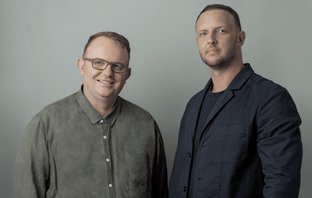
True announces Tim Huse as executive creative director
True has appointed Tim Huse to the newly created role of executive creative director.

True has appointed Tim Huse to the newly created role of executive creative director.

Two days ago, Instagram started experimenting in Canada by hiding likes on Instagram. If executed, this change will impact influencers, content creators and brands that until now – rightly or wrongly – have valued likes as a measure of engagement, and therefore success. CEO of Socialites Wendy Thompson shares her thoughts on why this might be a smart move by the social media giant.
Our weekly wrap of good things, strange things, funny things and other things from inside the intertubes.

Industry happenings at Kantar New Zealand, Imagic Creative and NZME.
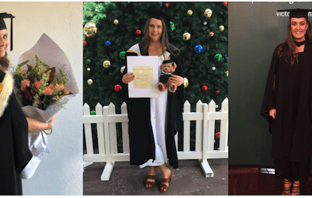
To mark graduation season, three of PHD’s graduates give an insight into their first year in the industry.
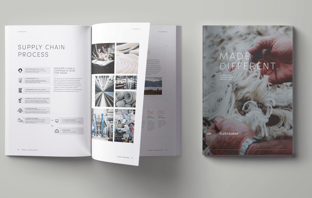
Since its launch in 2018, Tricky has been delving into clients’ brands to solve problems and shift thinking from the core. Partner
Jill Brinsdon talks us through how it’s getting closer to clients’ needs and delivering on them in a sustainable way.

Earlier this year, StopPress gathered the industry for an evening of self-congratulation as we celebrated the work that made 2018 so great, as well as the moments that got lips moving. Winners across the 16 categories were chosen by the editorial team who — along with the application of very sophisticated algorithms, immersive VR experience, AI chatbots — discussed and debated the results. Now, we revisit some of those winners for a behind-the-scenes look at why they are successful.

Graham Medcalf takes a look at the week that was, covering NZME’s digital paywall, the survival of magazines, effective use of analytics, differences in the Australian and New Zealand markets, and the value of indie agencies.

The New Zealand Herald paywall is now live, launching the first mainstream news online subscription model in New Zealand. Pead PR founder and chief executive Deborah Pead looks at the change of perspective needed to keep the press free and get people paying for news.
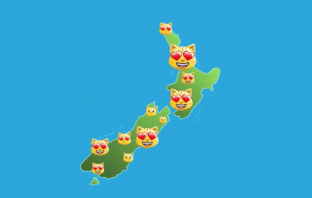
To celebrate its tenth birthday 2degrees has launched a new brand campaign ‘Fighting For Fair’.
StopPress sits down with Flying Fish’s managing director and executive producer James Moore and executive producer Samantha Attenborough to chat about technology, the exciting year ahead and moving into the long-format realm.

Major New Zealand news organisations, including RNZ, have agreed to protocols for covering the trial of the person charged for the Christchurch mosque attacks.

Spark’s latest campaign highlights the power of technology during the emotional moments of our lives.

Earlier this year, StopPress gathered the industry for an evening of self-congratulation as we celebrated the work that made 2018 so great, as well as the moments that got lips moving.
Winners across the 16 categories were chosen by the editorial team who — along with the application of very sophisticated algorithms, immersive VR experience, AI chatbots — discussed and debated the results.
Now, we revisit some of those winners for a behind-the-scenes look at why they are successful.

GfK’s first non-commercial radio survey of 2019 is out, showing Radio New Zealand’s audience is up 60,000 year-on-year to reach 696,600 New Zealanders each week, while RNZ National’s 616,200 listeners makes it the biggest station in the country.

A car park might not resemble a scientific lab, but in Energy Online’s latest brand campaign it serves as the setting for a “mind control” trick to showcase that power is power, and none of it is ‘super’.
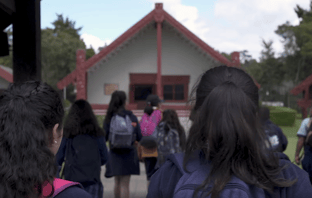
A round of applause to Ola Australia and New Zealand, Countdown and Air New Zealand.

NZ Marketing chats with Scope Media founder, Celia Crosbie, about ‘doing’ PR in the beautiful surrounds of Queenstown and Wanaka.

A recent advertisement by Gillette discussing toxic masculinity divided critics over whether it created meaningful change, or was just virtue signalling by one of the world’s largest razor brands. ICG strategy director Marcus Hawkin-Adams breaks down how to navigate the tricky marketing waters of championing a social cause.

The New Zealand Herald’s publisher NZME has announced digital subscriptions will be available from next week. Online readers will have to pay $5 a week for everything the Herald has to offer.

With Three holding its eleventh consecutive week at the top for the crucial 25-54 demographic, we chatted to head of content Andrew Szusterman about how the lineup is appealing to the masses and what’s coming in the future.

Our weekly wrap of good things, strange things, funny things and other things from inside the intertubes.

In the world of retail advertising, there has been a race to the bottom with an over-reliance on price, sales and discounts. With that
as a background, Graham Medcalf takes a look at how 99 is showing a surprising turnaround and rediscovering the mojo that was apparent in the giddy heights of 2011.
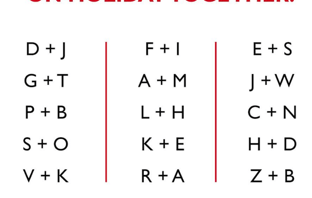
Flight Centre has taken out the prize for most successful post over the past four weeks, while Air New Zealand continues to maintain its lead on the scoreboard.

Will the agency of the future use AI to track employees and boost retention? Will paid OE’s become an employee expectation? Only time will tell, but one thing is for certain — agencies will need to adapt to the new generation. Pead PR managing director Sarah Munnik reflects on what agencies will look like in the future.

Creative agency Augusto and 23-year-old film maker and Voices of Hope co-founder Jazz Thornton have joined forces to kickstart a conversation around youth suicide. The duo have recently released Jessica’s Tree, a web documentary series hosted on the NZ Herald and Youtube that examines the last 24 hours of the life of Jessica, one of Thornton’s friends who took her own life. The series carefully balances tragedy and hope, and has been produced by Augusto and directed by Thornton. Here, Thornton and Augusto executive producer Cass Avery talk telling this sensitive story, social advocacy and using a creative medium to create change.

In the midst of New Zealand’s ‘Darkest Day’, Kiwis flocked to news radio, where newsreaders and talk back hosts provided platforms for New Zealanders to vent their distress at the Christchurch mosque terror attacks, and a place for trustworthy news to be processed. The reliability of radio as a trustworthy source of news pushed ratings up, with total audience numbers rising since the final survey of 2018 – combined listening numbers of commercial and non-commercial radio has risen to 3.62 million New Zealanders (10+) tuning in each week, totally 83 percent of the population.