Snapchat was an unofficial star of the annual Social Media Awards last night with many brands citing it as a great marketing platform to engage with their audiences, including the Blogger of the Year and People’s Choice Award winner NZGirl.
Digital piracy has certainly had a good run, but it now seems that it might be on its way down. A nationwide survey of 1,650 movie watchers commissioned by Flicks.co.nz, shows that the proportion of respondents who usually watch from an illegal source has declined from 87 percent of online content viewers in 2011 to just 43 percent this year—and this has nothing to do with Kiwi audiences being struck by a sudden bout of piracy guilt. In fact, the study showed that the percentage of people completely opposed to piracy has dropped from 40 percent in 2011 to 33 percent in 2015. So StopPress looks at how streaming services such as Netflix and Spotify are driving legitimate content consumption.
It’s no secret Fairfax is reorienting its business around digital—and, specifically, mobile—with Stuff as the central pillar of that strategy. And while managing director Simon Tong recently told us in a fairly candid interview that the magazine division had largely been left to its own devices, its main magazine brands have now been swallowed by that content-hungry beast stuff.co.nz.
This week Bloggersclub.com launched a temp division for social media management called Social Media Mentors aimed to give brands that “extra pair of hands” needed to voice themselves, and though its only early days, there has been plenty of interest so far.
Programmatic is on the rise all around the world, and across many different media channels, with a recent Business Insider report saying programmatic transactions will make up 52 percent of non-search digital-ad spend growth in the US this year. Programmatic is growing at 20 percent a year, with real-time bidding growing even faster. And while most of the ad networks claim they have checks and balances in place to ensure no dodgy ads show up and harm publishers’ brands, or no ads show up on dodgy sites, there will always be a few that slip through the cracks.
Given the growing willingness of Kiwis to pick the fruits offered by international e-commerce, NZ Post has developed YouPost as a means to enable shoppers to get their hands on items even if the stores don’t deliver to New Zealand. And to promote the offering, the organisation has now released a 45-second TVC that tells the story of Dan, a stringed instrument enthusiast, who managed to get his hands on a rare banjo even though the store, located in New Orleans, didn’t deliver to New Zealand.
While digital billboards and ad shells are slowly becoming more common in New Zealand, particularly in Auckland, we don’t yet have any that can see us and talk to us. But Graubünden Tourism does.
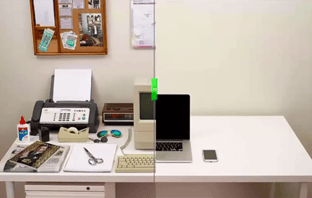
Ahhhhh, the desk. That thing many of us spend far too much time sitting at (and slowly dying). And that thing that has been completely transformed by the technological revolution of the past few decades, as a clip from the Harvard Innovation Lab shows.
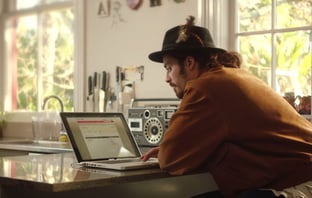
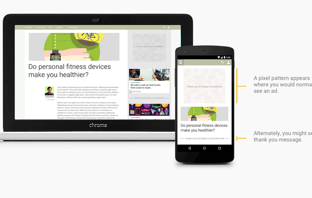
Internet users’ unbridled—and growing—love of ad blockers is one of the biggest concerns for the advertising and online publishing industry. So Google proposed a new initiative – called Contributor, which launched last year – for internet users who hate ads so much, they would pay to avoid them. So does it have legs?
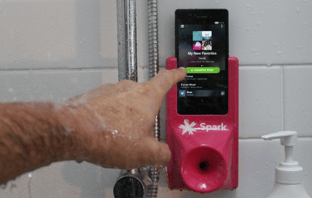
For better or worse, the gravitational pull of the mobile phone has become remarkably strong. That has its drawbacks, of course, and, in a recent US study on nomophobia, the clinical description for the fear of being out of mobile contact, 63 percent of respondents said they checked their phone for messages or calls once an hour, nine percent said they checked their phone every five minutes and 63 percent said they would be upset if they left home without their smartphone. Now Spark is ensuring that those tethered to their phones don’t have to shower without them either after announcing a prototype dock designed to work with Sony’s new waterproof Xperia M4 Aqua.
Today Spark Home, Mobile and Business appointed Clive Ormerod as its new general manager of marketing.
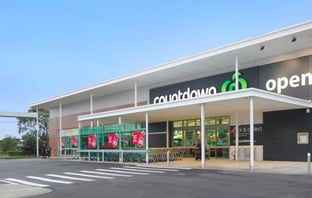
In what looks set to be another big blow for local news publishers, StopPress understands that Progressive Enterprises will be shifting a significant chunk of its ad spend from press advertising to other channels and is also thought to be trialling a reduction of unaddressed mailers in some areas as part of its media strategy for FY16, which commenced on 30 June. And Foodstuffs is paying close attention to the moves.
As Whittaker’s continues to show, co-branding initiatives can work brilliantly when the goals are aligned because both brands have motivation to help each other out. That makes sense when it’s in a similar category. But does it work for cars and clothing? Or is it a branding bridge too far?
In response to the high number of pedestrian deaths caused when people cross the road while wearing their headphones, Spotify has introduced a new feature in some markets that spots the streaming service’s mobile app from playing music when the listener approaches dangerous intersections. By tapping into the iBeacon technology installed at some of the worst intersections, the app is able to adjust the volume of the music when needed. In doing so, the app causes the Spotify user to pay attention and exercise caution when crossing the road.
We’re sure many New Zealanders are in disbelief as to how nearly four years have passed since the last Rugby World Cup. Four years since we yelled out to strangers in the street whooping with collective joy after the All Blacks secured the Cup after a nail-biting game with the French and four years since the victory sparked a baby boom across the nation. But this year’s World Cup, which kicks off in September has no doubt been creeping its way into the public consciousness for sometime now, probably due to a few big brands which hope to profit from all the attention, here’s what a few of them are up to.
Little more than five years ago social media was heralded by many as both the saviour of advertising, and a silver bullet that would end traditional media’s stranglehold on budgets. It hasn’t quite been either of those things – so what gives? We talked to Catalyst90’s CEO Tom Reidy about the evolution of the industry, and the way forward.
Sponsorship spending is on the rise as brands look to insert themselves into the relationships fans have with their favourite teams, causes and television programmes. But successful sponsorship takes more effort than putting logos on hoardings. These days, that place needs to be earned, says Lynda Brendish.
Trade Me Jobs, the New Zealand Heart Foundation, Lotto Powerball, Adidas and Pak ‘n Save share a crowded winners’ platform this week.
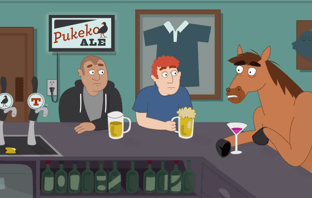
Back in December, NZTA and Clemenger BBDO launched the Limits campaign, which aimed to point out to moderate middle-age boozers that changes to the drink-driving rules meant they needed to change their habits or face the consequences. That was fairly serious. But now, in an extension of that campaign, it’s taking a leaf out of the BoJack Horseman book (and possibly riffing on the horse walks into a bar joke) with a humorous animated horse and a bunch of alcohol puns.
RadioLive has had a bit of a facelift, sporting a refreshed logo and new brand colouring, ditching the red, black and white look for blue, white and green. A new TVC has been released in conjunction with the rebrand, featuring a compilation of its line up of journalists.
Vimeo has long been lauded as the go-to platform for discerning filmmakers and serious creatives who want to share their work. Now, it’s teamed up with technology giant Samsung to produce a video series that explores the ideas and infinite meanings of connection and “examines the human relationship with technology”.
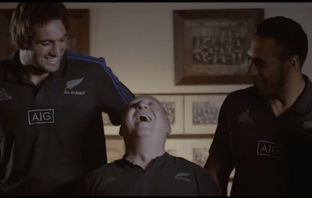
Adidas has released a new TVC by Augusto promoting its new campaign ‘Force of Black’ featuring some fierce footage of our boys in black.
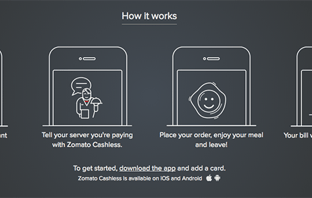
Whether it’s paying for a ride via Uber’s app, paying for your bus via Semble or paying for your groceries via one of the banks’ own cashless widgets, the wallet looks destined to become an anachronism. And online restaurant search and discovery platform Zomato is the latest to take away the need for them, saying it will soon let you pay for your meals out on its app and eliminate the need to wait for the bill.
Ogilvy & Mather New Zealand today confirmed the appointment of Regan Grafton as executive creative director, bringing an end to the creative’s three-year stint at FCB.
Barnes, Catmur & Friends seems to have taken a page of the stage magician’s handbook in new spot for the New Zealand Heart Foundation, which uses a distraction strategy to make its point.
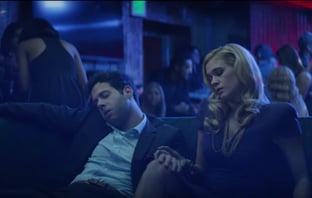
Whether it’s the housewife who smiles while cleaning the toilet, or the teenage boy who gets the girl after putting on some deodorant, advertising is renowned for showing unrealistic situations. But the latest campaign from Trade Me Jobs might just take the cake.
Today the Radio Broadcasters Association announced GfK would be the new provider for the commercial radio survey from 2016, taking over longtime research contract-holder TNS.
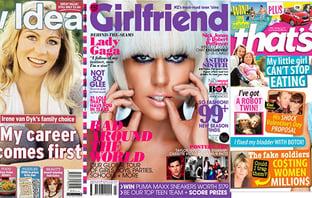
NZME confirmed through a release sent out today that it will not be renewing its licence with Pacific Magazines to produce New Idea, Girlfriend and That’s Life. The existing deal runs until 30 September 2015, and NZME chief operating officer Phil Eustace says that NZME will cease publishing the three magazine titles from that date.
The other mother of the nation has been reading the news (and cracking jokes) at TV3 since 1999 and took the brave step of signing up as newsreader for The Paul Henry Show this year. Here’s a taste of her media diet.
Coca-Cola has gone the cinematic route with a new online ad called ‘Steampunk Coke’, which looks like a scene straight out of a Hollywood blockbuster.