Get the latest direct to your inbox twice a week. Sign up today. 
Focus on the feeling you’re selling

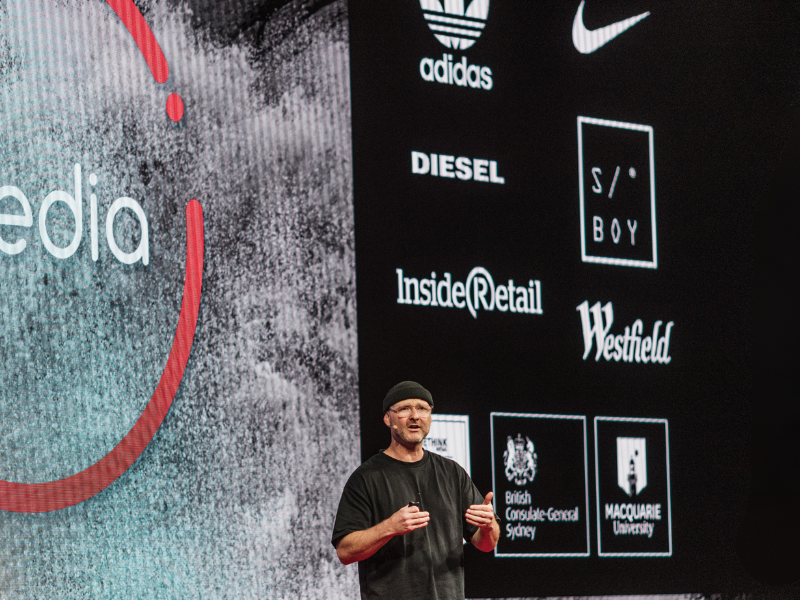
Nick Gray, founder of IGU Global, will speak at the iMedia Future of Marketing Summit New Zealand.
Marketing is more than selling a product, it’s about how you make people feel, says Nick Gray, who spent 20 years at brands including Adidas, Nike and Westfield.
People buy with emotion, then justify the purchase with logic later, he says.
“My job was not to question whether product was going to sell, but to ask, is this relevant for culture?” says Gray.
“We would focus on the feeling we’re selling.”
Now, as the founder of Sydney consultancy IGU Global (short for I Got You), Gray uses that same insight to help organisations build trusted brands.
In July, he’s bringing the sum of all his experiences to Ōtautahi Christchurch as a keynote speaker at the iMedia Future of Marketing Summit New Zealand.
Gray will talk about trust. He says it’s “the biggest most competitive advantage” a brand can have right now. He’ll also cover how to build a brand people genuinely believe in.
A brand that is both trusted and has cut-through is every business’ ultimate goal. iMedia Summits head of brand and marketing ANZ Mira Cossar says the biggest challenge facing marketing leaders today isn’t a lack of opportunity, it’s knowing where to focus.
“The constraints haven’t disappeared, but neither has the ambition. What’s changed is the confidence and intent with which leaders are moving forward. The conversations we’re hearing are less about reacting to change and more about making deliberate choices – where to focus, where to invest and how to create lasting value.”
Human-centric approach
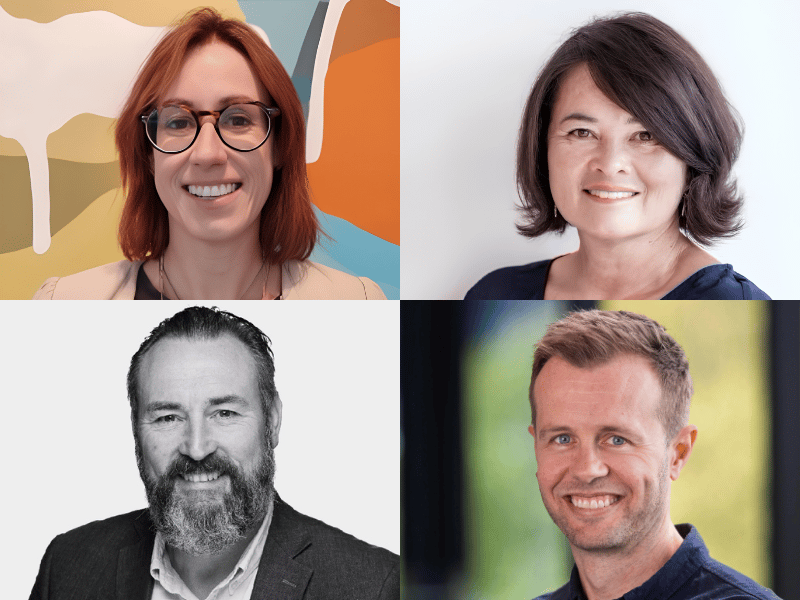
Effectively, marketers have two jobs: delivering revenue in the short-term while building a sustainable brand in the long-term. So says Lion digital and media director Kelly McIntyre, who also sits on iMedia’s 2026 Advisory Board and will join this year’s summit as an industry panellist.
“It’s actually just being fluent in that commercial conversation without losing sight of the fact that brands are built over years, not in a financial window of a month or a week.”
McIntyre knows that better than most – Lion brand Speight’s is one of the oldest in Aotearoa, having just celebrated its 150th birthday in May.
“We are really lucky because we already have this amazing brand people love, but we have to make sure they continue to be relevant. We want to make sure Speight’s is around for another 150 years,” she says.
Striking that balance of investing in both short-term sales and long-term brand building is crucial, but the ways brands achieve that continue to evolve.
The media landscape has changed dramatically over the past decade, creating more opportunities to connect with audiences but making customer journeys increasingly fragmented.
“You have to think about the entire ecosystem and the role each channel is playing. The constraint is always budgets, resource and time. So how do you think about that fully end to end? That’s the complexity of the world we live in now”, she says.
Anchor to an emotion
McIntyre’s biggest piece of advice is keep the consumers at the heart of what you do.
Gray agrees, saying this is key to building conviction and trust in your brand.
This is becoming increasingly challenging in the current economic and global climate where trust has never been lower and AI is only exacerbating that, he says.
So where do brands begin? First, anchor your brand or business to an emotion: “what is the feeling you sell?” Gray asks. Then, show up in that space consistently and make sure that the story you are telling elicits that feeling.
“This is where technology and AI are unfortunately leading us down the garden path where it’s all about efficiency, reach, conversion, algorithm, whereas back in the day, it was all built on conviction.”
While Gray adds that he is not anti-AI, he believes the friction involved in building brands in the past forced marketers to understand their businesses more deeply.
“Now, we put it into ChatGPT and it takes us through to the answer with the illusion of learning. We’re just outsourcing our thinking.”
At the same time, AI is changing how brands are discovered and evaluated.
“You can’t be a company that says we are all about company culture because if there’s a couple of bad reviews out there, AI is going to find it and it doesn’t care how much money you’ve spent on ranking first.
“We’re moving into a very different place where the behaviour of the brand needs to be the greatest focus from a marketing perspective, but that only comes from having clarity around your principles,” says Gray.
Unapologetically you
Once you know and understand your brand’s values and behaviour, then you have to communicate them clearly.
“To create belonging and culture and community, you actually have to be unapologetically polarising in what you stand for,” says Gray. “As soon as you try to be everything to everyone, you’re talking to no one.”
Gray’s goal for any brand he works with is to move from being an emotional choice to becoming the cognitive default: the business people reach for first, whether they need groceries or new tech.
“That comes in time, no different to any relationship. It’s built from consistency and repetition, which then moves you through to having a reputation,” Gray explains.
“The problem is, as soon as you do something else, it creates doubt in the consumer’s mind. Once there’s doubt in a relationship, it impacts trust and it’s very hard to repair.”
Gray and McIntyre join a growing line-up of speakers including Kiwibank’s chief economist Jarrod Kerr, and head of brand and content Erica Beagley, along with creative director at Auckland FC, brand strategist & co-founder of Huffer Steve Dunstan.
The iMedia Future of Marketing Summit is happening in Ōtautahi Christchurch on July 29 to 31.