
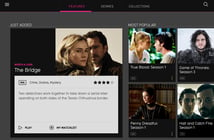
Better late then never: Sky’s Neon finally comes to the party
With Sky’s Neon video-on-demand product having launched, Stoppress talks to the designers about developing a streaming service people actually wanted to use

The latest agency news, campaigns and client wins (and losses) making headlines across Aotearoa.
With Sky’s Neon video-on-demand product having launched, Stoppress talks to the designers about developing a streaming service people actually wanted to use

Last year the big free-to-air ratings battle was between The Block NZ and MKR NZ. This year it’s X-Factor NZ and Our First Home. And, early on in the piece, it’s a tight tussle, with the first episode of the second season of MediaWorks’ talent show charting slightly bigger ratings than TVNZ’s new reno-reality show. PLUS: TVNZ’s Our First Home game extends the show to the second screen.
Land Rover, 2degrees, Westpac, Wendy’s and Eclipse tickle our advertising fancies this week.
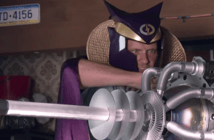
There was a fair bit of love for Westpac and DDB’s tale of a comically paranoid man on StopPress last week. And it’s followed that up with another fairly mad ad introducing Captain Destructo, a mad scientist/Kiwi dad/aspiring supervillain called Steve with grand plans—and, of course, the need for some financial assistance.

Some of today’s best audio-visual content is coming from slightly surprising quarters. Netflix, Amazon, YouTube, Vimeo and even brands like Chipotle are stumping up cash and proving that they can make great original shows, not just distribute them. And judging by a slightly misleading phrase on the promotional material for Breaking Bad spinoff Better Call Saul, it seems like Lightbox wants to be in that club too.

Since we’ve already done a bit of a run down on what Kiwi brands been up to this Valentine’s Day, we thought we’d better see what kind of stunts went on further afield during the romantically charged weekend.
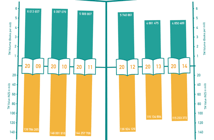
For some, ink on paper is anachronistic and wasteful. For others, there’s still some romance to tangibility. And, unlike vinyl or CDs, books are still a pretty efficient delivery system for words and pictures as there are no batteries to charge, you can read it relatively safely in the bath and it’s resistant to sand. The media is predisposed to covering the old vs. the new. The old generally tends to lose, so ears pricked up after word of increased physical book sales and declining e-reader sales in major markets in December. So how are physical book sales tracking in New Zealand? And is it a blip or a curve?

This past weekend again marked that time when advertisers tell us we’d better remind our loved ones of just how much we love them (because we don’t do it any other time of the year) by purchasing expensive jewellery, flowers or heart-shaped chocolates. We thought we’d take a look at what a few different brands got up to, to try and grab our attention on this year’s Valentine’s Day.

Car brands love stunts, as evidenced by this cracker from Ford in the US. And car brands also love restoring old models/pimping out new ones, as evidenced by Holden’s 60th campaign and the bespoke Toyota Hiluxes created for Willie Apiata and Matt Watson. But Land Rover New Zealand and Y&R NZ have combined the two in a clever campaign that has brought joy to the hearts of many—and presumably some jealously to the hearts of those who wish it had happened to them. And there’s a special connection, as one of the recipients, Will Radford, is my tin-arse brother in law.
In December, the radio industry came to an accord that the radio survey scheduled for the first half of the year would not occur. However, it now seems that after several weeks of contemplation, NZME has taken matters into its own hands and earlier today announced it will fully fund an independent survey of radio audiences in Auckland, Wellington and Christchurch. And this move has caught MediaWorks off-guard.
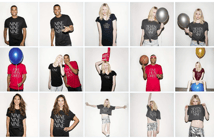
Scarcity is a powerful motivator, as anyone looking for a fancy chocolate milk in the past few months could probably attest, and the New Zealand Breast Cancer Foundation, with the help of Previously Unavailable and DDMMYY, is trying to tap into that by selling 1000 different t-shirts that are numbered one to 1,000 and cost the dollar value of their individual numbers.
Our weekly wrap of good things, strange things, funny things and other things from inside the intertubes.

Cricket mania, or, at least, slightly increased cricket enthusiasm, has hit New Zealand once again in the form of the 2015 ICC Cricket World Cup, which kicks off tomorrow when the Blackcaps play Sri Lanka. And, like many large sporting events, plenty of big big brands are hoping to profit from all the attention. Here’s what KFC, Matua, Hyundai, the MPI and others are up to.

Some believe the Blackcaps are in the best form ever and have the best chance of winning the World Cup. And, given it’s taking place here, there are no shortage of supporters. Even the the World Wrestling Federation, which, as some have pointed out, are renowned match fixers, is backing us.
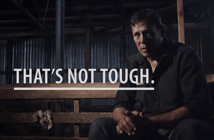
The Super Rugby season is about to start. And we all know what that means: ads directed at farmers. So, to show the toughness of Seed Force perennials, Tracta enlisted the services of renowned hard man Buck Shelford and got him to tell the now-famous and eye-wateringly painful tale of a dangling bollock.

Mat Yurow, the associate director, audience development, at The New York Times, wrote a great piece on Medium recently about the publishing industry’s “iTunes moment”. And it could be argued that TV is having an iTunes moment of its own as viewers are increasingly able to consume the shows (or, increasingly, the sports) they’re interested in on their own terms, online, and without the need for a channel brand or an all-you-can-eat subscription. TVNZ is embracing that change with its soon-to-be-updated Ondemand platform. And we had a preview to see what’s instore.
Following on from Auckland Council’s appointment of DDB as its lead agency, Goodfolk has been appointed the digital communications agency and Alt Group will be responsible for arts and culture communications. This announcement brings the long-running process to an end, and gives the agencies until the next mandatory RFP process to work with the Council. PLUS: Goodfolk wins Fletcher Building account.
The earnestness, thousand yard stares and various cliches seen in fashion ads are a fairly easy target, as seen in anything from Zoolander to Mercedes-Benz’ tongue in cheek Fistful of Wolves. But, given the importance placed on aesthetics in this industry, they generally look good and that’s certainly the case with a film shot by Vince McMillan, a director’s assistant at Exit Films, for AUT University’s fashion department.

Over the last few years, Getty Images has been tracking the type of imagery that companies prefer to use when it comes to representing their brands. And what the company has found, is that brands are shifting from the stereotypical stock types and opting for more varied and diverse alternatives. And these trends are also being reflected in terms of the imagery that brands are using to depict love in 2015. Rebecca Swift, the director of creative planning at iStock, shares her views on how Kiwi and Aussie representations of love are shifting.

It seems like almost everything is becoming ‘smart’ these days, or is at least in someway linked to the digital realm: smart phones, smart televisions, smart coffee machines, Google Glass, the Microsoft HoloLens, we could go on. And now Luna has found a way to bring the digital into the bedroom, with a prototype of the world’s very first smart bed.

After a series of technical glitches pushed back the date from December last year, Neon is set to launch on Friday, 13 February. And, not to be outdone by news of its competitor’s arrival, Lightbox has sent out a release to various media publications in which it gloats about the strong results of Breaking Bad prequel Better Call Saul.

With much of the world turning to digital media, book makers generally aren’t in a position to turn down potential readers. But a prototype cover for the Art Director’s Club annual in the Netherlands does just that by scanning the face in front of it and, like some kind of literary chasity belt, only opening if it deems the reader to be in a non-judgemental state of mind.

In a world where teenagers and adults alike seem to be checking their mobile devices every few minutes (or seconds), ignoring your compelling conversation to scroll aimlessly down their Facebook newsfeeds, uploading selfies to Instagram or sending the odd Tweet, it comes as no surprise that social media sites are an excellent platform for advertising. And a few big brands in New Zealand have now started using image and video-sharing mobile app Snapchat as a marketing tool. Here’s what Spark, Vodafone, ASB, Skinny Mobile and a few others have been up to.

Series three of House of Cards is set to go live at the end of February, and, given the response to the first two seasons of the show, there’s plenty of excitement about it. So there was plenty of surprise when ten episodes of the new season went up online early today. Some wondered whether this was a marketing ploy and if Netflix has ‘pulled a Beyonce’. But Netflix says it was a technical error. Judging by the House of Cards Twitter handle, however, maybe it wasn’t quite so accidental.

Last year, the New Zealand Defence Force (NZDF) exhibited its interest in digital technology with the production of the Force Fit app, which provided a very modern solution to the growing problem of unfitness among young people. But the NZDF doesn’t only dabble in digital technology for the purposes of marketing. The military organisation also sees it as integral to the sovereignty and safety of New Zealand. So, given the changing landscape, StopPress recently chatted to a spokesperson at the National Cyber Policy Office about the government’s approach to digital security.
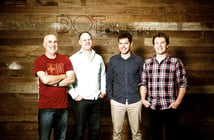
Apparently, data is the new oil. But, just like oil, data needs to be refined to be useful. And Dot, a ten-strong Wellington company that mixes analytics with storytelling is doing just that in an effort to find influencers, reduce churn and even beat the bookies.

Kiwis are now choosing to pay to stream TV and videos instead of turning to BitTorent for pirated content and online shoppers are looking to China for their precious goods, according to recent data-gathering by Slingshot.
After a creative pitch last year, it is thought the NZ Fire Service is set to appoint FCB as its creative agency. UPDATE: Ministry of Justice confirms it is also working with FCB.
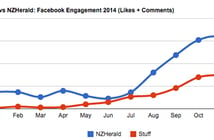
It’s no secret that Stuff leads the Herald in terms of the number of pageviews, audience reach and unique user base it attracts on a monthly basis, but this is by no means the only metric that advertisers are interested in tracking. Engagement stats, particularly through social media, are becoming increasingly important in terms of determining the value of a placing an ad on a digital media property. So, in order to gauge the effectiveness of both publications in terms of engagement, Frank Feinstein, director at Feinstein Doaks, surveyed 2.5 million Facebook interactions on the flagship Facebook pages of both the Herald and Stuff.
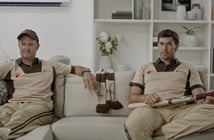
These days I find it near impossible to think of heat pumps without thinking of Stephen Fleming, and that’s not about to change as Fleming stars alongside fellow former cricket giant Nathan Astle in Fujitsu’s latest advertising campaign.

Tui’s Catch-a-Million campaign captured the imagination of the Kiwi public, the Kiwi media and global ad awards judges last season. And, with a bit of tweaking, the idea is back for the ICC Cricket World Cup, which kicks off on Saturday in Christchurch. PLUS: ANZ pimps out a pitch as part of its Dream Big campaign.
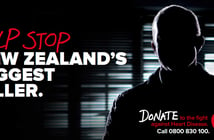
For this year’s edition of Heart Week, Barnes, Catmur & Friends has given heart disease the shadowy face of serial killer being interviewed by a faux reporter.

Apparently, idle hands are the devil’s plaything. So, with mobile phones ensuring there are very few idle hands these days, you might think that’s a good thing. But what does that devotion to the screen mean for creativity? And should we be switching off and looking around rather than down? A project by WYNC podcast New Tech City thinks so and it’s aiming to get people to appreciate the joy of spacing out with Bored and Brilliant.

A paranoid man, indepen-dancers, a personified disease and Aesopian characters star for Westpac, Kiwibank, the New Zealand Heart Foundation and Air New Zealand this week.
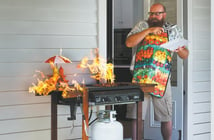
Nothing says summer like scraping toxic fire extinguishing chemicals off the lamb. Colenso BBDO’s ad for State Insurance has referenced this great Kiwi tradition with its ‘get insurance fast because things happen fast’ campaign and for their trouble they’ve taken out the December edition of News Works’ Ad of the Month.

Special Group has been appointed the new creative agency for the Vodafone Warriors, following a creative pitch that involved four agencies.