
News

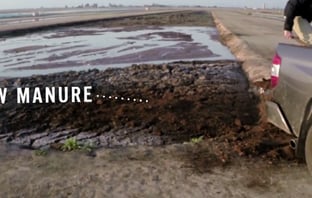
Crap in the tank
While some car brands have attempted to get cars running on water, Toyota has taken a different approach, proving to the public that it has a car that quite literally runs on bullshit.

While some car brands have attempted to get cars running on water, Toyota has taken a different approach, proving to the public that it has a car that quite literally runs on bullshit.

As technology continues to develop and become more readily available, it gives ad agencies the means by which to evolve the traditional media channels—and this is particularly prominent in the out-of-home advertising category. Locally, we’ve already seen billboards update in real-time during the elections, we’ve seen selfies linked from Twitter to outdoor digital screens, and we’ve had outdoor creative adjusting in accordance with the temperature. And now, Ogilvy & Mather in Hong Kong is taking it a step further with a new anti-littering campaign that uses the DNA of litterbugs to create digital faces that have a resemblance to the actual people who dropped trash on the floor.

This past weekend marked 100 years since the Anzac forces landed on the Gallipoli Peninsula. As a result, ceremonies and events were run up and down the country resulting in exhibition openings, parades and the building of a gigantic poppy. To put the scale of the event in context, the New Zealand Government alone is estimated to have spent around $42 million on centenary commemorations—and this only paints part of the picture given that promotional spending by brands is difficult to tally. And while most of the activations were in good taste here and across the ditch, the event once again served as a reminder of the fine line between commemoration and commercialisation of a tragic day in history. Here’s a rundown of some of the activations that took place.

The Apple Watch has, as expected, created plenty of chatter. And it’s now launched three TV ads showcasing what it can do—and, perhaps unintentionally, what it can stop.

Former director and owner of now-defunct company The Media Counsel (TMC) Glenda Wynyard has been sentenced to eight months’ home detention.

Roy Morgan may have shut the doors of its New Zealand office, but it’s still checking up on Kiwi brands for its New Zealand Customer Satisfaction awards. And New World, Care Chemist, Max, Robert Harris Café, Noel Leeming, Kathmandu and Powershop have all celebrated their first wins.

Maybelline has released a new campaign called ‘Love your face’ that uses YouTube’s interactive technology with the aim of making it easier for consumers to find foundation that matches their skintypes. The campaign was created by agency .99 in partnership with Maybelline New York and comes at a time when the makeup brand is celebrating its 100th anniversary.

One of the persistent public views that exists around marketing and advertising is that these industries are great manipulators of us all, creating in us silly desires and passing fancies that divert us from a virtuous life path and empty our wallets with the skill of a pickpocket. And when one looks at something like the furore created by Lewis Road Creamery around chocolate milk, it’s pretty easy to see how people might start musing on this. But the truth is that we are a much less Machiavellian lot than our fancy milk would suggest.

Our weekly wrap of good things, strange things, funny things and other things from inside the intertubes.

Changes at ASB, Starcom/ZO, TVNZ, Ambient Group, MediaWorks and Fonterra.

There have been plenty of changes at Whybin\TBWA over the past few years, both in terms of staff and clients. But after winning a few pitches, including the Auckland International Airport business, trying to establish the right model and operating as part of a trans-Tasman team, chief executive Todd McLeay and chairman Scott Whybin reckon it’s on the right track.

AA Smartfuel has released a new campaign that features three TVCs promoting its loyalty card, which provides “petrol cheap and sometimes free”. The campaign, created by Rainger & Rolfe and shot by Exit Films and follows Edward, a Korean immigrant who moved to New Zealand a number of years ago, as he hoons through the streets of Auckland in his taxi and humorously narrates what it’s like being a taxi driver in the city, discussing the nature of his job and the people he meets.

Over 900 ridiculously well-dressed media types took their seats at the Viaduct Events Centre last night for the 2015 edition of the Beacon Awards. Throughout the evening, each of the company tables gave partisan cheers when their co-workers stepped onto the stage to collect awards, serving as a reminder of the competitive banter that typifies the industry on a daily basis. And although most winners will no doubt feel a sense of pride—and the mild throb of a hangover—today, the most successful agencies on the night were MBM, FCB Media and Spark PHD.
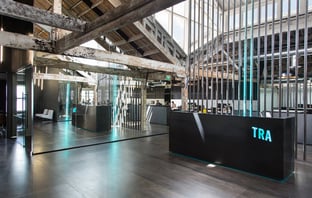
TRA has always positioned itself as one of the cool kids of its sector and its previous High St office looked more like a trendy agency than a dowdy research company. It’s taken that even further with its new office in Britomart, which developer Peter Cooper has pronounced “as the best fit out in the precinct”. And it’s bringing a few new clients along with it after winning the Spark, Toyota and Te Wananga o Aotearoa research accounts.

Earlier this week, Bauer and Mobile Embrace were confirmed as the latest additions to the IAB NZ board, which already includes NZME, Fairfax, Yahoo NZ, Yellow, Seek, Vodafone, Google NZ, Mi9, TVNZ, MediaWorks, Trade Me and Met Service. StopPress chatted to the conglomerate’s head of digital Michael Fuyala to find out more about the strategy that underpinned this move.
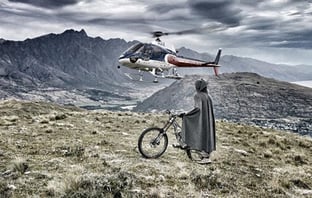
Devin Graham, an American videographer who produces adventure and extreme sport videos under the name Devin Super Tramp, has become one of social media’s biggest names, with more than 2.9 million YouTube subscribers and over 530 million total views. Tourism New Zealand got him to come for a visit and it ended up being the most successful social influencer work it has done to date.

Smartphone app Postr, which puts brands and money into consumers’ pockets by serving ads on their smartphone lockscreens, added its name to the list of apps trying to own the mobile last year. It’s managed to attract 12,000 downloads so far, and it’s hoping some new features that will enable users to browse news, weather and deals from The New Zealand Herald, GrabOne and MetService without having to unlock their mobile phone will grow that number significantly.

The buzz phrase ‘programmatic ad buying’ has been picking up momentum in recent months, and is now commonly heard in discussions on the state of modern media. And despite the frequency with which the word is used, it still carries enough uncertainty to motivate ad tech company Chango to recently run a sponsored web series on Adweek explaining key concepts to the US market. Similarly to the US, New Zealand is also coming to grips with programmatic ad buying. And to find out a bit more, StopPress recently chatted to Zane Furtado, the programmatic director at Acquire Online.

The way the world is going, it probably won’t be too long before the mobile phone renders cards obsolete. But until that happens, ASB is using the phone to make using cards easier by allowing customers to set temporary locks and maximum withdrawals and restrict contactless, international and online payments.

YouTube starlet has become something of a branding sweetheart in recent months. Last year, Coca-Cola commissioned her to promote its #colouryoursummer campaign in Australia, Google has included her on its YouTube stars roadshow and she is currently part of theContiki troupe of influencers currently sharing travel stories from Asia. And she also recently caught the eyes of marketing team at Netflix. Two weeks ago, Curry posted a video called ‘How to Netflix’ on her YouTube channel as part of marketing push by the SVOD player to expand its reach across Australia and New Zealand.
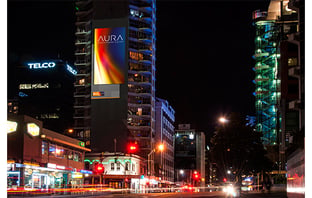
Outdoor digital advertising has had a slow roll out in Auckland due to council regulations about visual impact and safety, and this means that Auckland doesn’t quite have the digital glow of New York’s cityscape just yet. However, outdoor digital advertising is gaining momentum in the Super City, and the Auckland Council is showing a willingness to engage with out-of-home media owners on the incorporation of new digital sites. While outdoor advertising company APN was the first to unleash a digital billboard in Auckland city, other companies were soon to follow. And one of the latest is iSite, which has just announced a new billboard collection called ‘Aura’ that will feature two high profile sites in the heart of Newmarket in June, according to iSite Media chief executive Wayne Chapman.
This article originally featured in the March/April edition of NZ Marketing. History is littered with examples of short-term gain leading to long-term pain, whether it’s the…

The marketing world is keen on vending machine stunts, with stunts allowing them to accept everything from hugs to Canadian passports to piano playing to motionlessness (this trend was skewered nicely by Taxi). Now, in an effort to tackle pollution, Volkswagen has created one that accepts batteries instead of currency in Russia.

Over the last year, various media organisations—StopPress included—have on numerous occasions asked Facebook for user information specific to New Zealand, but the social media juggernaut was been unable to provide much beyond international stats and the fact that around two million Kiwis visit the site an average of about 15 times a day. However, yesterday, during a press conference held at the Seafarers building in Britomart, Facebook gave a room of journalists what they had been asking for by presenting a statistical breakdown of how New Zealanders use Facebook. PLUS: Facebook financial results for Q1 2015.

For some strange reason, unboxing videos are quite popular and some of the channels are making millions. But Samsung played with the artform to launch its new phones, showing some much more exciting activities than normal.
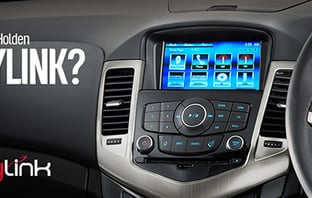
Advertisers are increasingly questioning the brand value offered by banner ads that seemingly do little more than annoy web users. And for this reason, media owners and agencies are being forced into producing innovative online banner campaigns that include interactive elements. So recently, when FCB and the Pandora international ad development team set out to create a campaign for the release of the new Holden Cruze, the pair decided to give users a look inside the vehicle.
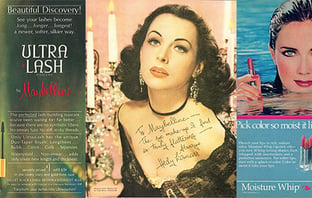
The Maybelline cosmetics brand started out in 1915 when Mabel Williams combined coal dust with Vaseline to create a more dramatic eye—and it has since grown into a beauty product juggernaut. We take a look at some of the brand’s print ads over the years.

The Building and Construction Industry Training Organisation (BCITO) has launched a new campaign with the aim of recruiting 5,000 new apprentices. And it’s doing it by focusing on the pros of working in construction, such as not racking up a huge student loan, being fit and muscular, spending time outdoors and being a total babe magnet.

Sky’s History channel and DDB have teamed up for a unique Anzac activation in which fake trenches were set up in Auckland and Wellington with actors dressed as soldiers re-enacting what it would have been like during WWI.
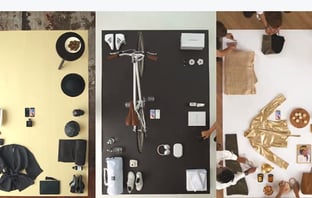
A meaningful slow clap goes out to NZTA, Mitsubishi, Tasti, Spark and Coca-Cola this week.