The European Union declared 2014 as the year against food waste, and Paris-based creative agency Marcel Paris latched onto this to release an Intermarché campaign called Les fruits et légumes moches, or the Inglorious fruits and vegetables.
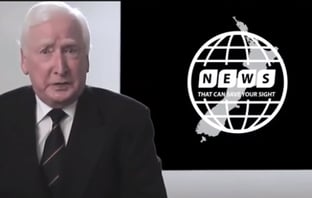
Macular degeneration is a disorder that is said to affect as many as one in seven Kiwis over the age 50. And while treatable when caught early enough, most people don’t even know what it is—let alone what symptoms to look out for. So, in an effort to demystify the condition and make Kiwis more aware what can be done to counter it, Macular Degeneration New Zealand (MDNZ)—a not-for-profit organisation dedicated to the cause—has launched a new campaign conceptualised by Logan Brooke Communications. And to help in delivering the message behind the campaign, MDNZ has called Philip Sherry out of retirement.
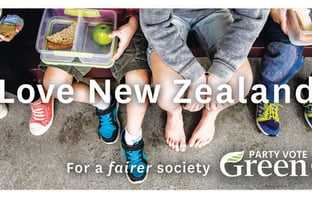
For the past two elections, The Green Party’s messaging has been what national campaign director Ben Youdan calls “aspirational”. That’s worked very well, with its vote going from five percent to 11 percent in 2011, making it by far the fastest growing party. But for the 2014 election it’s getting slightly more confrontational, juxtaposing images of open-cast mines, oil spills, Auckland gridlock and poor children with its positive—and protective—campaign slogan of ‘Love New Zealand’.
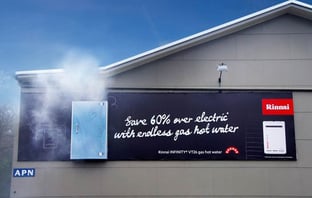
Compared with the comforting flickering fire on its first billboard, Logan Brooke’s second billboard for Rinnai was too steamy for some, with five fire trucks turning up on Friday to put it out, after receiving reports that the steam was smoke and the building was on fire. The fire service disconnected it.
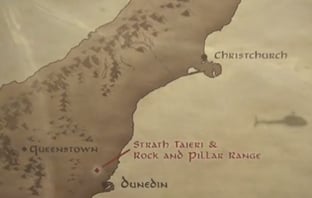
Last year, as part of a promotional push for its ‘Airline of Middle-earth’ sponsorship activation, Air New Zealand flew three fans to Los Angeles to watch the premiere of The Hobbit: the desolation of Smaug. And now, in anticipation of the release of the final instalment of the trilogy, the airline has upped the promotional ante by flying 150 fans to New Zealand for a week to tour some of the filming locations and to attend a private screening of the film in the company of Peter Jackson.
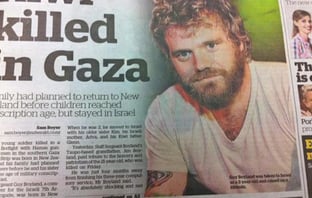
There are times when pop cultural knowledge comes in handy. And The Herald is no doubt wishing some of its staff had watched a bit more Jackass after an embarrassing blunder on the front page of today’s paper.
As part of our series dedicated to celebrating good work and inspiring a bit more generosity, Steve Kane, Y&R’s managing director, acknowledges the impact of The Warehouse Challenge.
Our weekly wrap of good things, strange things, funny things and other things from inside the intertubes.
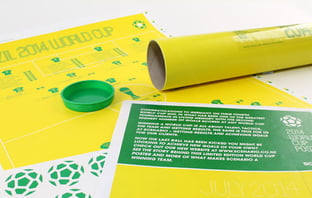
Scenario has made a World Cup poster that has deep, deep meaning, in an obsessive way that true football fans will appreciate.
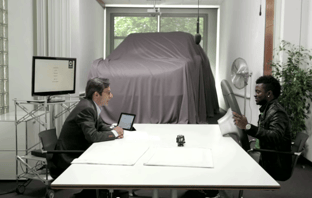
Smart , the brand known for bringing us the smallest car in the world recently pranked a bunch of people by telling them they were bringing out the world’s largest car.
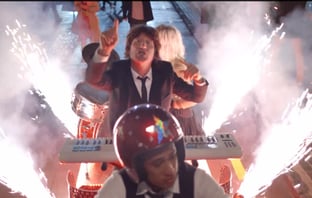
Vodafone has dug into the annals of recent pop culture and emerged with what is often referred to as the worst song ever made, Rebecca Black’s ‘Friday’. And rather than keeping the nauseatingly catchy tune restricted to a private boardroom listen between the marketing managers, the telco has decided to unleash a cover of it through a new TVC by FCB.
Fairfax is continuing its diversification by creating a special national events division to span Fairfax media properties that have until now run their own events.
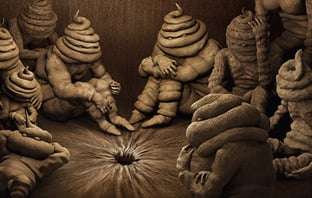
Constipation can be stressful but what about from the turd’s point of view, tucked up inside you? McCann Health in Shanghai had this very thought when they created this ad for laxatives, which ran in Singapore newspapers and bus shelters. “Instead of approaching the dramatization from the patient’s [point of view], we approached it from the excrement’s,” McCann Health says.
Industry happenings at Gladeye, The Marketing Association, Fairfax, Dynamo, Sunday Punch and ANZ.
After 14 years, the New Zealand Sponsorship Agency recently rebranded as Spur. And, as more brands see the benefits of creating experiences for customers that can then be amplified online, it seems the planets are coming into alignment for this small but growing agency.
Everyone loves a good scratch. And everyone loves winning money. So Lotto NZ by DDB are hoping to show that Instant Kiwi can give you a bit of both, with four spots showing depressing situations being transformed with a wiggle of the finger.
BMW Canada created a bit of online conjecture recently over a recent spot showing its new M4 skidding around a racetrack located on top of an aircraft carrier. Not surprisingly, given the distinct lack of racetrack-enabled aircraft carriers in the world, it was accused of being fake. But no-one seems to care whether it is or not, because it’s been viewed nearly five million times online. And now New Zealanders are getting a taste of it for the local launch.
This week, data specialists Nielsen and Roy Morgan both unveiled new data segmentation approaches that will see the insights they provide take on a more granular form. And in a rather uncharacteristically quirky move, both organisations have given their respective strategies somewhat interesting monikers.
First up in our new section, Ben Rose, head of brand at Sovereign, professes his admiration for Z Energy.
The discussion underneath the stories on StopPress can be extremely entertaining and quite revealing, but things often veer towards the negative. So we’re trying to balance the ledger a bit and, in conjunction with The One Percent Collective, we’re launching a new section for agencies, clients and anyone else in the wider marcomms industry to claim the moral high ground and celebrate the good work of their competitors.
The brands that New Zealanders trust the most were announced by Readers Digest recently, with Whittaker’s winning first place for the third year in a row, and also taking out the New Zealand icon and confectionery sections. So do these little badges make a difference to consumers’ decision-making processes? And are most trusted lists like this pointless?
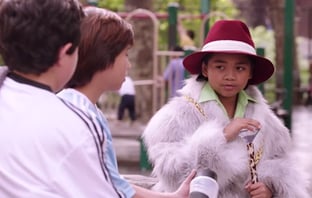
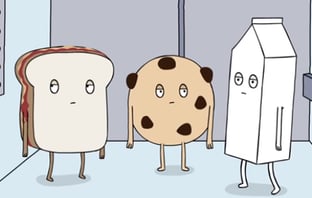
Canada-based Milk West, a dairy partnership consisting of Alberta Milk, BC Dairy Association, Dairy Farmers of Manitoba and SaskMilk, has launched a somewhat bizarre YouTube-based campaign via DDB. Called Snack Time and featuring a trio traditional snacks in awkward scenes, the campaign takes the form of a web series that is intermittently updated with new videos.
People will recognise the work of Coats Design from the aisles of their local supermarket and logos of their local retailers. It’s responsible for wrapping design around the products of big Kiwi names such as Michael Hill, Rodd & Gunn, Barker’s of Geraldine, and last year’s redesign of Hubbards cereal. And the man who kicked it all off was founder Rob Coats, who passed away on the weekend and is remembered fondly by his colleagues and contemporaries in the industry.
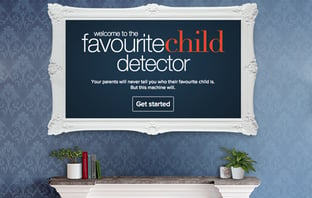
After a few seasons with MediaWorks, Sky managed to grab the rights to one of the best shows on television, Modern Family. And to promote the launch of the politically incorrect show on its free-to-air station Prime, FCB has created a Facebook app that claims to detect favourite children.
One fact that has stuck with me over the years—and flashes up in front of me occasionally when I’m deep in a time-sucking online/social media rabbit hole—is that the same part of the brain that responds so favourably to pokie machines is the same part of the brain that responds so favourably to the constant arrival of notifications on your phone, in your inbox or on social networks. So, like digital meerkats, many of us are constantly popping our heads up and looking for the next information fix. And, as a recent Victoria University study has shown, the online realm is having an impact on our reading behaviour.
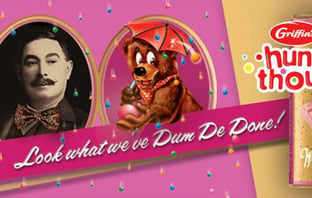
Whittaker’s and Griffin’s have colluded in sugary goodness to produce a limited edition product mashup called the ‘100s and 1000s Bar’ that combines Cookie Bears, chocolate and a significant sprinkling of hundreds and thousands. And to promote their product fusion, which was released on 21 July and will be available for only three months, the co-conspirators have launched a competition via a Facebook-hosted microsite that encourages Kiwis to cover random items in hundreds and thousands and then send in images of the results.
While online shopping is certainly on the rise, digital technology does not have to disrupt and destroy physical retail, says Theresa Clifford. Rather, it can be used to optimise inefficiencies and increase service and personalisation.
As a study by Trademob in late 2012 showed, around 40 percent of mobile ad clicks are either fraudulent or accidental, with more than half of them a result of ‘fat-finger syndrome’. That’s obviously bad for conversions and one major reason why advertisers pay less for mobile impressions (Google added another click into the mix to ensure users really wanted to visit a site). But Y&R, MEC and mobile advertising sales agency Mobile Embrace are trying to fight unintentional clicks another way: by making slightly more interesting mobile ads.
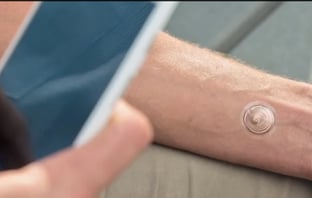
Motorola has launched a tattoo that allows smartphone users to unlock their phones instantly. So is it a henna tattoo of a QR barcode? Is it a microchip inserted into the skin? Or is it an actual tattoo etched onto the body with electronic micro fibre ink?
Every brand and his dog seems to have been trying to get in on the selfie craze recently, and, as yourselfieideaisnotoriginal.tumblr.com shows, it often smacks of desperation. But if you’re going to get punters to take a photo of themselves, at least make it challenging. Samsung, one of the few brands to have had success when it comes to selfie-related campaigns, is doing just that, with what could be seen as a tech-related version of the ice challenge.