News
For the love of words
By

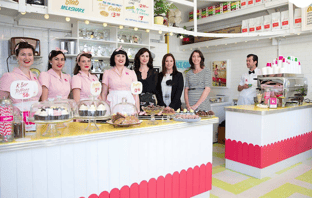
While playing actual board games seems increasingly anachronistic at a time when digital screens continually invade our space, there’s still a nostalgic appeal. And by turning a love story into a word nerd’s anagram fest, Scrabble manages to nail it.

Opinion
Media Munchies: Theresa Gattung
By

Theresa Gattung was made chief executive of Telecom at the very young age of 37 and, after eight years in that stressful role, she took a well-earned break in 2007. Now she’s putting her efforts—and her capital—into a much smaller business, food delivery service My Food Bag. And with a 40 percent stake in a company that’s expecting revenues of $50 million this year, she obviously knows how to pick ‘em. Here’s how the self-proclaimed uncool entrepreneur spends her media time.

News
Gregg’s pulls its product strings together with cheeky brand ad
By

With a broad range of products that spans the likes of jelly, coffee, spices, hot chocolate and food pastes, Gregg’s has until now advertised these various items separately in their respective categories. However, with the launch of its latest brand ad, the Kiwi company is attempting to consolidate everything it offers under the new ‘fun with flavour’ positioning.

News
The caption writers: how Able brings TV closer to the hearing impaired
By

Our ability to consume media is dependent on our ability to see and hear. If we can’t see, then Steve Braunias’ words in the Herald evade us; if we can’t hear, then the ramblings of Paul Henry float by silently; and if we can’t do one or the other, then the messages relayed via the television lose most of their impact. For over two thousand years, humans have developed various means to bridge the gap that separates the visually or hearing impaired from media. One of the more recent innovations in this space was the addition of captioning to television shows in the 1970s. The first application of this process was used in 1972 during an episode of the French Chef, with the words appearing uniformly across all TV sets tuned into the show. And by 1976, the Federal Communications Commission of the United States introduced closed captioning, which gave viewers a choice of whether or not to watch a show.

News
People with interesting faces
By

Those who enjoy the seamless and simplified branding of Huffer might just enjoy a current solo exhibition of the work of Ken Griffen, the former artistic director of the brand who is exhibiting at Auckland’s Allpress gallery with his first solo show Face Value until 6 June.

News
Spark’s growing digital empire expands into smarthome security
By

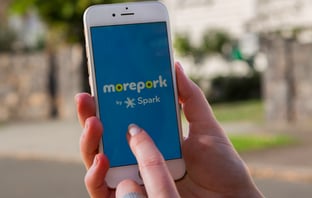
Following on from last launch of its digital app hub for small- to medium-sized businesses, Spark has now confirmed that it will begin offering smarthome security services later this year—adding yet another digital trinket to its growing portfolio of tools for both consumers and business people. The telco—a descriptor that’s becoming increasingly inaccurate—will beta launch the product called Morepork before the end of the week, enabling users to control and monitor their homes remotely via their smartphones.

News
Mobile app means no cowtowing to authority
By

Technology has a history of subversion. Apple’s classic 1984 ad showed its beliefs very literally. Streaming and internet-enabled piracy are changing the media and entertainment business. Google changed the way we advertise. And now businesses like Airbnb, Uber and many others are fighting against powerful incumbents and antiquated regulation to give consumers better services. While the confiscation of a few cowbells from a rugby game at Westpac Stadium in Wellington certainly isn’t in the same category, MEA Mobile and app partner (and Chiefs sponsor) Deosan have showed their subversive side by developing a digital substitute for Chiefs fans.

News
The steady rise of the digital: PwC’s entertainment and media predictions 2015-2019 – UPDATED
By

The entertainment and media industries have seen a huge shift in recent years. Content viewing has gradually shifted to the online world and therefore advertising follows closely in tow while traditional media’s growth rate is slumping. PwC provides some insights and predictions of the movements of these industries closer to home and further afield between 2015 and 2019.

News
From Telecom hate to Spark advocacy: Be Counted campaign rallies the troops to fight against price rises
By

It wasn’t too long ago that Spark was a company to be railed against; a monopolistic monolith using confusion as a marketing tactic to suck money out of consumers. One Spark staffer tells of a focus group attendee from South Auckland before the rebrand saying that if an 027 number came up on their phone they knew it was either telemarketers or debt collectors so they’d just ignore it, which is a good indication of the level of disdain for the brand in that part of the country. But since then, there’s been a lot more openness from those inside the company and a lot more love shown by consumers, and this change in approach manifested itself in the Be Counted campaign, which was created by Touchcast and managed to get over 50,000 New Zealanders interested in regulatory process.

News
Button madness: big tech players make buying a click away
By

The human psyche is seemingly embedded with an unrelenting draw toward buttons—something illustrated in the exasperation of a parent begging a toddler to leave random switches alone. And this base impulse is something that brands are looking to capitalise on by putting ‘buy now’ buttons just about everywhere (those with koumpounophobia are advised to look away now).

News
Songs in the tune of LinkedIn
By

The world of LinkedIn is a networker’s paradise (as the satirical slogan summarises ‘connect with people for no reason at all’). And it turns out it also a musical punster’s paradise, with YouTube user Jim Mortleman and a few others replicating the words of Queen’s Bohemian Rhapsody with screenshots from the social network. Anne Ayoade the Wayne Bloss indeed.

News
It pays to have a sports star
By

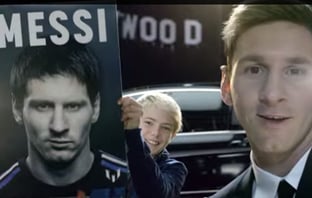
There’s no shortage of local brand ads featuring the chiselled faces of the nation’s sports stars. And tagging a famous visage onto a brand might not be the most original approach to promoting a product or a service, YouTube’s recent rundown of the top ads of the decade again illustrated the pulling power of athletes.

News
The Tweeting Panamanian pothole
By

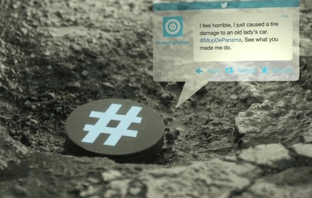
One of the last things you would expect to be tweeting away is a pothole. Yes, you heard correctly, a pothole.

The Tweeting pothole was designed by Ogilvy & Mather and consists of a device that has been placed in potholes which is activated when driven over, sending out hilarious activist Tweets to the Department of Public works.

News
One second of fame: regular Kiwis to feature in Vodafone’s One Weather pre-roll—UPDATED
By

Recently, the One Weather sponsorship served as a pre-roll battleground for major car brands, as Ford touted the superiority of the Ranger over the Hilux through a faux weather reporter moulded on the lovable pie-eater from Toyota’s advertising. The car brands have since put away their monobrows, and Vodafone has now stepped into the One Weather slot—and the telco is also hoping to give its sponsorship a distinctly Kiwi feel (hopefully, without the monobrows).

News
A man’s best friend
By

A rather lonely-seeming chap picks up a wee pup to be his ultimate companion in this Purina Puppy Chow ad created with BuzzFeed which has already had millions of views after being released less than a week ago.

1 405 406 407 408 409 697