News


Regan Grafton crosses the floor from FCB to Ogilvy
Ogilvy & Mather New Zealand today confirmed the appointment of Regan Grafton as executive creative director, bringing an end to the creative’s three-year stint at FCB.

Ogilvy & Mather New Zealand today confirmed the appointment of Regan Grafton as executive creative director, bringing an end to the creative’s three-year stint at FCB.

Barnes, Catmur & Friends seems to have taken a page of the stage magician’s handbook in new spot for the New Zealand Heart Foundation, which uses a distraction strategy to make its point.

Whether it’s the housewife who smiles while cleaning the toilet, or the teenage boy who gets the girl after putting on some deodorant, advertising is renowned for showing unrealistic situations. But the latest campaign from Trade Me Jobs might just take the cake.
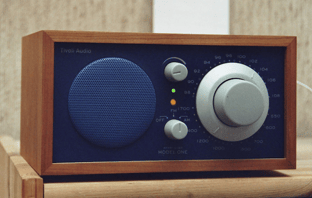
Today the Radio Broadcasters Association announced GfK would be the new provider for the commercial radio survey from 2016, taking over longtime research contract-holder TNS.
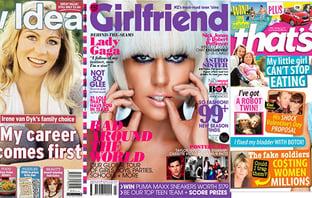
NZME confirmed through a release sent out today that it will not be renewing its licence with Pacific Magazines to produce New Idea, Girlfriend and That’s Life. The existing deal runs until 30 September 2015, and NZME chief operating officer Phil Eustace says that NZME will cease publishing the three magazine titles from that date.

The other mother of the nation has been reading the news (and cracking jokes) at TV3 since 1999 and took the brave step of signing up as newsreader for The Paul Henry Show this year. Here’s a taste of her media diet.

Coca-Cola has gone the cinematic route with a new online ad called ‘Steampunk Coke’, which looks like a scene straight out of a Hollywood blockbuster.

Much like in New Zealand, mobile phones are ubiquitous in Mexico. Over 90 percent of people living in the Central American country carry the devices in their pockets on a daily basis, and the nation’s arm of Redcross saw this as an opportunity to save lives. Given that many people don’t wear their medical tags, the Redcross invited citizens to send in their medical details to a their mobile phones. All this information was then stored on a database, which can be accessed by emergency workers when needed.
There’s a new marketplace on the block, which believes in the sentiment “sharing is caring” and it’s called Ourthings. A rental website which encourages communities and businesses to share wealth between them by renting out their goods.

Our weekly wrap of good things, strange things, funny things and other things from inside the intertubes.

In a new series, StopPress talks to a range of newsmakers currently trying to shine lights into dark places while also keeping their own lights on and looks at whether commercial realities are leading to editorial compromise. Next up, Damien Venuto talks with Hive News founder Bernard Hickey.

After enlisting the help of a bearded serial high-fiver in its last campaign, Lotto Powerball and DDB have taken a rather serious and sombre approach this time, telling a story of hope, love and freedom through the relationship between a young boy, his grandfather and his hardworking father.

TVNZ has launched two new OnDemand short-form offerings, youth-led magazine show Yours TV and short documentary series Loading Docs which the broadcaster says is part of its focus to support up-and-coming New Zealand talent.

The Pak’ n Save Stickman has struck again in two new TVCs by FCB. In one he takes on the role of a ‘price patrol’ officer and in another he delves into his more (errr) seductive side.

Numbers, metrics and measurement are important but they aren’t everything, says Hunch’s Michael Goldthorpe.

Marketers have so many tools available to them to target customers and personalise communications. But they still need to bear in mind how people arrive at the front door in the first place, says Andrew Lewis.
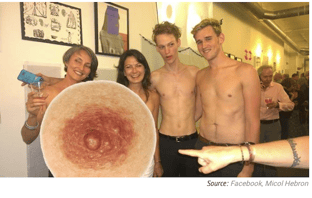
In New Zealand and in many other places, the female nipple is commonly censored among mainstream media outlets. Social media sites such as Facebook and Instagram are guilty of removing images of women with bared breasts. But now women have been illustrating the absurdity of the idea of a mere areola making something rude by photoshopping male nipples onto their breasts, while the results are pretty funny, they also make a bold statement.

Two Twitter evangelists, head of communications Nathan Burman and international revenue manager Olly Wilton, are currently making the agency rounds in New Zealand as part of a push to increase the scale of the social media company’s business in the local market. Over the course of the last week, the pair have met with various agencies and media outlets to discuss why it’s worthwhile to shift ad spend to the network.

Justin Bieber has made headlines again. And no, not for peeing in mop buckets or destroying hotel rooms or dangerous driving, this time it’s for… his butt.
Lorde once said that all the internet is “ … is doing your own PR”. And in modern times this rings truer than ever. We curate the material we put on our social media accounts, crafting the image of ourselves that we want to present to others. You could say we are our own brand and social media is how we market ourselves, and while most of us get paid in ‘likes’ or ‘followers’, some social “influencers” are teaming up with brands and getting paid in cold hard cash. And on that note, here are the top ten followed Instagram accounts in the country and how a few of these media personalities are racking up the dollars from doing what they do best.

“Everyone is selling audience,” says Mobile Embrace’s Sarah Kavanagh. And this means that ad tech providers constantly have to tweak what they’re offering in order to make it attractive to advertisers. She recently chatted to StopPress about how the mobile industry is evolving and how ad tech players are responding to that change.

New Zealand’s ecommerce sector has shot through the roof as punters increasingly open their laptop lids instead of their wallets to purchase new items. Data from Nielsen shows New Zealanders now buy 18.2 million items each year, to the value of $4.6 billion, and this figure is expected to rise to $4.8 billion by the end of this year.
You don’t have to look far to find someone willing to express an opinion on the state of Kiwi television. Whether it’s something as simple as volume of television ads or something a bit gruntier like the legality of Global Mode, Kiwis have over the last few months shown themselves to be very interested in expressing their views on the evolution of the medium in the local context. And now, in a bid to collate all these opinions in a single place, TVNZ has launched the TVNZ Greenroom, an online initiative that allows Kiwis to share their thoughts on how the broadcaster is doing.

Advertising can be a bit like a mirror, or perhaps more like the Mirror of Erised (cue cheesy reference) from Harry Potter where an idealised version of ourselves is reflected back at us. When targeted well it can be so pervasive that we come to think of advertising scenarios as being normal “Of course I should be wearing those shoes”, “Clearly I need that marble bench top in my kitchen”. Advertisers try to reflect our relationships too, marketing to couples and families. But wouldn’t it be strange to see advertising bypass us, for us to see ads embodying relationships or representations of people that don’t reflect our reality. For the reported 10 to 15 percent of New Zealanders that make up our LGBT community, it has been like this for a long time. But things are changing, the world is slowly but surely progressing, and so is the advertising world along with it. Here are a few examples of advertising that includes this community, and why it would be of interest for advertisers to continue doing so, particularly in light of gay marriage increasingly becoming legalised in more countries.
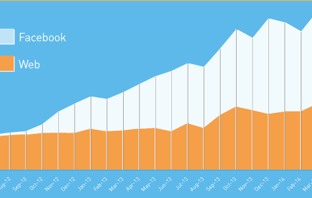
With over two million Kiwis on Facebook and 100s of thousands on Twitter, social media offers a means by which to increase the reach of a campaign. This week, AdRoll’s Ben Sharp looks at why social should be key to your programmatic marketing strategy.

Magazine brands have long embraced the wagon wheel approach and interact with their audiences through a range of different mediums, whether it’s print, online or events. And while there’s no doubt print is declining in popularity in some segments, it is still working well in others and Mindfood has followed up its launch of its Style brand extension last year with a new one called Decor that’s aimed at the big, growing but quite cluttered home and living market.

Industry happenings at Canon, Content Boutique, NZ Herald and oOh!media.

The days of wallets being crammed with loyalty, bank and business card might soon be coming to an end. In fact, wallets themselves could well be headed for obsolecence if Semble has anything to do with it. The company has already been facilitating contactless mobile phone payments across the country, and it has now announced that it’s expanding into public transport. The expansion is part of Semble’s plan to become a one-stop mobile shop for every card in a person’s physical wallet, chief executive Rob Ellis says.