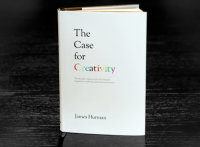
Last week BrandWorld’s David MacGregor let his opinions be known about James Hurman’s new book The Case For Creativity. Now it’s ex-Colenso bod and adman par excellence Mike Hutcheson’s turn.
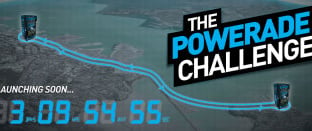
For years, brands have created ads and placed them in appropriate media in the hope that they’d help sell more of their stuff. These days, brands are increasingly creating experiences in the real world that are relevant to the product and involving consumers in those experiences. And The Powerade Challenge, a 9km running course/interactive marketing campaign around Auckland’s waterfront, is a prime example of this shift.
There’s been plenty of discussion about the daily deal model recently, due mostly to 1-Day’s decision to can its 1-Day Out offering because it believed the model was unsustainable. GrabOne’s founder and chief executive Shane Bradley certainly thought otherwise and, one year after launching its popular experience-based site, it’s ready to take on 1-Day at its own game with a new initiative that aims to put even more crap in people’s cupboards, GrabOne Store.
New cover, courtesy of DDB
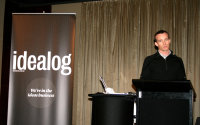
Idealog was first launched six years ago and it has won best business magazine at the Magazine Awards every year since. Even so, when you’re putting out a mag focused on innovation, there’s always room for improvement, so co-founder and publisher Vincent Heeringa, ex-editor and digital boffin Matt Cooney (the NBR’s Hazel Phillips takes over in mid July), the Image Centre team and DDB, which was responsible for the cover concept and the small ad campaign, gave the old girl a good going over. The latest issue features new sections, a new lay-out, new writers and a soon-to-be-relaunched daily business news service and tablet offering, all filtered through the sieve of innovation and ideas. And to celebrate the transformation, Idealog invited Sam Morgan to speak about some of his business ventures and the importance of media that inspires New Zealanders to try turning their ideas into income.
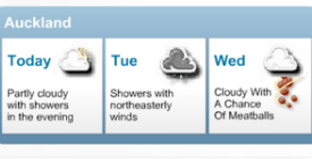
New Zealanders love nothing more than talking about the weather. So DDB’s team of Jennie Ko, Pip Perkins and Regan Grafton tapped into that with Sky TV’s Cloudy with a Chance of Meatballs online banner ad. And it was good enough to win the July IAB BollyAward.
They used to be called the Qantas Film and Television Awards, but after Qantas grounded all its flights (metaphorically speaking) last year for this and the Media Awards, the name of the screen industry’s night of nights has now been changed to the Aotearoa Film & Television Awards (AFTAs) and Aviso Design has created a new logo that ThinkTV chief executive Rick Friesen says better reflects the nature of the awards.
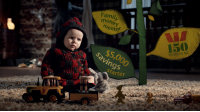
Ahhh, babies. So cute, so cuddly, so much potential, yet so financially illiterate. To help remedy that—but mainly to celebrate 150 years in New Zealand—Westpac, with the help of .99 and Robber’s Dog, has launched a new campaign called Gen W that’s offering 150 small Kiwi humans ongoing financial support and advice until they turn 18.
Who’s it for: Toshiba by Clemenger BBDO Sydney and Yukfoo
Why we like it: It’s pretty tough not to become derivative and cliched with your marketing efforts if you’re a sponsor of the Rugby World Cup. Certain boxes just need to be checked. And we …
Over the past 18 months adult contemporary music radio station Classic Hits has been the subject of a significant shake up in terms of its musical, advertising and dj line-up. And with those changes now firmly in place, the station has rounded off its makeover with a new logo that’s actually a significant departure from the green and red logo that’s been in place since 1993.
…Hazel Phillips’ replacement stands up, Bill Francis takes up the Radio Broadcasters Association reins, Jenni McManus swaps business journalism for a comms role, The Listener says goodbye to another deputy editor and The Pond puts some of its freelancers on weekend duty.
If you think a ‘like to enter’ competition on your company’s Facebook page is a cunning way to grow your follower numbers, you’re probably right in the short term. But if you treat it as a loyalty database, be prepared for some repercussions.
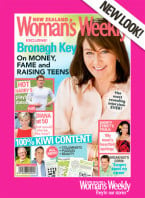
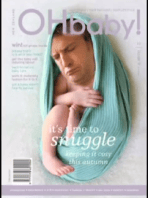
It’s been a fairly interesting period for the ladies mags recently. The old battle between ACP’s Woman’s Day and NZ Magazine’s Woman’s Weekly was spiced up considerably after a few big editorial switcheroos and a hearty debate about the pros and cons of brands signing exclusive deals with publishers. Now there’s even more excitement, with Woman’s Weekly undergoing its biggest change in more than a decade.
Those generous Handley brothers, who sold their share in the Hyperfactory to Meredith Corp last year, launched a scholarship to help improve New Zealand’s marketing smarts by sending them off on a jaunt in the US and giving them access to marketers working for some of the world’s biggest companies, such a L’Oréal, Kraft, Nestlé and AB InBev, as well as a few cutting-edge start-ups. And they’ve chosen their finalists, as well as the panel of six big-brained judges to decide on the winner.
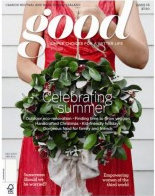
With the New Zealand Magazine Awards hangovers now well and truly abated, it’s time to reflect on those who did it best in the realm of magazine design. All up ten Best Cover Design awards and nine Designer of the Year awards were dished out across several categories.
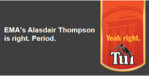
Alasdair ‘Sick Problems’ Thompson’s attempts to clamber out of the huge hole he dug himself last week was a massive PR trainwreck. And you can always rely on Tui to embrace the media zeitgeist on its billboards to try to sell more beer.
Sadly, after the annual week of Gallic hedonism and chinstrokery, it’s back to old clothes and porridge for the global advertising community because the Cannes Lions finished up on Sunday with the awarding of the Film, Film Craft, Creative Effectiveness and Titanium and Integrated Lions Awards. Here’s a round-up of all the winners from these and the special awards.
It’s the summer festival season in the south of France, with the Cannes Lions International Festival of Creativity coming hot on the heels of the Cannes Film Festival and the Formula One Grand Prix just up the coast at Monte Carlo. But the French Riviera isn’t just a micro-climate in meteorological terms. Its status as a playground of the rich and famous inevitably means it has a degree of insulation to the economic weathering that plagues more industrialised regions.
We left the best until last, but Kiwi agencies picked up three Lions on the last night at Cannes, with Colenso taking home five of the six local Lions won in this year’s festival of creativity.
Last month the Association of New Zealand Advertisers’ (ANZA) Jeremy Irwin, announced he was stepping down from his role as chief executive to pursue more of his lifestyle interests. But while Irwin’s retirement begins at the end of this month, the former director of Unilever New Zealand, Lindsay Mouat, is getting set to step into Irwin’s shoes.
The fine folks at Getty took some snaps of people smiling with sponsors and holding certificates on stage at the Magazine Awards last night. You can read about who won here. And now you can see what they look.[nggallery id=8]
After last year’s big haul for the Kiwi agencies at Cannes, 2011 is looking decidedly average. But there’s still a chance for some late glory after DDB and Colenso picked up two nominations each in the film category.
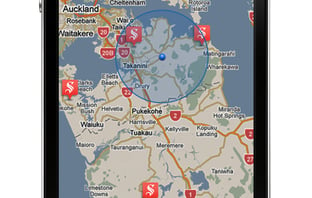
Not satisfied with simply being the beer sponsor for the All Blacks, Steinlager has gone all gadgety with its latest venture—an iPhone app that helps All Blacks supporters find their way around town whislt keeping them up to date with real-time stream of All Blacks news. And, because ending up passed out in a gutter somewhere isn’t ideal, the app also helps ensure you get home safely.
Oliver Driver is one of the go-to guys for MC duties these days. But what many people don’t know is that he is also a publishing luminary, as this short film created for the Magazine Awards shows.
John Baker
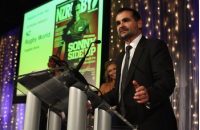
If our office is any guide, there are plenty of bleary-eyed, slow-moving, grease-craving media folk today following the mid-winter Christmas party that is the Magazine Awards last night at the Pullman. And, after 56 awards across 14 categories were handed out, it was a night for the ruggers to celebrate, with Tangible Media’s NZ Rugby World taking home the top two awards of the night, supreme editor of the year for Gregor Paul and supreme magazine of the year.
Twenty-four hours isn’t long when you’re tasked with helping to provide water for arid African villages. But that’s all the time Pip Perkins and Jennie Ko were given at the Cannes International Festival of Creativity earlier this week in the Young Lions Press ad competition.
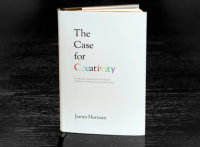
James Hurman is a planner for Colenso BBDO and in his book The Case for Creativity, he argues you shouldn’t do shit ads because they’re less effective than highly creative ones. Given I love great ads (the locus of the book is advertising creativity, rather than innovation in the broader sense), I should be an easy sell. But while I really wanted to like the book, it has several weaknesses.
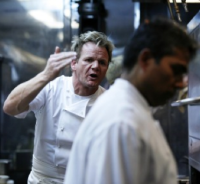
One of Gordon Ramsay’s most popular programmes is Kitchen Nightmares, where he helps turn struggling restaurants around. Let me say right from the start, I’m no fan of Ramsay. But I believe he’s teaching us some valuable lessons when it comes to website marketing. Let me explain.
Six categories down and it’s slim pickings for the Kiwis at Cannes, with Colenso BBDO flying solo and picking up its third bronze lion for the Multiple Sclerosis Waikato campaign in the Outdoor category. This adds to the bronzes it won in the promo and activation and direct categories for Westpac Impulse saver and the Pedigree ‘Doppelganger’ adoption drive.
The public has spoken and the public will be required to participate after Palmerston North-born Pulusea Seumanu’s idea was named the winner in ANZ’s ‘Welcome the World’ campaign. Seumanu’s idea brings together clothing, cards, colour and movement, all of which will be co-ordinated in a mass spectacle created by thousands of Kiwis.
As consumers, we might not give much thought to advertisements beyond having a chuckle at some or snarling and changing channels in response to others. On the other side of the screen, it’s a different story. Stakeholders want to know campaigns are doing what they’re meant to do: making an impact and delivering commercial results. And that’s what the Effie Awards reward.