
News


TVCs of the week: 18 August
Trade Me, State, Air New Zealand, Rexona and Anchor take a victory lap this week.

Trade Me, State, Air New Zealand, Rexona and Anchor take a victory lap this week.

Can you buy loyalty? Brands across the world are spending billions of dollars trying to find out. But TRA’s Andrew Lewis says most companies are probably going about it the wrong way.
The best art is often laced with subversion and provocation. And the same rules often apply to the best advertising. Now those two things have been combined with Saatchi & Saatchi’s campaign to promote the recently re-opened Govett-Brewster art gallery in New Plymouth.

Whether it’s Google and Luxottica, Spotify and Uber or Whittaker’s and Lewis Road Creamery, strategic partnerships and co-branding initiatives can be a good way to breathe some new life into both parties, increase distribution and, if you’re lucky, add some joy to the lives of consumers. And Kiwi fashion label I Love Ugly’s collaboration with global accessories brand Jansport is already paying dividends.

After nearly a century, Anchor milk has jumped back aboard the All Blacks bandwagon, partnering up with the team just before it heads into World Cup territory.

Scoop publisher and editor Alastair Thompson on the disruption of online news advertising and Scoop’s subsequent steps to sustain its platform through the introduction of an ethical paywall, dubbed ‘Operation Chrysalis’.
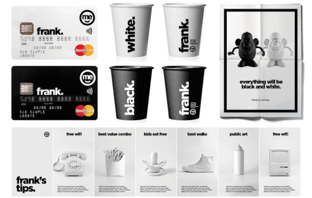
It would be fair to that the Kiwi brand is somewhat synonymous with the colour black (or shade if you want to be pedantic). Not only do Kiwis have a penchant for donning black clothing (and other dark hues), with several online articles devoted to the fact, our national sports teams also rock it. The announcement of the finalists of this year’s Best Design Awards revealed a familiar thread – Kiwi graphic designers who work magic with the beloved hue.
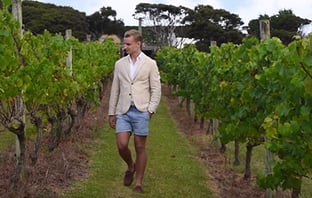
Last year, when Act’s David Seymour released his sensational campaign video in the lead up to the election, Kiwi social media responded with glee, poking satirical barbs at the awkwardness on display. And while Seymour has since left the spotlight to tend to his followers in Epsom, another awkward YouTube star has emerged: a blonde protagonist Nelson Patchett, trading under an organisation called SI Empire which aims to help the Plebeian men of New Zealand become alpha males.

Industry happenings at Saatchi & Saatchi, NBR, Weta, Pandora, Images & Sound, BBC, Ambient Group, Lily & Louis, Republik and Outdoor Media Group.

It’s easy to make fun of ad agencies, what with their creative offices and casual dress codes and intangible creations. If they don’t have the founders’ names in the title, often in acronym form, it’s important they exude coolness. But can you tell the difference between agency names and porn? A new website by Canadian agency 88 Creative puts it to the test.

Our weekly wrap of good things, strange things, funny things and other things from inside the intertubes.

In the cut-throat world of supermarket retailing, many factors come into play when consumers make their decisions about where to shop, whether it be price, location, range or the latest collectables. But while humans like to think we’re rational creatures, we’re not and a lot of our purchasing decisions are based on whether or not we actually like a brand. New World has its fair share of nuts and bolts, price-led retail ads promoting various deals, but its brand advertising has been streets ahead of the competition in recent years and it has challenged its agencies to take creative leaps and come up with engaging ideas to capture attention. And the mad Fruit and Vege pro ad, which our judges voted as the StopPress/MediaWorks TVC of the Year, is a great example of that thinking in action.

There was intellectual dissection, there were furrowed brows, there were plates of calamari (hopefully the kind from the sea), there were big jugs of beer, there were raised voices, there were occasional bouts of physical violence and, eventually, there was quorum as a panel of esteemed judges chose New World and Colenso BBDO’s rather fruity Fruit and Vege Pro as the victor in the StopPress/MediaWorks TVC of the Year, with Vodafone’s Piggy Sue and Sky’s Murmuration second and third. PLUS: other category winners for craft, degree of difficulty and clever use of TV.
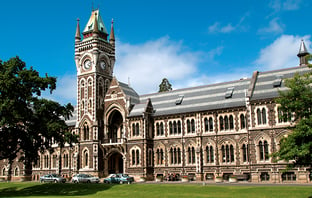
There has been a fair amount of activity behind the scenes at the nation’s institutes of higher education over the last few months. Here’s a look at what’s been happening at Otago, AUT and Unitec.

State has released the latest chapter in its ‘Click. Done’ campaign through Colenso BBDO and Finch, which promotes its online service. This time with a new character who really digs life, but doesn’t really dig insurance.

The marketing industry has already dabbled in sharkvertising, madvertising, nudevertising and even sleepvertising. But there’s always room for more. And for the launch of its insurance offering, Trade Me has probed into the netherworlds of what could be described as analvertising (not to be confused with analyvertising, which refers to ads that provide insightful analyses on pressing social issues). This new sub-category of the ever-growing encyclopedia of marketing experimentation is introduced through a series of irreverent spots by Assignment Group, during which Trade Me makes the point that the paperwork and admin involved with insurance can (quite literally in this case) be a pain in the butt.
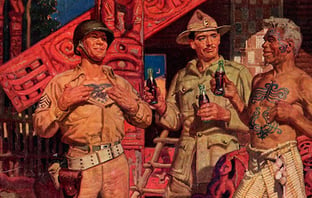
If you were to drive your car across New Zealand, along the way sporadically visiting small towns with populations rarely exceeding 87 people, you’d encounter an assortment of experiences that vary as much as the topographical makeup of our two islands. But no matter how different each of these pitstops might be, one thing that you will almost invariably see wherever you go is Coca-Cola bottle. And this year, one of the most ubiquitous brands in Kiwi consciousness celebrates the 100th anniversary of its easily recognisable bottle.

The Health Promotion Agency and FCB just launched the third phase in its Step Forward campaign, which began its run on TV this week.

Through new content partnership between Marketo and StopPress, we look at how technology is being used to automate marketing processes and what this means for industry. First up, Marketo’s Rob Cooke reckons that while the industry has evolved significantly since the ’80s, some core principles still remain relevant today.
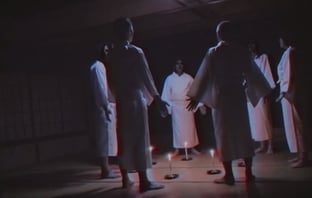
The Japanese are well known having produced some of the best scary movies in popular culture. But what they aren’t known for all that well is producing scary films for the purposes of promoting health products. As strange as this might sound, Japanese ad agency Tokyu has developed a new short horror film with the aim of maximising the number of calories the viewer burns through while watching.

Since Google was first launched, Larry Page has shown his inner prankster through quirky doodles, elaborate April Fools’ jokes and a slew of Easter Eggs. And, despite the seriousness of his latest message on the launch of Alphabet, it still came with a sneaky touch of Google’s humour.

Calculators are useful things. Or perhaps they were useful things before smartphones came along and made them somewhat redundant (unless you pursue a study/career in maths or science, are in highschool or want to write ‘80085’ or ‘55378008’ into the device). But 2degrees is proving other kinds of calculators can be useful, and it’s used its own one which it says reveals Kiwis are paying too much for their mobile, with millions more dollars in savings possible if they make the switch to a different provider aka 2degrees.
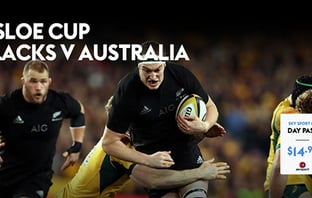
Sky has opened up Sky Sport channels 1, 2, 3 and 4 to non-subscribers through its online sports streaming service Fan Pass. And this announcement means that sports fans will be able to access the quartet of channels through a one-day streaming pass for $14.99 or a week for $19.99. So what does this mean for viewers who don’t have a Sky subscription.
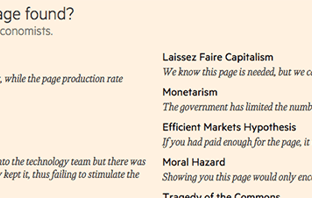
The Financial Times, which has recently been sold to Nikkei, is at the forefront of economic and business journalism. But, just like The Economist’s well-regarded wit, this level of professionalism and seriousness doesn’t detract from its sense of humour, as evidenced by a recent development project on its website that tried to add some character to its error page.

To own a smartphone is one thing, but as technology becomes more advanced, it also becomes more pervasive, edging itself further into the household. Soon it seems we’ll have a smart everything: smart beds (yes that’s a thing), smart watches, smart thermostats, smart bikes. The list goes on. Yesterday Spark released its Morepork smart home technology, but it’s not using the native owl of which it’s named after to market the product, but rather a family of emojis. We spoke to Spark’s Gemma Croombs to find out more on how the telco is pushing the product and her insights on smart technology. PLUS: a few examples of the latest in home smart tech.
There’s a battle for talent happening in the tech sector, as evidenced by the massive salaries and various sweeteners being offered by big tech companies like Facebook, Google and Apple. That battle is also being waged in New Zealand. And while it might not be on the same scale as Silicon Valley, Kiwi tech companies are also employing a range of different tactics to try and find good staff and keep them engaged. From charity schemes to creative offices to Friday kegs, here’s what TradeMe, Vend and Xero are doing.
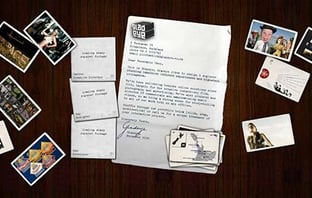
Flash was a format that gave rise to the interactive web of today and the independent video games scene as we know it. But after security flaws have been exposed and the number of detractors has grown, its time has come, says Gladeye’s Eleanor Barker.

As Paul Catmur wrote last year, the marketing bit often seems to be forgotten in the world of digital marketing. But here are a few that combined the two and were deemed worthy of a place in the interactive marketing category at the Best Awards.

Air New Zealand lodged itself firmly into the glow of the upcoming Rugby World Cup by launching a new safety video featuring the All Blacks depicted in a Men in Black setting. The five-minute clip shows chief protagonist Richie McCaw and his sidekick Dan Carter walking into the Men in Black building for a meeting with Agent Zed (played by actor Rip Torn), who instructs them to keep Air New Zealand passengers safe. What ensues is a safety rap performed by Stan Walker with some reasonably impressive supporting vocals by Israel Dagg.
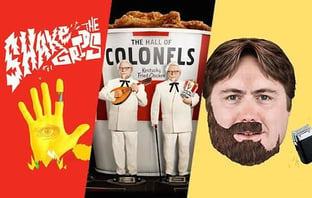
For sometime now the general consensus behind website design (and many other kinds of design) is that less is more. Web designers aim to make sites as easy to navigate as possible, rather than assaulting visitors with flashing green neon and trillions of different icons like early websites did in the late 90s. But like many things in life with a cyclical nature (fashion, music and food trends to name a few), perhaps websites are no different. And while we’re not sure if we can call it a trend, we have noticed a few more web designers and developers cramming more into their website designs, creating a retinal overload which is surprisingly pleasing. Digital agency Resn is one of them, making a name for itself by thinking a bit differently and capturing our attention through its creative, animated website designs.