
News


TVCs of the Week: 23 September
A glut of goodness this week from New World, Contact, Samsung, Vodafone, Spark and Rebel Sport.

A glut of goodness this week from New World, Contact, Samsung, Vodafone, Spark and Rebel Sport.
Following on from ANZ’s move into publishing with BlueNotes, BNZ, RaboDirect and Westpac have now made their own forays into the content marketing landscape. But the approach that each bank has taken differs not only in terms of the content being covered but also in terms of who produces the material for publishing. We take a look at what each bank is doing in this space.

News is increasingly heading online, but paper still has its place and, increasingly, that place is the weekend. And The Guardian and Observer have released a great new ad via BBH that sums up what the weekend is all about—and the paper’s role in it.
Jetstar has been doing its darndest to shift perceptions among some Kiwis travellers that the low-cost airline is cheap for a reason, with its last campaign offering $24,000 worth of flight vouchers and drawing attention to the fact that, despite a reputation for unreliability, it was named New Zealand’s most punctual domestic airline in 2013. And it’s backing itself once again, offering a $25 voucher to all passengers if a domestic flight during the next eight days arrives more than ten minutes later than scheduled.
Lady Gaga may not have performed in Rangiora (yet). But she is using some visual marketing software from a company that’s based there. PLUS: how the company is expanding into the US market.
Almost 5,000 New Zealanders have taken to the polls and their votes have declared Mallowpuffs Original the nation’s favourite biscuit as part of Griffin’s ‘Bikkielections’ campaign. This result marks the first time in the poll’s four-year history that Mallowpuffs has featured as one of the nation’s top three biscuits, let alone won the entire event. But is an elaborate election-themed campaign around election time even legal?
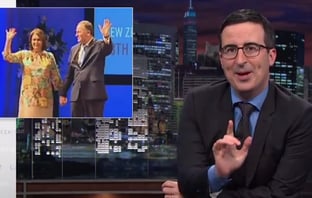
John Oliver has torn strips off everything from native advertising to Tony Abbott in his HBO show Last Week Tonight, and he’s been getting plenty of online love as a result of his entertaining opinions. And now New Zealand has come under his microscope, with a clip discussing the National Party’s run-in with Eminem over the track it used in its election ads and Steven Joyce’s description of its use as “pretty legal”.

Back when newspapers (and, to a lesser degree, magazines) were happily floating down their rivers of gold, the church and state of editorial and sales were kept very separate. But desperate times call for what some may see as desperate measures and as publishers search for new revenue streams, many of them are increasingly offering their skills to help tell the stories of businesses. Now APN has joined that club with the launch of Brand Insight.

Although no Kiwi agencies picked up a Grand Clio at the 55th edition of the prestigious American Awards show, the list of nine winners in the various categories provide a concise summary of another fantastic year of creativity from across the world. Of all the agencies to pick up one of the big gongs, only Harvey Nichols’ ‘Sorry I Spent’ and British Airways’ ‘The Magic of Flying’ won across more than one category. And There were also several winners that carried their Cannes success across the Atlantic, with Chipotle’s ‘The Scarecrow’ and Volvo’s ‘Live Test Series’ collecting the major gong at the Clios.
Is subscription video on demand the silent TV killer? Alex Lawson thinks so. And its rise has plenty of implications from a media perspective.

Kiwi agencies have once again pulled in a decent haul of silverware on the international awards circuit, with the latest tally of gongs coming from the prestigious Clio Awards. And although the New Zealand contingent missed out on picking up a Grand Clio, NZTA’s ‘Mistakes’ campaign picked up two golds. The first of these awards went to Clemenger BBDO in the film category, while the second was awarded to Finch in the film technique category. PLUS: see which other agencies picked up awards. Updated with Clio Healthcare results.
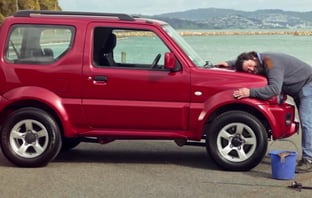
Suzuki, unlike some of its Asian car-making counterparts, hasn’t done a huge amount of local advertising and has largely relied on international material (and high profile sponsorships like 3 Sport and The Warriors). But to celebrate taking top spot in the Canstar Blue customer satisfaction award, it has created a new 30 second spot via GSL Promotus showing a bunch of New Zealanders getting it on with their cars.

Rebel Sport is continuing its facts-based advertising approach with a new spot that alludes to the natural advantage that left-handed batsmen have over their right-handed counterparts. The 30-second clip, which was conceptualised by Ogilvy and shot by Film 360, is the latest iteration of the ongoing ‘no one gets sports like us’ positioning, and follows on from Rebel Sport’s ‘Sprinting or Flying?’ TVC that was released toward the end of last year.
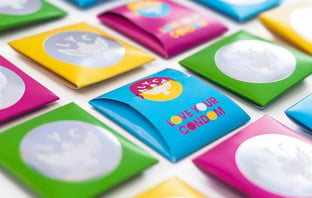
Interbrand was riding high after its work for the New Zealand AIDS foundation won a TVNZ-NZ Marketing Award in the not-for-profit category and a global Interbrand Best Work Award for verbal identity. But that was fairly shortlived because and it has lost the Love Your Condom (LYC) brand, a government-funded prevention campaign encouraging condom use among all gay and bisexual men, the most at risk demographic for contracting HIV, to bcg2.

MediaWorks’ channel Four is continuing along the same lines as its The Home of Not Rugby during the 2011 Rugby World Cup, with the current campaign with Special Group of ‘The Home of Not Election’. It has been promising an “entertaining escape from the political coverage dominating other media to Election Day and beyond: an invitation to take a break from the Judith Collins saga, and enjoy the brand new season of America’s Next Top Model; to get excited about upcoming new fast tracked episodes of [various shows].”

Our weekly collection of good things, funny things, weird things and other things from inside the intertubes.
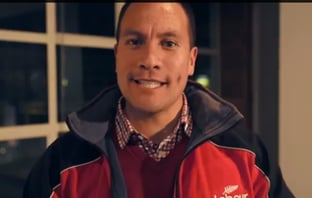
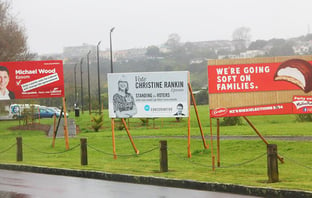
The final lead up to the national election gives the citizens of the country the unique pleasure of being able to see politicians dressed in formal attire standing in the rain, feigning smiles and waving at all the cars driving by. It’s unclear whether such seemingly desperate measures have any sway over the location of the ticks on election day, but they are entertaining nonetheless. Traditionally, these last-ditch efforts by political parties have been limited to doing impersonations of brand mascots on street corners, but in a digitised world they are becoming more sophisticated. These days, politicians recognise that political messages have the capacity to reach a wider audience if they are delivered online. And for this reason many the nation’s parties have taken to the internet to consolidate their street-based efforts.

To show off the latest selection of Moto goodies, Motorola and Droga5 in New york have have just made the most complicated film prop of all time.

Foodstuffs and Colenso BBDO veered away from traditional supermarket advertising when they started promoting New World staff as products and parodying infomercials in last year’s Fresh Every Day campaign. And while it’s still looking for laffs in the latest instalment, it’s dialled up the surreality with talking yams and houses filled with bread.
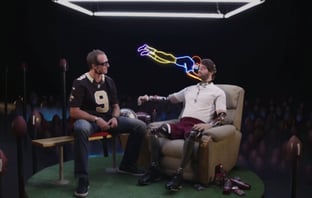
The Old Spice mandroid’s fraught romantic adventures have brought much joy to the StopPress towers, although some have wondered whether it’s sexist or a parody of sexist ads featuring the product as an aphrodisiac. Now he (it?) is back with a new sports talkshow. Plus: the wonders of the Late Night Big Breakfast.

Interactive is an expanding piece of the ad spend pie here and around the world, and Magna Global has predicted it will overtake TV in the US by 2017. Facebook is a big part of that ecosystem and it reckons it can offer both scale and granularity. So we caught up with Facebook head of New Zealand Stephen Scheeler to find out what’s happening here and how House of Travel has harnessed the social network and is moving away from traditional media.

Industry happenings at Snakk, TRN, MediaWorks, Maori TV, Mai FM, Tangible Media, Adshel, and MEA Mobile.
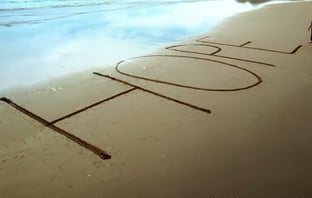
Marketing gets a pretty bad rap from the general public for the sophisticated tricks it uses to influence behaviour in the quest for profit. But the Ministry of Health and Health Promotion Agency’s National Depression Initiative campaign by FCB is a prime example of the power of marketing to do good. And the campaign, which covers the period from 2010 to 2013, has just been shortlisted for the coveted IPA Effectiveness Awards, the first time since 1994 that a Kiwi campaign has earned that accolade.
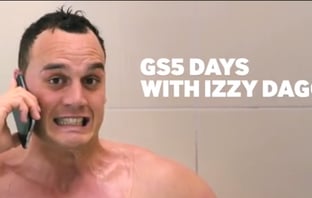
The growing prevalence of the online channel has made it more common for the regional arms of major organisations to make locally produced content. And this trend has now seen Samsung release a new YouTube clip that features rugby star Israel Dagg showing off the full utility range of the GS5. But placing your brand’s message in the hands of a sports star comes with its risks.

If you are sick of “having your heart toyed with like a meaningless plaything” in the real world, you now have the opportunity to experience the very same thing in the digital realm, with Wellington/Amsterdam web savants Resn creating an interactive artwork to accompany the song ‘Look Away’ from SBTRKT’s soon to be released album, Wonder Where We Land.

Despite Steve Jobs’ antipathy towards big screens, Apple launched the 14cm iPhone 6 Plus (and a couple of other things) last week. And Samsung, no stranger to taking swipes at its main mobile competitor, responded with a series of ads showing some disappointed Apple staff. Now it’s followed those up with another feisty spot that talks about the initial negative response to its big, “more productive, more innovative, more fun” Galaxy Note and the ensuing scramble from other manufacturers to follow suit.

In an effort to make the trend of second-screening a bit more interactive, a team of tech geniuses at MIT has developed a system that allows a smartphone user to interact with a laptop or tablet screen with a second device. And while the technology is still in its infancy, there are undoubtedly a few marketers around the world who are thinking up ways that it could be used in a campaign.
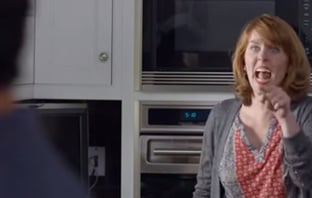
It’s a classic—albeit fairly rare—tale: someone has an idea for a business. Their friends, families and potential investors tell them it’s ridiculous. A few years later, it’s a runaway success. And if that happens to you, a new ad for the oft-controversial domain name company GoDaddy via Barton F Graf shows how inspirational business owners should react with humility and grace.
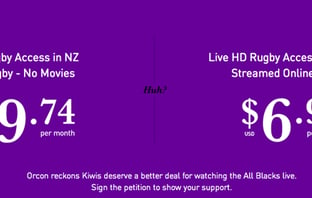
Orcon is taking a leaf out of the ‘Politician’s Handbook’ by attempting to mobilise the Kiwi masses through a petition, which aims to break Sky’s hold on the broadcasting rights for live rugby games. The petition is hosted at a microsite called FreeMyRugby.co.nz and draws attention to the fact that only New Zealanders with a Sky subscription—available for $74.75 a month on a Sky basic and sport package—are in a position to watch the All Blacks play live. And while sharing this common knowledge is unlikely to cause a riot, it does draw attention to how the media landscape is changing and how this might continue to impact Sky’s hold sports broadcasts.
Architectural design firm Jasmax is celebrating its 50th anniversary this year, and, in keeping with the marketing zeitgeist, it asked punters to join in the fun by creating a short video showing “how architecture impacts and facilitates our everyday lives” (and at least one Jasmax project). And Jason Dobbs and his skateboarding son Cato took the $5,000 prize with a clip called A2B.