StopPress exclusives


Air New Zealand lands Colmar Brunton Ad Impact Award
Air New Zealand’s big ‘where to next’ brand ad, featuring Gin Wigmore’s rendition of Tomorrow, has picked up the Colmar Brunton Ad Impact award for August.

Air New Zealand’s big ‘where to next’ brand ad, featuring Gin Wigmore’s rendition of Tomorrow, has picked up the Colmar Brunton Ad Impact award for August.

DDB’s Nick Dellabarca and Liz Richards scooped up the supreme award out of 53 teams which entered Pixel 361°, APN Outdoor’s first annual outdoor creative challenge. The win will see them head to SXSW in Austin, Texas in March next year while both the highly commended and people’s choice awards went to Aaron Carbines and Mike Felix of Us&Co.

Having recently had himself 3D-printed as part of Spark’s promotional push for the release of the iPhone 6, Henry Oliver looks at whether the concept of queuing for readily available items might soon become a thing of the past.

MediaWorks has taken legal steps against online men’s brand NZ Blokes, sending the editors of the site a cease-and-desist letter in regard to the promotion of an event called NZ Crate Day on the NZ Blokes Facebook page. The letter from MediaWorks stipulates NZ Blokes recently commenced marketing activities in relation to the NZ Crate Day and that this constitutes an infringement given the similarity between the names and the fact that both events were scheduled to occur on 5 December.
Our weekly wrap of good things, strange things, funny things and other things from inside the intertubes.

Fairfax has teamed up with Sky Sport, linking its Fan Pass offering to the Stuff news site allowing rugby fans to live stream the World Cup games for a fee. Fairfax’s national sports editor Aaron Lawton shares his insights on the partnership.

As an official sponsor of the Rugby World Cup, Heineken is one of the few companies that’s actually allowed to mention the event by name. And given this privilege, the company has been incorporating the event into much of its recent advertising.

As indicated by the proliferation of headphones fastened to the ears of runners and gym goers, a personal soundtrack has become something of a necessity for an exercise regime. Given this affiliation between music and exercise, organisations such as Beats by Dr Dre has released a plethora of ads featuring sports stars using its products. Similarly, Spotify has also been making moves into this space, developing playlists specifically targeted at those engaging in exercise. And now, the music streaming service has taken it one step further by launching a feature that plays tracks matched to the pace the runner is moving at.

Michael Goldthorpe reckons Tumblr might be stepping on the toes of a few copyright holders. So is there anything the industry can do about it or is it just a sign of changing times?

Since online advertising first emerged, publishers have been selling their ads with the promise that they’re targeted to specific audiences and trackable. And this is true to some degree. The tech platforms available on the market today certainly do have the ability to serve ads onto specific websites, but whether those ads are seen by humans or anyone at all is completely different issue.

Radio New Zealand has launched its first podcast with John Campbell called ‘Pay day is broke day’ and in just an hour since it was published it’s already the most popular piece of content on the RNZ site.

Uber has now reached one million trips in New Zealand since it launched 18 months ago and to celebrate, it’s offering its users two free rides tomorrow and has released information on its impact in the country.

Social media is being used in all kinds of creative ways to market these days. One of the latest initiatives is by Tourism New Zealand and travel group Helloworld which has created the world’s first social media relay, through Instagram, in celebration of United Nations World Tourism Day.

Biggsy and Duster may sound like characters in a gangster flick. But they’re actually Assignment Group’s two newest hires, Philip Andrew and Peter Biggs.
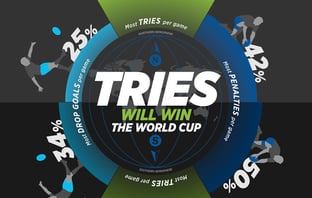
Dr. Paul Bracewell, founding partner and chief data scientist at Dot Loves Data, says the statistics being thrown around in the media about the 2015 Rugby World Cup are typical of many applications of analytics in the business world: there are few actionable insights being provided. So he crunched the numbers and showed that the simplest solution is often the best.

Through a content partnership between Marketo and StopPress, we look at how technology is being used to automate marketing processes and what this means for industry. This time we chat to Vend’s Josh Pickles on his experiences with the Marketo platform.

Samsung has released its Samsung Galaxy Note5 and teamed up with designer menswear brand Working Style to promote the product in New Zealand, creating an analogy between the streamlined design of the device and the fine workmanship of a tailored suit via a TVC by Augusto.

The venn diagram that justified the creation of House of Cards showed that Netflix had big data on its side. And since then it’s had a pretty good run as far as creating original content goes. Its latest series, Narcos, follows the story of drug kingpin Pablo Escobar and it has also been a major hit. And, in keeping with a native ad strategy that has seen it work with The New York Times to promote Orange is the New Black, The Atlantic to promote House of Cards and Wired to promote a new era of TV, it’s called on The Wall St Journal’s commercial content division Custom Studios to create an impressive indepth series of the economics of the cocaine trade.

While everyone’s automotive attention is currently on the sneaky emissions-dodging Germans, Honda continues to pump out the advertising gems and, following in the footsteps of the classic Rube Goldberg effort Cog, the attention-grabbing Hands, the very clever The Other Side and the mind-hacking Keep Up, it’s weaved together around 3,000 hand-drawn images and used the power of stop motion to show 60 years of innovation.
Following on from the recent consolidation of the Slingshot, Flip and Orcon advertising accounts, M2 Group has released its first ad campaign via its recently appointed creative agency Rapp.

Guess what’s projected to be the fastest-growing business in the US? Apps? The ‘sharing’ economy? The internet of things? Big data? It’s actually … (imagine you hadn’t read the headline or seen the accompanying images) marijuana. So how far away is it in New Zealand? And what opportunities might there be for savvy entrepreneurs and marketers? Henry Oliver gets the rub of the green.
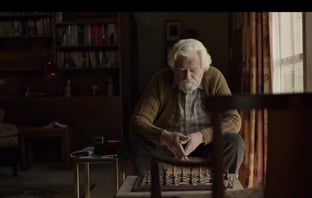
Earlier this year, Vodafone changed creative direction with the introduction of an adorable porcine character named Piggy Sue, whose heartfelt story relayed the point that ‘life’s better together’. And now, the red telco has built on the positioning with a new ad that shows the value of mobile technology in keeping people connected through a brief story about a grandfather playing a game of chess with his grandson.

As is increasingly becoming clear, brands can no longer expect to put the bait out and wait for its audience to come. A bit more is required these days to target the more distracted modern audience, and brands are having to travel to audience-territory or risk being ignored. A big brand which has cottoned onto this is Sky TV which (along with a number of other brands) has now joined image and video-sharing app Snapchat in an attempt to target a millennial audience, to generate interest in its Rugby World Cup 2015 coverage.

Online browsing through smartphones is exploding in the local market. But Sizmek’s Carolyn Bollaci believes there’s a disconnect between the level of consumption and the quality of the ads being served.

House and garden brand Unilever has released a short film about a weary tree that leaves the rainforest, after the realisation it might be safer in the city.

With digital revenue still not measuring up to print losses and ad blockers becoming more common in the top-right corners of browsers, media owners increasingly have to reassess how they go about sustaining their online businesses. And over the last few weeks, Tangible Media and Bauer, two of the nation’s biggest magazine publishers, illustrated there’s no concrete rule applicable to doing this, with the pair taking divergent paths as they set out create commercially sustainable online properties.
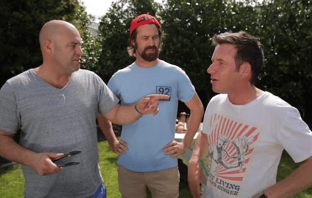
It’s a conversation that happens twice a year, once near the beginning and once near the end. Do the clocks go back or forward one hour? The conversation was probably the result of many arguments back in the day before the internet and smartphones came along and adjusted time automatically for us. But still, the debate continues. That’s what Leigh Hart, Millen Baird and Jason Hoyte have tapped into for this new Hellers ad, by Moon Media in conjunction with Simpatico Advertising, in probably the most confusing way possible.

In an ongoing series, StopPress talks to a range of newsmakers to find out how those trying to shine lights into dark places are keeping their own lights on and whether commercial realities are leading to editorial compromise. Next up, Ben Fahy talks with TVNZ’s chief executive Kevin Kenrick.
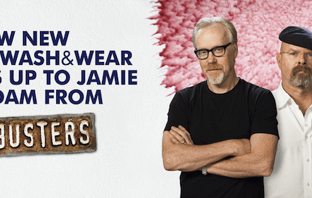
Dulux has harnessed the power of the MythBusters for its latest campaign through OMD to prove whether or not Dulux’s new ‘Wash&Wear’ paint is up to scratch in four new TVCs.
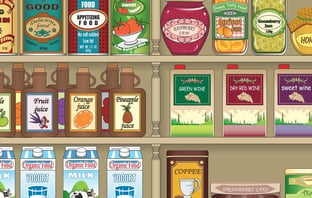
At the moment, it is near impossible to escape the rugby madness that has hypnotised the nation. Many of our beloved products from the supermarket have turned black, one of which being Anchor’s milk bottles, which turned the shade in support of the All Blacks. Dow Design provided us some insights on what makes good product design, and what sells.