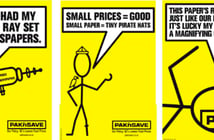
Please don’t read this book
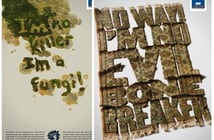
Paul Catmur’s take on ‘Changing the world is the only fit work for a grown man’, an eyewitness account of the life and times of advertising visionary Howard Luck Gossage.
The latest agency news, campaigns and client wins (and losses) making headlines across Aotearoa.
Paul Catmur’s take on ‘Changing the world is the only fit work for a grown man’, an eyewitness account of the life and times of advertising visionary Howard Luck Gossage.
Last year Sealord and Greenpeace got into a bit of a stoush after the environmental group’s ‘Nice logo. Bad tuna’ campaign aimed to draw attention to what it believed was a seafood company “buying its tuna from fishing companies that are needlessly destroying marine life”. Sealord called it misleading in the extreme and got its lawyers involved. And it might have to give them another call, because following up from the company’s first ever brand campaign by Saatchi & Saatchi, Greenpeace has released a spoof ad that again takes aim at Sealord’s sustainable credentials.
The first season of The Block NZ was a huge success for MediaWorks. For the sponsors, however, it surpassed even their high expectations of what television can do.
TSB managed to get itself on TV remarkably quickly after the announcement of the National Bank/ANZ fusion with a message aimed directly at the customers who see the rebrand as an opportunity to switch. And, as expected, the rest of the banks were close behind with their own various overtures.
BNZ’s teaser campaign reached its denouement last night, launching its new brand platform ‘Be Good with money’ and adding some spice to an already pretty spicy financial marketing scene after last week’s formal announcement about the cessation of the National Bank brand. BNZ’s chief marketing officer Craig Herbison talks about starting conversations, breaking taboos and focusing on the bigger issue.
Fly Buys’ new motto ‘Every time you swipe, something good happens’ became quite literal recently, with some interactive Adshels in Auckland and Wellington injecting some fun into the city streets.
After three weeks of TV ads, hundreds of mystery billboards, a few spray painted footpaths, a hijacked Twitter account that sent around 100 people to a fake money drop, and a fair bit of speculation about who was behind the ‘Money is Bad/Money is Good’ teaser campaign, our suspicions were confirmed last night when the BNZ logo came into view alongside its new tagline ‘Be good with money’.
When mainstream media outlets put their minds to it, they can be a powerful force for good. Campbell Live, which was in the headlines today after the announcement about is main rival Close Up, has given it a good nudge this year with a series of fundraising initiatives and it’s been shining a light on child poverty in New Zealand and its social and economic impacts this week. To raise funds, it’s instituted Lunchbox day with KidsCan and there are a number of businesses and community organisations doing their bit around the country. So as you slip back to work from your Friday power lunch, either text lunch to 8595 to make a $3 donation or harass the boss to come up with some cash. Or both.
The axe is hovering over Close Up after a release was sent out yesterday saying it was looking at a ‘proposal’ to switch it off in favour of what TVNZ’s news and current affairs head Ross Dagan calls a “new daily current affairs show with a distinctively different format”. Most believe it’s already a done deal, and if it goes ahead, the show will finish up by the end of the year, bringing an end to a format that’s been running for 23 years.
There were a few raised eyebrows when Telecom chose a turtle to play the role of brand mascot in the new Tommy and Boris campaign. And Vodafone has taken the opportunity to subtly poke fun at its major competitor with a cheeky wee number starring its spokesboy James Rolleston and a greyhound called metaphor.
APN went to plenty of trouble to promote the recent changes to the New Zealand Herald and nzherald.co.nz, with a fancy TVC, a host of print and digital advertising and a microsite dedicated to keeping readers and advertisers informed. All up, the campaign had a ratecard value of $4 million (although it used its own media channels extensively). And, in what could either be seen as an example of how far newspaper marketing has progressed, or an example of how the newspaper industry didn’t need to do jack to maintain its readers and advertisers back in the day, it was slightly more advanced than the campaign the Herald ran to preview its last major format change in 1960.
The fusing of two financial entities that between them have nearly half of the population on their books is a massive—and massively complicated—task, both logistically in terms of back-end systems and emotionally in terms of assuaging customers’ fears through communications. It’s been in the planning for a while, of course, and in response to yesterday’s official announcement that ANZ would be phasing out the National Bank over the next two years, Whybin\TBWA is about to launch a big integrated campaign that “heralds the start of a new era for ANZ and reassures customers they will be getting the best of both worlds”.
After a tender process that ended up attracting over 50 submissions, Sydney agency Iris was chosen to lead Christchurch and Canterbury Tourism’s push to bring Aussies back to the region after a 43 percent decline in visitor numbers since the earthquake. And it has launched a campaign based around a series of long-form mockumentary episodes, with Mayor Bob Parker playing on Australia’s love of oversized novelty structures and real-time images used to show how far the city has moved on.
Smaller, independent agencies are often going on about their nimbleness and agility in comparison to the big, internationally-owned full-service shops. And smaller, independent financial institutions are always going on about the level of service and local ownership compared to the big, foreign-owned banks. And the two things have collided with TSB and Special Group’s new campaign, which aims to make hay after the black horse has bolted and offers its support to soon-to-be ex-National Bank customers.
The vultures have been circling for a while now, and the official announcement that the National Bank brand is finally heading for the knacker’s yard and will be folded into its Australian-owned parent bank ANZ over the next two years, with remaining branches rebranded at an estimated cost of $100 million, marks what will be one of the biggest changes to the financial marketing landscape in over a decade. NZ Marketing ran a cover story on the looming disappearance of the black horse and what kind of treasures were up for grabs back in May. Here’s an edited version of that story.
A lot of effort has gone into rehashing the RSVP & Nexus Awards. New categories have been added, judging has been tweaked, the entry process has been simplified and the whole shebang has been renamed as the New Zealand Direct Marketing Awards. And, appropriately, those responsible for the changes have attempted to draw attention to them—and show that ‘blood has been spilt’ to reach a consensus—with a nice direct campaign that included packs of fake blood. But when we opened our package this morning we couldn’t help but chortle at the irony of a direct marketing campaign promoting the new Direct Marketing Awards that was addressed to someone else.
He’s a world-class academic, a gifted leader and a massive attribute to the marketing community. And now The University of Auckland’s Rod Brodie takes his rightful place in the TVNZ Marketing Hall of Fame.
From the 100% Pure New Zealand campaign to the launch of the Honda City, George Hickton has proven time and time again that marketing is a philosophy that underpins a business, rather than just a function within it.
By mobilising apathetic New Zealanders to see if they could get a better deal on their power, the What’s My Number campaign changed the electricity retail landscape.
Based on the nugget that Kiwis wanted homemade desserts without having to make them at home, Dollop has found a sweet niche. And, on the smell of an oily rag and with a good sprinkling of intuition, it has quickly become a nationally recognised brand and doubled its sales in the past year.
Gravity Coffee’s week-long intern experiment, Sky’s awkward dead air, Orcon’s new feline ambassadors, Cool Charm’s street cred and Ogilvy’s Shopping Channel clasp the TVC of the Week trophy to their bosoms this week.
TVNZ and BrandWorld sent their new The Extra Mile masthead into the wild this week, and promptly apologised for hosting the advertorial segment on its news website. And MediaWorks is playing in the masthead sandpit as well after launching a new integrated advertising platform called Focus TV late last month. And, in what it sees as branded content—and what others might see as another example of commerce encroaching further on editorial integrity—the host and TV3’s ex weather presenter Toni Marsh is being called a ‘reporter’.
The Promax BDA awards aim to celebrate the world’s best brand, creative and marketing initiatives within the television industry—and the agencies and network creative departments responsible for them. And TVNZ and Spicer & Martin, Sky and Brandspank, and MediaWorks all returned home from the Australia/New Zealand ceremony last week in Sydney with a few gongs between them.
The cut-off looms for this year’s Maggies, a competition that lets the great unwashed decide on New Zealand’s best magazine covers. So, esteemed publishers, editors and minions, enter your covers immediately.
Following on from its win in the Yahoo! New Zealand Digital Strategy Award for its LiptonSlide campaign, PHDiQ has taken out the latest edition of the competition for its launch of the Samsung Galaxy III on behalf of Vodafone.
Given New Zealand’s feverish excitement during the Olympics when our gold medal tally was greater than that of the usually better performing Australian Olympic team, there’s still a fairly healthy dose of ‘friendly’ rivalry between the two nations. Over the years there’s been a bit of talk about New Zealand becoming the seventh state (and it happened briefly during the Games when, for the first time since 1912, the two nations came together as a rogue state known as Aus Zealand) and, from a marketing perspective, plenty of companies have decided to take care of business in New Zealand from Australia. But subtleties and local nuances are important when it comes to communications, as TVNZ-NZ Marketing Award winners Volkswagen and Z Energy can attest, and some things that work in other markets might not work here. And that’s the card British American Tobacco has played in the latest instalment of G2 Sydney’s animated Agree Disagree campaign, which taps into New Zealand’s patriotic, independent, Aussie-hating streak and questions the wisdom of following Australia’s lead on plain packaging legislation.
Sponsorship is less about logos on hoardings and more about activation these days (although ANZ might disagree after its logo-fest at The Cloud for Valerie Adams’ gold medal ceremony last week). In fact, some believe the old ratio of three dollars for every one spent on the sponsorship should now be upped to five. So in an effort to offer some added value to All Blacks fans, Adidas and Carat have unveiled Game Day, a Facebook application that lets them follow live commentary, comment on the game, track up-to-the-minute stats, access player and team profiles, weigh in on referee calls, vote for man of the match, and buy Adidas gear.
There is perhaps no greater force in the online world than cat videos. Wired recently delved into what it called the online cat-industrial complex, ad agency John St spoofed the feline fascination brilliantly with the world’s first cat advertising agency, and a recent cat video film festival in the US drew 10,000 people (it was won by Henri 2: paw de deux). Now Orcon is embracing the zeitgeist with a new campaign starring animated cats Daisy and Gav.
Just Juice has Antonia Prebble, Symbio has Lorraine Downes and now Cool Charm is aiming to up its street cred by launching a campaign starring its new ambassador: Kiwi electropopper Zowie.
As the old idiom goes, bad news travels fast. And, in a world where the ‘corporate fail’ is prime social media—and, increasingly, mainstream media—fodder, spreading the good news is becoming increasingly difficult. So, in an effort to balance the ledger somewhat, TVNZ and BrandWorld set up a new platform called The Extra Mile—almost like the commercial equivalent of One News’ Good Sorts segment—to bring more attention to some of those positive tales. And the inaugural episode was broadcast last night on TV One.
When it comes to dairy products, there’s a perception they’re all basically the same. So how do you convince 13 different markets in the Pacific to choose your brand? Fonterra aimed for their hearts—and, in doing so, tried to make those hearts a bit healthier.
State’s ‘With You in the Water’ programme has found the sponsorship sweet spot and improved its standing in the eyes of New Zealanders by helping to keep them and their families safe.
Subcard, the customer loyalty programme of Subway in New Zealand, is one of the most progressive loyalty schemes in the country. And, as it turns out, it’s also one of the most progressive loyalty schemes in the world, because it has been named as a winner of the third annual Colloquy Loyalty Awards, an event presented by LoyaltyOne and Visa in the United States to honour groundbreaking innovations in loyalty.
TBWA’s ‘The Mission Continues’ for 2degrees took the annual Colmar Brunton Ad Impact award, and it’s continued its winning streak by claiming victory in the August round for its 100% Middle-earth campaign for Tourism New Zealand.
Back in 2007, a man by the name of Mike Orange decided he needed to start looking after himself a bit better. In the realm of male cosmetics, there were plenty of hand me downs from corporate monsters used to producing feminine products, but nothing that “promised quality at a reasonable price without the made up words and fake science”. So DirtyMan skincare was born—and, rather appropriately, it was born in a dingey bathroom on a building site. So, for all those men questioning themselves after watching the latest Lindaeur ad, or all those women who want their men to be more manly, we’ve got a couple of prize packs to give away and all you have to do is tell us a dirty joke.
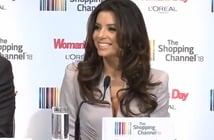
The Greg Partington-owned Shopping Channel launches on 1 October on Sky and Freeview channel 18. And, along with a series of ads featuring some of the hosts imploring Kiwi businesses to sell their stuff on the box, plenty of giveaways on Facebook and a fair bit of social media activity, Ogilvy and Robber’s Dog have also released a new TVC, one of the first projects new executive creative director Angus Hennah got stuck into after he arrived at the agency in July.