Media expert Antony Young rounds up media news from beyond Aotearoa in a regular column for StopPress.
This week:
- Fifa ponders expanding the 2030 World Cup to 64 teams as a rights sales tactic.
- Netflix, Sony and Paramount look to Letterboxd as bidding war brews.
- The Economist continues with its 40-year old outdoor campaign.
- Publishers weigh up the pros and cons of quitting Google search.
- Microsoft’s Copilot signs deal with Australia’s Nine Entertainment.
- Influencers nearly overtake search for Gen Z
Fifa’s 64-team plan is a rights sales tactic
Fifa is examining a 64-team 2030 World Cup as it prepares to shop US broadcast rights for 2030 and 2034. More teams means more inventory to sell and a 64-team format with 16 groups of four would jump the tournament from 104 games to 128.
This is 24 extra games versus the 48-team version, and double the 64-game total the old 32-team format ran in its entirety. Reports peg Fifa’s asking price at $1.5 to 2 billion, more than triple what Fox is paying for this year’s tournament, with Netflix, YouTube, Apple and Disney all circling.
More games makes a split-rights deal easier to sell: even a straight 50-50 divide between a streamer and a linear network would hand each partner 64 games, enough to build a real windows strategy rather than fighting over scraps. Fox did massively well out of this year’s tournament with added inventory through the hydration breaks and 42 million viewers watching the US crash out 4-1 to Belgium. Viewing numbers like that are closer to what broadcasters would see for an NFL playoff match and are unprecedented for football/soccer.
Netflix, Sony and Paramount eyes NZ-founded Letterboxd, bidding war brews
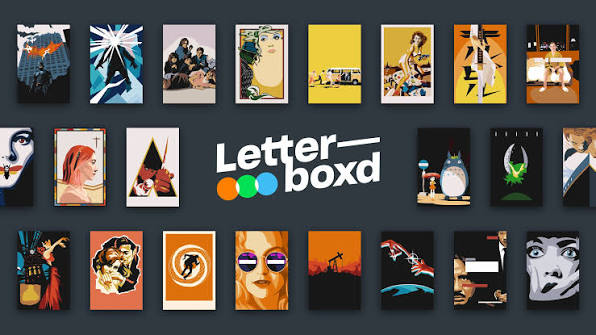
Netflix, Sony Pictures and Paramount are all circling Letterboxd, a NZ-founded social media platform that film lovers rate, review and log films. The platform now has 30 million-plus members after adding 10 million in the past year alone.
The app is majority-owned by the Canadian holding company Tiny, which acquired a 60% share in the business in 2023. Co-founders Matthew Buchanan and Karl von Randow, two Auckland web developers and designers who established Letterboxd in 2011, own the remaining 40%.
The film-review platform in 2023 sat at a $50-60 million valuation; bankers are now floating $250 million, a four-fold jump. Now, for the awkward bit: Rotten Tomatoes spent years under NBCUniversal ownership and copped criticism for it, while IMDb sits inside Amazon.
A studio owning the platform where people rate that studio’s films is seen as a conflict, Sony, Netflix and Paramount have all sat in on early meetings, alongside private equity firms RedBird and TPG and Reddit co-founder Alexis Ohanian, with the process being run by investment bank LionTree.
The Economist’s timeless outdoor campaign continues
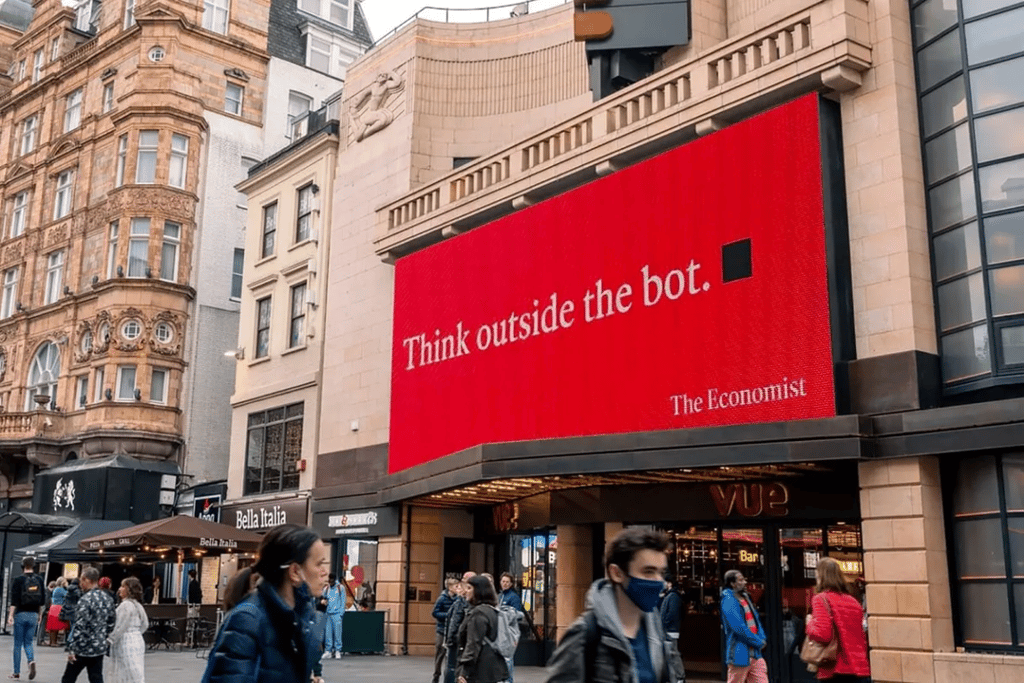
The Economist’s iconic red-and-white poster work has spanned four decades. Originally conceived by Abbot Mead Vicker, it continues to endure with an updated AI-skeptic follow-up from creative shop Cocogun.
The brand’s stripped-back voice still lands where louder, social-first design doesn’t. Three executions carry it: “Think outside the bot” and “actual intelligence” while a third leans on the same spare red palette and serif type to argue that human judgement, not a chatbot still calls the shots.


Publishers weigh quitting Google search
For decades, publishers who have relied on Google to drive content traffic and treasured its search ranking, are now threatening walking away from the platform.
Content delivery network Cloudflare which hosts roughly one-fifth of the websites in the world just handed Google an ultimatum: from September 15, every new site and free-tier customer gets bot settings that block “multi-purpose crawlers” on ad-bearing pages by default. Google’s crawler that indexes for search also trains Gemini in one pass.
USA Today Inc. says it’s prepared to delist from Google entirely within six to twelve months. Beehiiv’s creator network can now do the same. The math is blunt: once search traffic falls far enough, the value of showing up drops below the value of withholding content as leverage, and years of declining referral traffic have quietly made that trade thinkable.
Google’s extended opt-out and new UK controls exist, but publishers don’t trust a system where visibility depends on Google’s discretion rather than a hard block.
Microsoft’s Copilot to pay Australia media for AI use
Microsoft just signed its first Australian AI media deal with Nine Entertainment. The one-year pilot allows Microsoft’s Copilot, the AI digital assistant integrated into Word, Excel, Outlook and Teams, to reference the text of news articles published by Nine’s mastheads during AI searches to contextualise and keep answers up to date.
It will let Copilot reference Sydney Morning Herald, The Age, AFR, Brisbane Times and WA Today content, serving snippets and summaries that link back to Nine’s paywall. Nine didn’t lodge an ASX statement, which under its own disclosure threshold means the deal is worth under roughly $25 million a year.
It lands as Canberra pushes the News Bargaining Incentive, aimed at forcing Google, Meta and TikTok to pay upwards of $200 million a year for hosting Australian news, and gives Nine a commercial precedent to point to while Google still won’t play ball. News Corp has deals with OpenAI and Meta while suing Perplexity.
Influencers nearly overtake search for Gen Z
For Gen Z, influencers and search engines are now a coin flip: 42% discover products via search, 41% via influencers, per YouGov’s 52-week rolling dataset.
Zoom out to all US adults and influencers drop to ninth place at 27%, well behind word of mouth (51%), retail browsing (44%) and search (42%).
The generational split is the story here. TV and radio still work for Boomers, who cite broadcast ads at 41% versus just 13% for influencers; among Gen Z that ratio inverts almost exactly, 19% to 41%. For Gen Z, MrBeast leads trust scores at 34%, ahead of Marie Kondo at 32%.