Media expert Antony Young rounds up media news from beyond Aotearoa in a regular column for StopPress.
This week:
- Brands are returning to music videos as an ad format.
- YouTube will now start overlaying AI disclosures on its videos.
- Spotify is now narrating magazines to try and convert more people to audio books.
- Google is moving from search to AI Mode.
- AI is the new non-GMO label.
- Kiwi footballer Tim Payne has become the new face of the 2026 World Cup.
Brands are making music videos again
The music video is back as an ad format. Gap, Hawaiian Tropic, Lume and Diablo are all running long-form spots styled as music videos, betting that two minutes of entertainment beats a 30-second brand spot for attention.
Hawaiian Tropic’s senior brand manager Shaylin Winterer puts it plainly: “Attention isn’t necessarily about shorter versus longer, it’s about whether something is entertaining enough.”
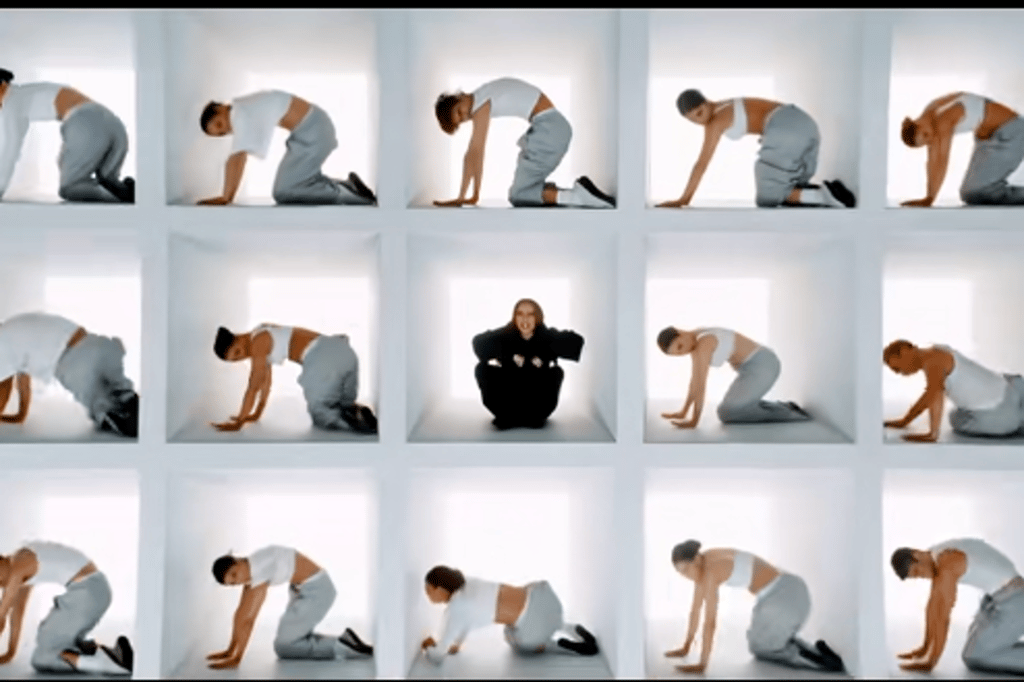
Gap has been a leader in this genre. The brand has, in the past, created videos for Missy Elliott, Daft Punk and Troye Sivan. They find artists who are “known, but just about to explode.” They timed Tyla just before her Grammy win, Troye Sivan just before his Charli XCX tour. The clothes are always on screen, but the sell is buried in choreography and styling rather than a logo slap. Their recent pick, Young Miko, tracks the Latin music wave.
The result is something consumers actually anticipate. Agency exec Oli Wash says once a brand does this consistently, audiences start asking: “I wonder what they’re going to do next.” That’s earned attention, not bought.
The format only works with the right brand fit. More than half of gaming brand Diablo’s core players love heavy metal, which is how Korn ended up recording their first new track in four years for a game ad.
Artists are increasingly motivated too: per-stream revenue is down, touring costs are up, and a seven-figure brand deal that doubles as a music video release isn’t “selling out” anymore.
YouTube to flag AI content
Starting this month, YouTube will move “AI” disclosures from the buried video description to directly below the player and onto Shorts as a visible overlay. It’s no longer relying on creators to self-disclose: YouTube will now automatically scan for “photorealistic” AI content and apply labels itself, using Google’s SynthID watermarking tool.
YouTube is explicit that labels won’t affect recommendations or monetisation. So the crackdown is really a transparency exercise, not a penalty. Brands and publishers using AI for stylised or animated content are fine, but anything that could pass for genuine footage is what’s being targeted.
Spotify now wants you to listen to magazines
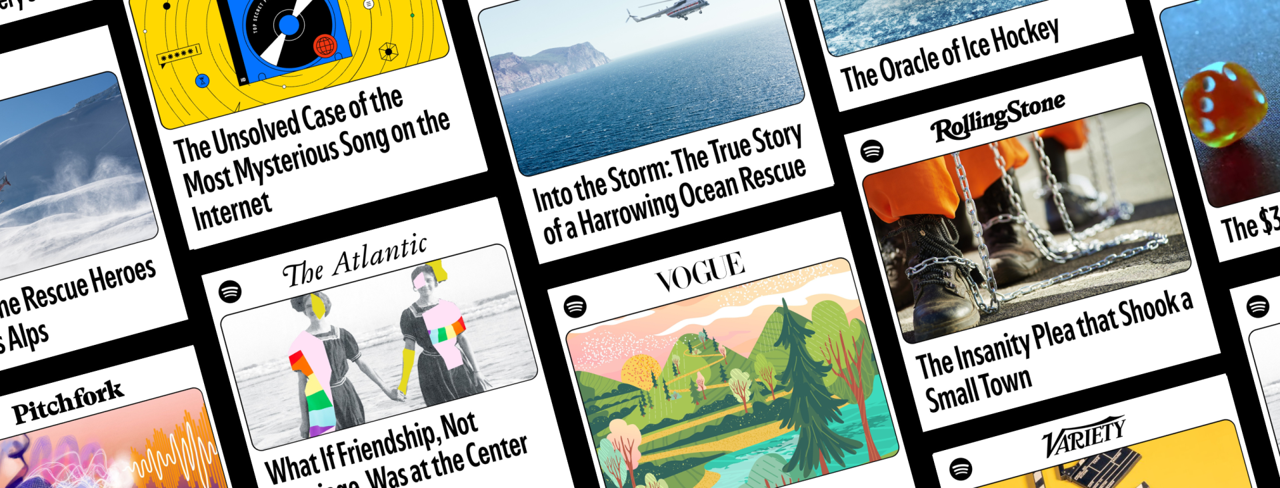
Spotify is now narrating magazine articles. Starting this week, premium subscribers can listen to over 650 long-form pieces from Rolling Stone, The Atlantic, Vogue, Wired and Vanity Fair drawn from their existing 15 monthly audiobook hours. Free users can buy individual articles for $1.99. The narration mixes human and AI voices, with AI-read portions labelled.
According to Tech Crunch, the move is less about magazines and more about audiobook conversion. Spotify’s licensing lead Colleen Prendergast described the articles as a way to “build healthy listening habits, ultimately growing engagement with books over time.”
Essentially, they are using shorter content as a funnel into more profitable long-form content. The question for publishers like The Atlantic and Condé Nast titles is whether a $1.99 à la carte listen cannibalises their own subscription or reaches a reader who was never going to pay for one.
Google is transitioning its business model from search to AI Mode
The zero-click era is accelerating faster than most marketers expected. Around 60% of Google searches now end without a visit to any external website, rising to roughly 77% on mobile. When an AI overview appears, the impact becomes far more dramatic. New Ahrefs data shows organic click-through rates for the top-ranking result are down 58%, almost double the 34.5% decline the company measured just eight months earlier.
Meanwhile, Google is treating AI Mode as a commercial surface, not a protected experience, and the ad inventory is already expanding. The company is quietly testing placing brand and product ads directly below AI-generated responses. The ads won’t run in Gemini for now, though Google says whatever works in AI Mode should translate there eventually. Conversational AI prompts carry different user expectations than a keyword search, and Google knows it.
“You have to rethink how to approach ads and what an ad is,” says Shashi Thakur, VP and GM of Google Search Ads.
AI is the new non-GMO label
A Nike post on X called Jannik Sinner’s career “his story in the making,” phrasing someone flagged as a “GPT AI-ism.” Nike almost certainly didn’t use AI to write it. Didn’t matter. Hundreds of responses piled on anyway. That’s the new reality: the AI backlash has gotten broad enough that brands get hit on suspicion alone.
AI has been taking a bit of a beating lately. A Stanford/UC Berkeley poll found less than half of Americans think the country should push ahead with AI development. The same week, AI was booed at commencement speeches, a hyped book on AI and “truth” was caught containing AI-fabricated quotes, and Pope Leo XIV announced his next encyclical will address protecting humans in the age of artificial intelligence.
Some brands are treating it like a clean-label opportunity. iHeartMedia runs “Guaranteed Human” as an actual brand pledge. Aerie and Dove have both committed to no AI-generated imagery in marketing. Polaroid is running explicitly anti-AI ads. The positioning echoes the non-GMO playbook, “realness” as a social statement.
And finally, Tim Payne becomes the global face of the World Cup
After this weekend, even my sister who knows nothing about football knows who Tim Payne is!
In less than a week, the All Whites and Wellington Phoenix defender’s Instagram followers surged past four million. As Sports Illustrated noted, he is outpacing every MLB team except the LA Dodgers and New York Yankees, while “No Payne, No Gain” edits, AI-generated songs and calls for Tim Hortons to rename a Vancouver store “Tim Payne’s” spread across social.
And while Lionel Messi is the face of 1 in 4 World Cup ads, thanks to an Argentinian influencer Valen Scarsini, Payne has become the people’s champion and a social media star for the World Cup.