Media expert Antony Young rounds up media news from beyond Aotearoa in a regular column for StopPress.
This week:
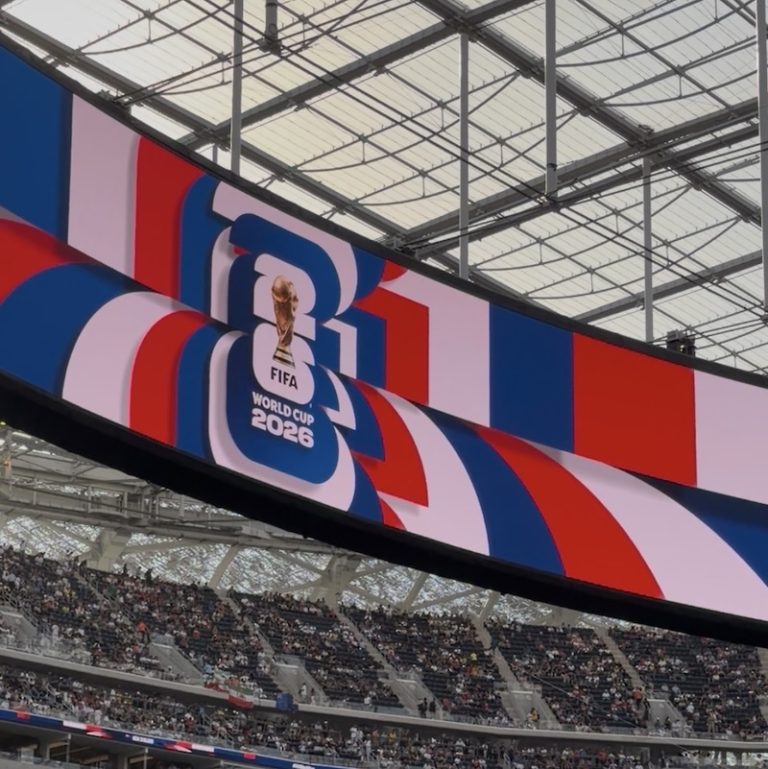
- The most interesting brand work at the 2026 World Cup is leveraging the tournament’s attention without official Fifa sponsorship.
- This year’s Cannes focused on business results, not just creativity.
- At Cannes, marketing rivals Mark Ritson and Byron Sharp agreed more than they disagreed.
- Instagram is turning its TV app into a creator-led streaming platform, moving into streaming territory.
- The UK ASA banned Google search ads from Adidas, Calvin Klein and Uniqlo after none could prove their products were actually recycled.
- As search keywords fall away, publishers are selling ‘questions’ instead.
Three World Cup wins that didn’t pay Fifa a cent
I’m writing this piece from Vancouver just after the All Whites v Belgium match, so am hoping this will let me claim a tax deduction!
The most interesting brand work at the 2026 World Cup leverages the tournament’s attention, despite happening outside Fifa’s official sponsorship deals.
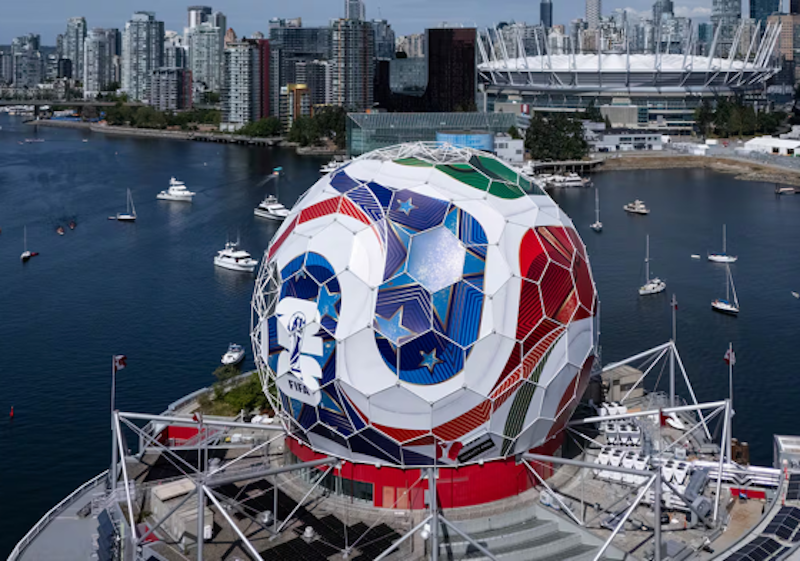
In downtown Vancouver, Adidas benefited big time when the city turned its Science World’s geodesic dome into a giant Trionda match ball, the “Beautiful dome”, complete with a prominent three-stripe logo that Adidas didn’t even have to pay for.
Destination Vancouver and government partners footed the bill. One Reuters photo has already run in 100-plus media outlets, with marketers tipping 100 million impressions before the tournament leaves town.
Levi’s pulled the opposite trick: forced by FIFA’s clean stadium policy to tarp over its Santa Clara stadium naming rights. It left the batwing outline visible, and they leaned into the “Nobody’s gonna know” meme, and turned a compliance order into 2.4 million Instagram likes and 9 million TikTok views.
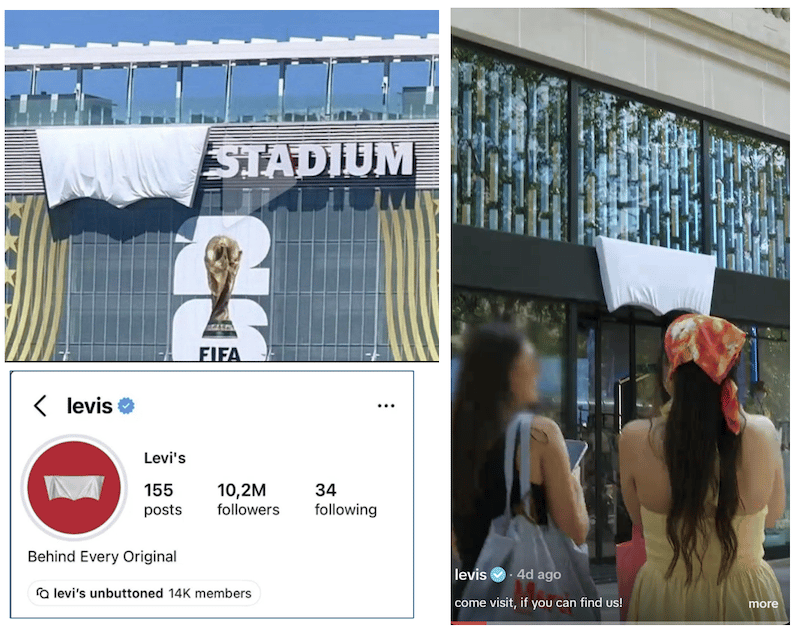
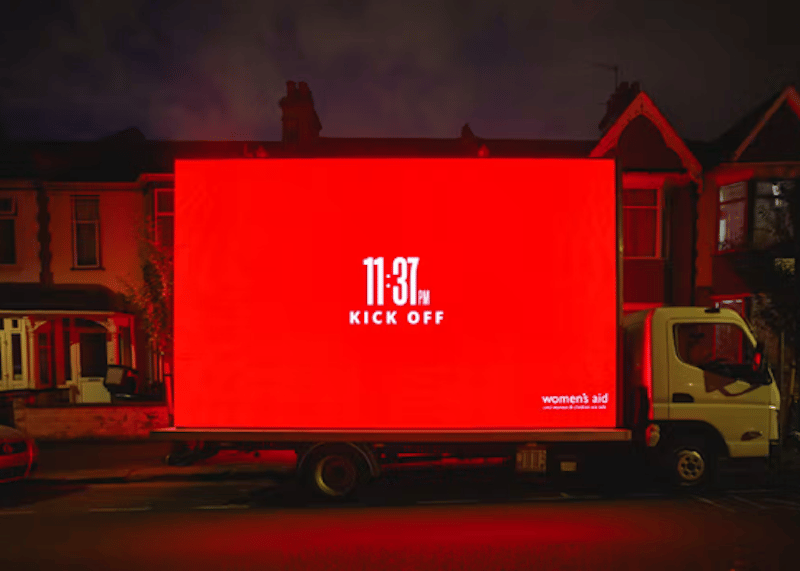
They have rolled out covered logos onto storefronts in Paris, London and beyond. Women’s Aid went the other direction entirely with a powerful campaign hijacking the most-searched matchday question, “What time is kick-off?” The out of home campaign located on sites near pubs and fan zones marked when post-match domestic abuse reports historically spike to plant an alternative kick-off time – 11:37pm.
Cannes 2026: AI agency pitches, marketing results first, Open AI and influencer sell
The other big event taking place last week was Cannes.
A huge congrats to Motion Sickness, McCann NZ and Wellington, Dentsu Creative, Colenso BBDO and Kātene Durie-Doherty for picking up silverware this year.

For me, I am one of those nerds that always enjoy the festival for its presentations and panels over awards and alcohol beverages. This year’s Riviera mood was less rosé, more reckoning.
Publicis arrived with 60-plus closed-door client and investor sessions. CEO Arthur Sadoun’s real message was a warning that the industry’s AI sales pitch has tipped into “overpromising,” pairing inflated speed-and-efficiency claims with aggressive pricing in a race to the bottom that “ultimately shows up in job cuts.” His fix: prove concrete business results.
CMOs, meanwhile, have stopped pretending the Lions are about the work alone notably after last year’s Grand Prix cheating scandal. The consensus is a trophy only counts if tied to a number. Kimberly-Clark’s Patricia Corsi put market-share gains beside her eight Poise Lions in a slide for Wall Street analysts; recruiters confirm marketers rarely are hired on hardware, and Cannes itself added a Creative Brand Lions category to reward strategy over spots.
OpenAI crashed the party, using its first Cannes outing to confirm it’s “clearly in the advertising business now” pitching an “intelligence economy” of intent over Meta’s attention economy, backed by 900 million weekly users, 20% purchase-intent queries, and a $100bn revenue target in four years.
The festival attracted more than 250 celebrity influencers from Alex Cooper to David Dobrik, working an estimated 13,000-strong crowd for brand deals and speaking slots. One Dhar Mann workshop dangling a $200,000 integration as the prize. CMOs are betting on influencer channels that eMarketer says will pull $12.42bn in US brand spend this year.
Ritson and sharp duke it out
Still at Cannes, the marketing world’s two most famous antagonists, Mark Ritson and Byron Sharp, took the Debussy stage at Cannes and to a packed room expecting blood agreed on most points.
Mental availability, distinctive brand assets, mass over niche, the nonsense of purpose and the crime of pulling campaigns after 30 days: broad consensus. The friction centred on a narrow list of issues. Andrew Tindall covered this superbly in The Drum:
Targeting isn’t a sin, it’s a budget reality. Ritson’s two-speed model, mass brand-building for the 95% not in market, targeted activation for the 5% who are drew pushback from Sharp, who called it “purchase availability,” not targeting. But the deeper split is about scale. Sharp describes how the world works for the top FMCG giants. Most brands in that room aren’t operating at that scale. If you’re a challenger or a mid-sized B2B brand, making targeting choices isn’t failure; it’s how you buy enough frequency to register at all.
Distinctiveness gets you noticed, not chosen. Both men agree distinctive brand assets, i.e. logos, colours, sonic cues, “a brand that looks like itself” are underused and abandoned out of boredom. But recognition is table stakes, not a growth strategy. For anyone trying to take share from an entrenched leader, salience maintains a position you already hold it doesn’t build one.
The “how” of memory-building is the missing half. Both speak fluently about building mental availability and “what evokes the brand” and neither answers what kind of work actually creates those cues. The laws tell you what to achieve, not how to make advertising that achieves it. That gap is where most brands fail. So agencies and experience still have a place!

Instagram wants you to scroll your telly
Instagram is expanding its TV app with longer-form video, episodic series and live creator formats, a direct play for the living room screens that Netflix already owns.
It’s a notable pivot for an app built on the vertical, thumb-scrolling Reel. Instagram is testing a dedicated horizontal-video section, and Meta this month began trialing a “Series” feature for serialised Reels across Instagram and Facebook.
Distribution is widening too. The TV app is rolling out to Samsung sets, adding to existing Amazon Fire and Google TV support. New features lean into shared viewing: personalised channels organised by creator or topic (comedy, sports), phone-to-TV casting of Reels and saved content and Stories playback inside the app for the first time.
Instagram has long fought TikTok and YouTube for attention; chasing episodic and live formats on the big screen puts it in the path of subscription streamers and their ad tiers. For media buyers and creators, the signal is that creator content is being repackaged for the highest-CPM screen in the house and the living room is becoming contested territory between social platforms and traditional streaming.
ASA bans Adidas, Calvin Klein, Uniqlo green ad claims
The fight over greenwashing continues.
The UK ASA banned Google search ads from Adidas, Calvin Klein and Uniqlo after none could prove their products were actually ‘recycled’.
Adidas pushed “recycled running shoes” then admitted it has no recycled shoe range, just some products with recycled materials. Calvin Klein argued no one would read its “recycled” tops claim as covering the whole range. Uniqlo leaned on an international certification scheme.
The ASA wasn’t buying any of it ruling absolute terms like “recycled” tell shoppers a product is made entirely from recycled material, and that bar demands “a high level of substantiation.” The regulator is now reading green adjectives literally. “Recycled” without a qualifier means 100%, and the gap between marketing shorthand and what legal can document is exactly where the ban lands.
Publishers bet on the ‘Q&A economy’
As search keywords fall away, publishers are selling ‘questions’ instead.
BuzzFeed, DMGT, Frommer’s and Sports Illustrated have signed on to Gist, ProRata’s white-label AI platform, which drops a “Question Bar” into their pages and answers reader queries from their own content. This allows sites to keep traffic on-site instead of bleeding it to ChatGPT or Gemini. Their pitch to advertisers is a new auction logic: there’s no keyword to bid against anymore.
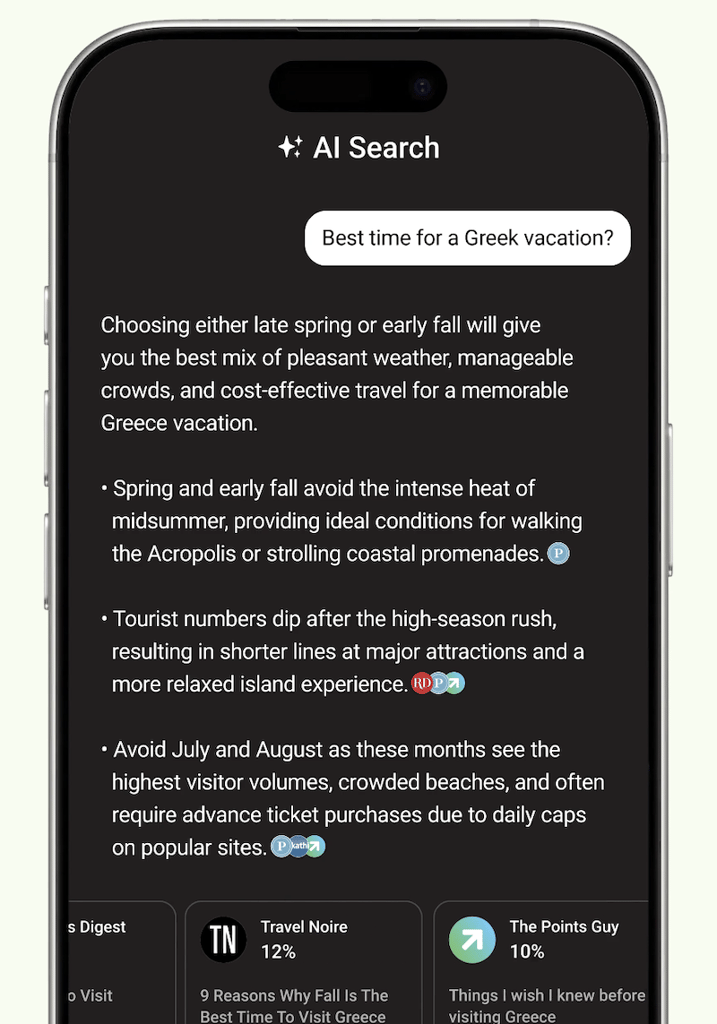
Gist CMO Peter Sloterdyk frames it, if Neutrogena wants to own a sunscreen answer, it now has to predict the question and pre-write the response. ProRata has raised over $75m with plans to rebuild discovery for an era where consumers now start with an AI engine, not Google.
Rival Taboola’s DeeperDive is already live on USA Today, HuffPost UK and Reach. Gist says questions are tracking toward a billion enquiries a month. Publishers are looking to sell these ads and monetise their first-party data.