The Compendium: 15 August
Our weekly wrap of good things, strange things, funny things and other things from inside the intertubes.
The latest agency news, campaigns and client wins (and losses) making headlines across Aotearoa.
Our weekly wrap of good things, strange things, funny things and other things from inside the intertubes.
The Magazine Publishers Association has announced the finalists for the industry’s annual awards with 19 judges making the calls. Bauer has the lion’s share with 43 of its entries making the finals, Fairfax with 21, Tangible with 15, Kowhai Media with nine, as well as a few independent publishers and columnists making the list.
Following the receivership of MediaWeb, NZ Management Magazine was bought by the NZIM and given to Adrenalin to publish alongside its existing title NZ Business. MediaWeb used to own the Deloitte Top 200 Awards, which celebrate New Zealand’s most outstanding large businesses and their people, and the event was seen as a “cash cow and jewel in the crown” of the company. But it’s thought the IP was transferred to Deloitte when MediaWeb couldn’t pay the bills, so, without anyone to run this year’s awards, it recently put that business on the block and APN New Zealand has won it. PLUS: Toni Myers’ LinkedIn profile gets a slap from a former MediaWeb employee.
As part of our series dedicated to celebrating good work and inspiring a bit more generosity, Corey Chalmers, Saatchi & Saatchi’s recently appointed co-executive creative director, big ups the marketing campaign behind What We Do in the Shadows.
The business world is infested with buzzwords, which is why it’s important for comical raps to try and jolt people back into reality and show them just how douchey they sound when using them.
Air New Zealand is crazy about rugby. And, given the number of Aussies that come to New Zealand for the snow, it’s also quite a big fan of skiing. Now, with the help of Host Sydney and Diaries Downunder, it’s combined the two in spectacular fashion as part of its online video campaign ‘Meanwhile in… New Zealand’.
A new anti-obesity campaign released by Children’s Healthcare of Atlanta has gone nuts on the internet for its portrayal of a pair of parents driving their child to an early grave by enabling his poor eating habits. The spot, shot in reverse chronology, moves from a scene of the son in the hospital through various key events that link to the moment. As the narrative progresses, it soon becomes evident that the parents have been integrally involved in not only creating the son’s bad eating habits but also in facilitating them.
In a world where attention is a currency, the sweet spot sometimes seems to be polarity. Let’s call it the Paul Henry effect, where some watch because of love, and some watch because of hate. That formula often applies to the world of advertising. And MasterCard’s recent efforts starring an over-zealous (and quite lucky) All Blacks fan called Tim are a good example of that in action. Now he’s back in his third appearance for the brand—and he’s as violating as ever.
Red Bull has appointed Vizeum to its media account, making the Dentsu Aegis-owned agency responsible for the Austrian-owned company’s media strategy, and planning and buying duties across New Zealand.
In moves parallel to Nextdoor in the US, Kiwi private neighbourhood website Neighbourly is shacking up with councils. Last month it signed an agreement with Rotorua District Council to be an official communications platform to complement existing channels, and Neighbourly says it’s in discussion with a further 26 around New Zealand.
All around the world, the advertising cash is flowing online. But, in some cases, it’s been proven to be flowing to the wrong places. The Interactive Advertising Bureau (IAB) in the US has been doing all it can to deal with sophisticated scams involving non-human traffic that are thought to be stealing billions from advertisers, and the New Zealand outpost is attempting to ensure its house is in order too with the formation of a new standards and guidelines council.
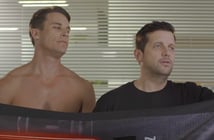
Earlier this week The Edge was revealed as the brand behind Love You Man, a campaign that will undoubtedly ruffle the feathers of those with slightly more conservative views on the act of marriage. With the confirmation of Jay-Jay, Mike and Dom’s involvement came the announcement that the campaign forms part of a competition that will award a trip to next year’s Rugby World Cup to a pair of best mates who take their friendship to the next level by exchanging vows.
While Apple is busy showing off some of the esoteric ways you can use its smartphone, downloading an app that could make fart sounds is, for many, still one of the most attractive features of this technology. And Beat Bowel Cancer Aotearoa (BBCA) and Whybin\TBWA have decided to embrace the entertainment value of anal whisperings with bumsarefullofsurprises.org.nz, a website that lets the public add fart sounds to any YouTube video.
Vodafone has collaborated with Image Centre-owned* digital media agency Ngage and APN Outdoor to launch a series of interactive LED billboards that members of the public will be able to engage with via their mobile phones. The content displayed on each of the three billboards, currently on display in Ponsonby, Eden Terrace and Parnell, is delivered in real time via Vodafone’s machine-to-machine technology, which negates the need for additional cabling and infrastructure.
Mobile development company Sush Mobile kicked off in 2008 and quickly gained a solid reputation for its various apps and solutions. And just six years later it has been bought by Asia Pacific financial tech company Finzsoft for $1.9 million.
There’s been plenty of discussion about the rise of subscription video ondemand services recently, with Spark’s Lightbox getting set to launch, Sky announcing it is planning a new Netflix-type service and Slingshot offering a controversial workaround allowing Kiwis to access overseas providers. But sitting relatively quietly in the background is Freeview, which is now being used in 67 percent of New Zealand homes and is hoping to launch an ondemand service later in the year that will cater to the increasing number of New Zealanders with connected TVs. General manager Sam Irvine says it will offer “the seamless integration of linear broadcast TV and TV over the internet”, so what does it mean for the gogglebox scene?
For this year’s edition of National Rail Safety Week, KiwiRail and TrackSafe NZ have followed in the New Zealand Transport Association’s footsteps by launching a game to get their message across to the masses.
Mensa-wannabes rejoice – you can massage your neuroplasticity with a Mensa-supported Brain Training Zone by Russian cybersecurity company Kaspersky Labs. It’s a site with hundreds of brain training games, puzzles and IQ tests “to get your cognitive thinking up to scratch”.
Colenso BBDO has partnered with Mountain Dew to develop a novel range of skateboard decks that reveal a hidden message as the skater grinds away the bottom. And what makes this project even more interesting is that Colenso owns a share of the IP that comes with the innovation, meaning that the agency could stand to profit if the concept attracts interest from players in the skating industry (production company Finch officially owns the IP and Colenso shares in it).
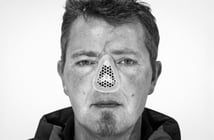
Over the last few weeks the nation’s political parties have been furiously hammering stakes into the ground in an effort to erect their campaign posters. And while most political ads feature smiling politicians with perfectly combed hair, the Conservative Party’s Colin Craig has instead opted for a monochrome death stare for his campaign.
The Best Awards finalists have been announced, with a bevy of great design from New Zealand and Australasia. The annual awards are organised by Designers Institute of New Zealand and names the very best in graphic, spatial, product and interactive design, awarding a coveted purple pin to the winner of each category. This year there was a strong involvement in getting Australian designers to enter, wanting to put a spotlight on Australasian design, and CEO of Designers Insitute of New Zealand Cathy Veninga says standards have remained high.
Vine is still fairly nascent platform and, aside from V Energy, we haven’t noticed a huge number of Kiwi brands using it too creatively. But, just a few spots further down the alphabet, Z Energy is giving it a crack and we enjoyed its attempt to draw attention to its super long hoses as part of its ZipThru campaign.
Foodstuffs has collaborated with one-to-one agency JustOne to launch a new loyalty programme exclusive to New World. In the past, the company has relied on the Fly Buys reward scheme to give its customers added incentive to shop at the store, but Foodstuffs group general marketing manager Steve Bayliss says that it was time to develop something discrete. And while this is a novel move for New World, it comes well after Countdown first launched its loyalty programme in 1994.
AJ Park patent specialists Anton Blijlevens and Jillian Lim touch on some interesting patents to look out for in the future.
In an age where click-hungry online publishers are looking for their next hit, a celebrity death is basically manna from heaven. Philip Seymour Hoffman was the last major case (The Sydney Daily Telegraph got a telling off for this headline). And Robin Williams was found dead in his house this morning, so, unsurprisingly, the story has been dominating many of the world’s major news websites. So is it a case of a bottom-feeding media doing everything it can to increase its audience, or a concerned media attempting to offer a fitting tribute? Or both?
Not knowing about sports and then commenting on them is a surefire way to get some laughs, as Bad British Sports Commentary shows. That relationship was flipped around by NBC Sports last year to promote its coverage of the English Premier League when it got some laffs by creating an ad featuring a US football coach (played by Jason Sudeikis) who became a UK football coach. That didn’t go so well, and now Coach Lasso is back in a new role, with star US goalkeeper Tim Howard in support.
Jockey announced its sponsorship of the All Blacks and All Blacks Sevens teams early this year and gathered together a host of buff professional rugby players to parade about in their gruts for the black and white launch campaign. Now it’s added some colour—and given a cheeky nod to its support of the ‘boys’—for a campaign leading into the Bledisloe Cup and Rugby Championship.
Holden, Spark and FCB share the limelight in the latest edition.
Back in the day, the Yellow Pages ruled. Business names were sometimes based on where they would end up in the book (that’s why there are so many accommodation options starting with A and the Krasilovky Brothers of New York took that to extremes with their long-running listing battle). But for many consumers the online realm is a much more efficient way of finding businesses and Google has taken its toll on the print-based directories and forced them to find new revenue streams. So why are there still so many online business directories in operation?
Only a few weeks after VW celebrated its 60th anniversary in New Zealand via a Colenso-created campaign, Holden has now also started the party for its diamond jubilee with an Ogilvy spot that has a strong Kiwi flavour. And while VW gave the power to the people by piecing together a crowd-sourced spot, the team behind the Holden campaign have taken a more traditional route by assembling a narrative that showcases the car brand through the ages.
David Seymour, the Act Party’s Epsom candidate, released a campaign video in May that has been bouncing around YouTube for the last few months. And from the evidence on show in the nearly three-minute clip, it appears that Seymour might be a little new to the on-screen political game.
Colenso BBDO has won the June/July Orca award from the Radio Bureau with its doggie radio station K9FM, which already picked up a silver at the recent Cannes Lions. K9FM is a campaign for Colenso’s client Pedigree that dogs can listen to at home while their owners are out working. It stems from research that found that classical music calms dogs down, ambient sounds keep them stimulated and a relaxed voice eases their separation anxiety.
In an effort to subvert the preconceptions attached to working at the company, McDonald’s has a launched a new campaign via DDB that gives viewers a look at some of the success stories that have emerged from starting a career at one of the stores.
We live in a world where targeting individuals is becoming increasingly attainable, where streaming and ondemand services (and, in many cases, illegal downloads) give viewers much more control over what they watch, and where online video has become a major sucker of people’s time. As such, the sceptics tend to believe traditional, primarily ad-funded TV is an anachronism. But, according to NZ on Air and Colmar Brunton’s recent media consumption study, Kiwis are still watching plenty of linear TV; according to ASA ad spend figures, brands are still spending up large on TV advertising; and according to pretty much everyone, good video content still has the biggest emotional impact when it comes to branding. So, once again, we’re aiming to celebrate the efforts brands, agencies and production companies put into changing perceptions and/or selling more stuff over the past year and a bit with our annual StopPress/MediaWorks TVC of the Year.
Following its identity change on Friday, Spark released its first ad campaign over the weekend. Dubbed ‘never stop starting’ and created by Saatchi & Saatchi NZ, the campaign’s first 60-second TVC brings the imagery used in the teaser posters to life by featuring a protagonist walking toward and talking to the camera. As the ad progresses, the actor takes on a variety of different characters and speaks about the importance of starting anew.
We took a quick look at the popularity of slow TV in Norway.