Social media might seem as easy as publishing a varied assortment of brand-related material onto a profile. But, after a chatting with a few Kiwi brands doing it well, Joshua Riddiford discovered that it’s harder than it looks.
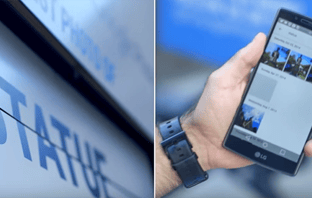
Humans regularly pay for having their photo taken (when it’s horrible and it gets posted on social media, or when looking back and wondering why you ever thought that hairstyle was a good choice). But, following on from a tease at its I/0 event, Google decided to let people pay with a photo to promote the enhanced search functionality of its upgraded Photos app.
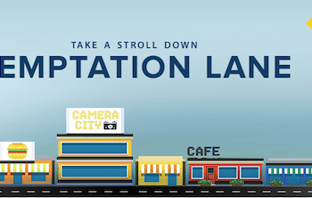
For those who waste their pay cheque on things like shoes or coffee, beer and other consumables this ANZ online game will see you doing your best to stay on track (in the digital world), mainly because of the lure of the potential win of $5,000
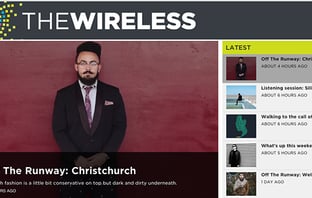
Since its inception in 2013, Radio New Zealand’s (RNZ) digital brand The Wireless has grown quickly, attracting a new audience of readers that were largely disconnected from the legacy structures of the state broadcaster. This upward trajectory has seen the website’s average audience climb from 700 daily users last year to 3,000 this year. And the RNZ executive team is now hoping to spread this success across all its digital properties with the appointment of The Wireless editor Marcus Stickley as the digital features editor. PLUS: digital teams restructure, a tale of two Tobys and a RNZ new website on the cards.
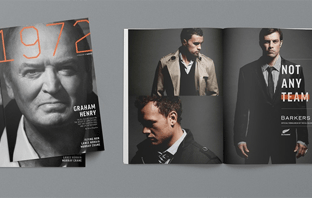
The Best Design Awards’ Best Effects category showcases design that goes above and beyond, bringing a profitable outcome for the clients involved. Here’s a breakdown of this year’s finalists.
Last week, there was plenty of media interest in Bansky’s brilliant ‘bemusement’ park by the sea, Dismaland. And while it’s not particularly suitable for children—and while tickets sold out in an hour—he and his gang of subversive artists have released an ad showing a family visit to ‘the happiest place on Earth’.
It’s never been easier for marketers to learn about their audience. All they need to do is go to social media, look at what they’re posting and what’s trending among their target age demographic. Brands have begun travelling to their audience to market to them too, launching social media campaigns, joining Snapchat, Instagram, Pinterest, whatever it may be. But something else we’ve noticed recently is brands going to their audience and essentially asking for advice, crowd-sourcing ideas for products like websites, food, even ads. Here are a few examples from here and abroad.
Back in the early days of the internet, pop-up ads started, well, popping up. Originally, they were seen as a way for advertisers to fight against the early stages of banner blindness and get in front of users without being directly attached to the content of a website. But readers found them intrusive and annoying and, eventually, technology was developed to block them. And it’s happening again as Ad Blocking software grows in popularity. So are the supposed evils of online advertising worthy of drastic action? Or is it another unfair stake in the heart of publishers already dealing with a digitally-inspired existential crisis?
Media companies are continually pushing the strength of their particular medium (or combination of mediums). And one popular way to show off capabilities, get creatives thinking about how to use the medium effectively and line up a few leads is to run a creative competition. NZME has its Advertising Challenge. Adshel ran the Creative Challenge for its charity client Surf Lifesaving NZ. And now APN Outdoor is joining in the fun with Pixel361°, a scheme that invites creative minds to create a digital outdoor campaign to raise awareness of the Men’s Health charity.
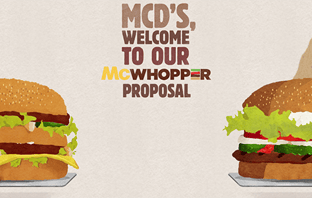
Co-branding is fairly common practice in marketing and it pretty much always involves complementary brands, rather than direct competitors. But the Burger King global and Y&R NZ are taking the idea of co-opetition much further and challenging McDonald’s to celebrate Peace Day by asking it to join forces and create the McWhopper.
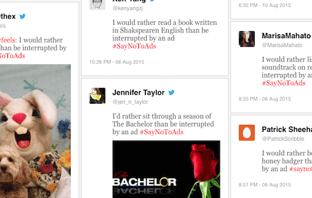
In this day and age, it’s becoming increasingly clear that people don’t like being obviously advertised to. We don’t have the time, patience or interest anymore. A modern audience is a more distracted audience, it’s true. Content marketing company Scribble knows this, and it came up with a clever initiative to get Twitter users in the marketing realm (but not necessarily) spreading some ad hate in an attempt to champion content marketing
Having already covered all aspects of retargeting from the basic to specialised in the Get with the Program(matic) series, AdRoll’s Ben Sharp looks at how marketers can measure their results more effectively.
The New Zealand Fire Service has released two new ads, the first since FCB became its creative agency. The ads, part of a campaign called ‘Your only voice’ warn that a working smoke alarm is often one’s only voice to warn loved ones and friends of a fire.
Following a pitching process that saw the competitive field eventually narrowed down to Colenso BBDO and Contagion, House of Travel (HOT) has decided to take its business to 100 College Hill.
Sky TV, DB Export, Lumino the Dentists and Lotto NZ snatch the honours this week.
At the centre of Lotto Powerball’s brand ad, released in July, was a story about the relationship between a dad and his son. And now with Father’s Day fast approaching, the brand has jumped on the opportunity to consolidate its ‘Imagine’ positioning with a touching spot that depicts the classic Kiwi scene of some backyard cricket.
Last year, to launch the Madden 15 video game, EA went to town with a fantastic three-and-a-half minute clip featuring a slap-happy Kevin Hart and Dave Franco battling it out. And to launch the 2016 version, it’s taken it up a notch with a completely over the top fake movie trailer that’s riddled with stars of screen and field.
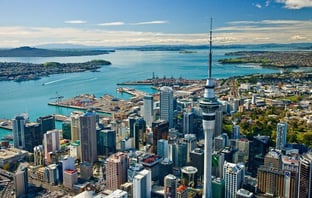
Auckland’s been the City of Sails and the Big Little City. Aucklanders have been JAFAs and (long before that) Rangitoto Yanks. But none of these holdovers from the good ol’ days of the share market boom, the America’s Cup or the John Banks mayoralties work for the diverse ‘super city’ of 1.5 million people that Auckland is becoming. And after a comprehensive review of Auckland’s economic development strategy, Auckland Council’s economic growth agency Auckland Tourism, Events and Economic Development (ATEED) is undertaking Global Auckland, a rebranding project chaired by NZME’s chief executive Jane Hastings.
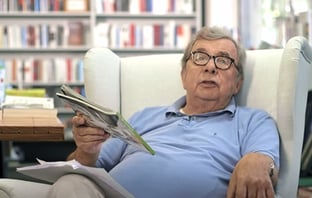
With a print run of 220 million copies, the Ikea catalogue has a distribution level that any author would be proud of. And it’s only fitting then that legendary German literary critic Hellmuth Karasek should be given the opportunity to analyse the pages and share his opinion on the narrative development, characters and language used in the book. Over the course of about five minutes, the critic pages through the catalogue, delivering a very dry analysis.
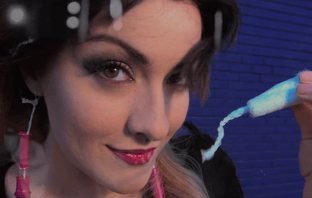
You notice you are feeling a little bit moodier than normal. Irritable and a bit down, with a hot feeling in your chest that you cannot extinguish. The smallest things annoy you. Your flatmate forgets to wash their dishes, someone forgot to buy milk, you drop something on the floor twice in a row, this goes on for a few days. And then you feel it, the dull ache deep in your lower stomach, which becomes more and more intense like that feeling you get from a dead arm, but transferred to your lower abdomen. You’re also breaking out and you feel bloated, fatigued and genuinely sick. Then, as you curl up on the couch in foetal position with a hot water bottle nursing your tummy, cursing mother nature for dealing you this monthly slap in the face, you switch on the television, and what do you see? An attractive lady in a pad/tampon ad, looking at the camera, sensually even, muttering something about absorbency as she proceeds to strut down the street in a mini skirt, and you think to yourself, ‘I hate this woman’. Period.
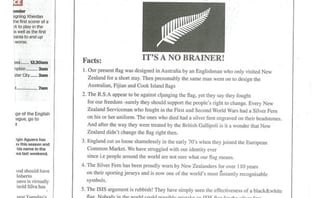
Benevolent dictator John Key has been on a mission to convince New Zealanders that we need a new flag—from the big ($26 million for the flag consideration project) to the small (writing columns)—and he has said he favours the fern and southern cross combo. Gareth Morgan also wants a change and has pinned his four colours to the mast after running his own competition. And Peter G Deakin from Turangi (if that is his real name, eh John?) has also taken out an ad in The Sunday Star Times explaining his views and showing his penchant for the silver fern.
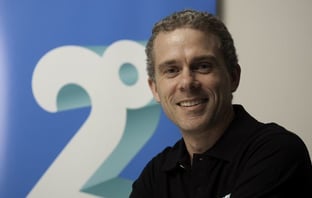
Malcolm Phillipps joined 2degrees just a few months after it launched in late 2009 and he’s been a key figure in its evolution from a cheap and cheerful challenger brand to a grown-up, full-spectrum telco. Now he’s set to chuck it in and head to the Waikato.
Over the last seven weeks, the DB Export ‘Brewtroleum campaign’ has been encouraging Kiwis around the country to help save the world by drinking variants in the brand’s range. The only problem with the message was that the world-saving action was that it was limited to times generally considered appropriate for beer drinking. One could not, for example, open a DB beer at 11am in the morning and persuasively argue that this was an essential act. So, in an effort to overcome this problem and enable any person to lend a hand to the Brewtroleum cause at any given time, the brewery has created DB Export 0.0% Citrus—a lemon-flavoured lager with zero alcohol content.
In an ongoing series, StopPress talks to a range of newsmakers currently trying to shine lights into dark places while also keeping their own lights on and looks at whether commercial realities are leading to editorial compromise. Next up, Damien Venuto talks with the NZ Herald’s data editor Harkanwal Singh about turning big data into accessible journalism.
A timelapse video of luminescent glow worms, delicate frost crystals, a blue shark emerging from the water and a jellyfish the size of a dinner plate are among the 28 finalists of the New Zealand Geographic Photographer of the Year, selected from a whopping 5,800 entries.
Early next month Kiwis will be celebrating Father’s Day. The one time of the year where dads (if they’re lucky) they will get toast in bed, maybe some chocolate and hopefully a lashing of affection and appreciation from the family. This is also the time when a lot of dad-inclusive advertising comes out, often promoting things like lawn mowers and DIY renovation equipment. But the idea of the dad is changing, and gradually this is being reflected in our advertising. Dad is no longer just into power tools, he also likes staying in and reading books with the kids, cooking and taking on what has traditionally been considered ‘feminine’ roles. Here’s Getty Images’ vice president of creative content’s take on the evolution of the dad and what this shows about our shifting perceptions.
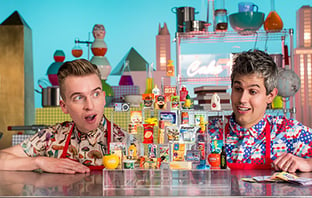
Brace yourselves, parents (and weird people who like to collect things from supermarkets). New World has launched an updated version of its ridiculously popular collectables line. And it’s aiming to inspire some food science with the Little Kitchen.
NZME contributed AU$203.7 million revenue and a net profit of AU$30.7 million to APN’s financial figures, but the performance of the various arms—publishing, radio and ecommerce—of the organisation was relatively flat when compared to the figures posted in the previous year. And while Hastings confirmed that digital registrations for the Herald were going to be launched, she said that there were no plans to introduce a paywall this year.
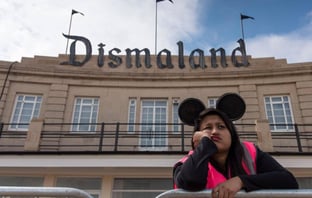
Tourism activities are always better in the mind than in reality. And Banksy, one of the most subversive artists in the world, has flipped the capitalism-fuelled, often rather empty, completely over the top fun of the modern amusement park on its head with the opening of Dismaland, a “bemusement park”/major art exhibition on the sea in England that’s definitely not suitable for children.
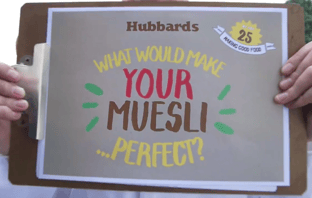
Hubbards Muesli is showing a preference for the digital after launching two new social media-based campaigns: one in celebration of its 25th birthday next month where it asked Kiwis to submit their own muesli recipes on its microsite, and then share the recipes on Facebook for a chance to have their concoction hitting the shelves. The other to promote its latest ‘Outward Bound’ range of muesli, calling upon New Zealanders to share their own ‘Outward Bound’ moments.