Everyone’s got an opinion in this industry! Thought leadership pieces from in and around New Zealand Adland.
NZ Retail/The Register editor Sarah Dunn reckons there might be more to selfie culture than meets the eye.
Everyone’s got an opinion in this industry! Thought leadership pieces from in and around New Zealand Adland.
NZ Retail/The Register editor Sarah Dunn reckons there might be more to selfie culture than meets the eye.

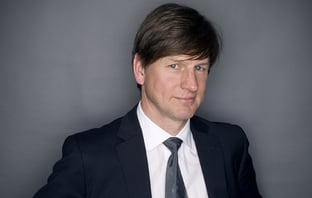
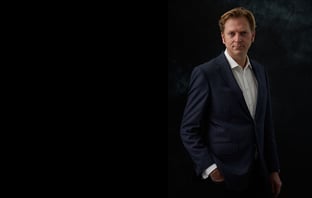
This month Idealog magazine published its 60th edition. A decade in publishing is an achievement worth celebrating—especially this decade—but co-founder Vincent Heeringa knows things need to keep changing if it’s to last another ten. Here’s his manifesto for the next ten years—and he believes the rules also apply to media in general.
Why are the likes of Google and Facebook acting so altruistically and exploring options to provide internet access around the world? And what do their movements mean for the traditional telcos and marketers? Anthony Gardiner looks at what is destined to be a highly disruptive journey.
Ogilvy & Mather’s executive director reckons not-for-profit organisations don’t necessarily need massive budgets to reach broad audiences. They just need to be smart when it comes to using digital channels.
What might at first seem like a familiar creative challenge often requires a different solution to the one used before, writes Brian Slade. And that is certainly the case for city identities.
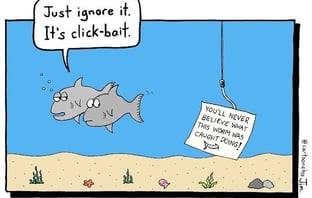
Paul Catmur on the difficulty advertisers face in the fickle digital age to compete with all the cats, celebrities and Blackburn self-pleasurers out there.
After around five years as editor of Metro, Simon Wilson recently sent his final issue off to the printers and stepped into a new role where he aims to do more writing and less wrangling. And he signed off with an editorial that editors—and advertisers—could all learn something from.
When you’re talking to customers, community groups, suppliers and shareholders the length and breadth of the country, and an internal audience the size of a small town, the best advice your design company can give you is create a line of sight into your visual identity, writes Brian Slade.
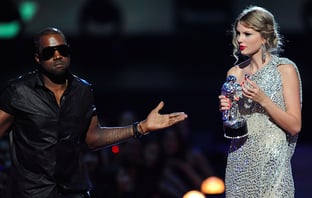
Dentsu Aegis’ Robert Harvey argues that while Kanye West was able to interrupt his way into the public consciousness only a few years ago, the age of interruption is coming to an end and brands increasingly should aim to be the thing audiences are interested in.
Having worked at TBWA\ from 2005 to 2010 alongside David Walden, Michael Goldthorpe was asked to share a few words about his mentor and friend at last night’s Effie Awards, which fell on the same day as Devo’s unsurprisingly well-attended and colourful funeral. And he decided to let Devo’s words, which serve as the introduction to a book that will be available to buy soon, do most of the talking.
Ahead of the upcoming CAANZ PresCom event on the commercialisation of content, The Spinoff’s Duncan Greive gives his $0.02 on the matter and says that while there are some prickly ethical issues to deal with, brand-funded content offers a glimmer of hope for the craft of journalism and can work in everyone’s favour when done well.
Though advertising legend Dave Walden passed away this weekend, he will live on forever in the stories of those who shared moments with him during his 66 years. In this series of tributes, we invite friends (and foes) to share their stories, anecdotes and thoughts on the life of ‘The Great Waldo’.
Shouting out random things in a public space isn’t the best conversation starter in real life. And TRA’s Colleen Ryan argues the same applies in social media.
Michael Goldthorpe reckons Tumblr might be stepping on the toes of a few copyright holders. So is there anything the industry can do about it or is it just a sign of changing times?
Online browsing through smartphones is exploding in the local market. But Sizmek’s Carolyn Bollaci believes there’s a disconnect between the level of consumption and the quality of the ads being served.
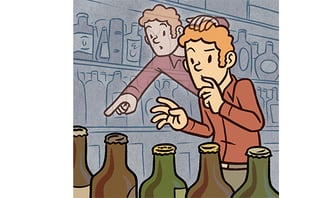
The difference between consumers’ claimed behaviour and actual behaviour is often vast. And while marketers like to have concrete data to make plans, Andrew Lewis thinks they need to become better at observing customer behaviour.
Contagion’s Dean Taylor investigates why Google, Amazon and Apple dominate their respective fields, and what he finds is that these three juggernauts have a lot in common.
Rob Limb argues that while the terms ‘precision’, ‘predictability’, ‘fact-based decision making’ and ‘real-time contextual automation’ are thrown around freely, marketers should still be focusing on the customers behind the numbers and ad tech.