
News


Finalists announced for 2022 IAB NZ Digital Advertising Awards
The finalists for the 2022 IAB New Zealand Digital Advertising Awards have been announced following a record number of entries.

The finalists for the 2022 IAB New Zealand Digital Advertising Awards have been announced following a record number of entries.

ReachMedia has been selected as the distribution partner for Stuff Limited community newspapers for the entire Auckland Region.

The Voyager Media Awards this year saw Stuff take out the win in 20 categories out of 51. The wins for Stuff showed its strength of…

On Friday night, New Zealand’s journalists gathered to celebrate the industry’s best across print and online at the Voyager Media Awards, in a showcase of how journalism has transformed over the years.

On Friday night, journalists from around the country gathered to celebrate excellence in their practice – and there was plenty on show, with 355 finalists across 68 categories. The big winners on the night were The Weekend Herald and the New Zealand Herald’s Matt Nippert.

Finalists for the 2018 Voyager Media Awards (formerly Canon Media Awards) have been announced and last year’s winners, New Zealand Herald, Weekend Herald and Stuff, are no doubt hoping for another successful night.

The biggest change we have ever made to our newspapers is happening on April 30 as we switch all Stuff’s Monday to Friday metropolitan and regional newspapers from broadsheet to compact format.

The six-month interim results are out for our two largest print news media owners Stuff and NZME. It is no secret that print has battled with years of declining advertising revenue and departing audiences and there is no doubt the tough financial results have taken its toll. The key lowlights being Stuff’s subsequent closure of 28 regional print mastheads, and an obstinate Commerce Commission which has repealed repeated merger attempts by NZME and Stuff. However, in some quarters, the recent financial findings show that the fall in print revenue has slowed, with suggestions that the worst is over. We ask media experts and publishers what they glean from the financial findings – bearing in mind the unpredictable and circulating beast that is the media industry.

IAB New Zealand has announced it has been working with major New Zealand publishers, agencies and tech vendors to implement ads.txt, a global IAB initiative designed to eliminate counterfeit inventory in the programmatic advertising ecosystem.

Stuff has announced a plan to close or sell some of its community and rural newspapers, with 28 mastheads set to be affected.

NZME and Stuff have announced this week they will seek leave to appeal a High Court ruling that upheld a Commerce Commission block on their proposed merger. In December the High Court upheld a Commerce Commission ruling not to clear or authorise the merger. With that in mind, we take a look at what industry folk think of the proposed merger and mergers in general.

Fairfax Media New Zealand has rebranded to Stuff, with the change announced in August last year but only coming into effect today.

Sinead Boucher’s career on the Fairfax digital team started in what she describes as a “broom cupboard” at a time when the site was seen as a nice-to-have tag-on to the print business. Now, as she sits in the chief executive chair at Stuff, she reflects on how much things have changed.

For 20 years the David Bain Family Murders have captured New Zealand’s imagination and now they’re doing so in a 10-part podcast series that dives deep into the controversial case.

A rundown of those who walked home with a treasured doorstop last night.

Stuff has announced its entry into the streaming market with the establishment of Stuff Pix.

Fairfax Media has appointed Mark Stevens to the role of editorial director.

Fairfax Media launches a digital energy business to help reduce customers’ electricity costs.

Following the launch of Stuff Circuit’s documentary series The Valley, reporter Paula Penfold and editor and director Toby Longbottom share how they brought to life an investigation about New Zealand’s soldiers in Afghanistan.

As the Commerce Commission announced this morning that it would not approve the merger between NZME and Fairfax New Zealand, the heads of both organisations published official statements expressing their disappointment at the decision. We look at how it all went down.

While publications here and abroad have canned their comments section, Stuff has decided to continue fighting the trolls. Editor Patrick Crewdson explains why.

The way the word ‘digital’ is thrown about in the media industry suggests it’s a platform still in its early days. And while many brands are still coming to terms with digital capabilities, Stuff is celebrating its 16th birthday. In that time the news provider has built up a monthly audience of two million New Zealanders. Now, coinciding with its birthday, it is putting the focus on the audience, with a refreshed version of its ‘Go Full Spectrum’ campaign via Shine, to remind audiences what it does for them.

Last year Fairfax underwent some massive changes, restructuring its editorial staff into local teams and specialist areas, shifting a large part of the focus away from newspapers and over to the digital realm. This emphasis on digital seems to have paid off, as Stuff managed to grow its audience and has now used it to leverage a partnership deal with TVNZ, where Stuff readers will be able to view One News video from the site as of Thursday, which might mean more time spent on the site and in return TVNZ gets a taste of Stuff’s audience.
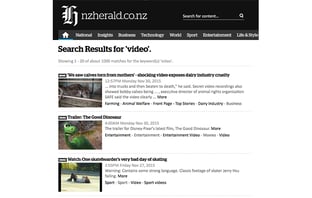
Following on from our recent report on TVNZ and MediaWorks’ use of short-form content, we now look at how NZME and Fairfax (and a few international publishers) are using short videos to make major news stories accessible to more people.

Research from Nielsen shows that approximately 25 percent of unique online visitors to the Stuff website and 29 percent to the NZ Herald in the month of October came from readers located outside New Zealand. So are advertisers aware of the high proportion of international visitors and are they taking it into account when purchasing ads on these news sites? And also, how are publishers monetising their international audiences?

Fairfax has teamed up with Sky Sport, linking its Fan Pass offering to the Stuff news site allowing rugby fans to live stream the World Cup games for a fee. Fairfax’s national sports editor Aaron Lawton shares his insights on the partnership.
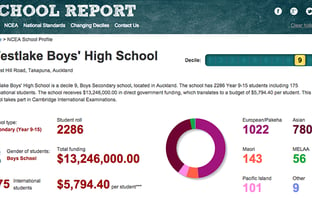
Following on from our story on the work of NZ Herald data editor Harkanwal Singh, we recently also got glimpse of some of the work that the Stuff projects team is doing in the data journalism space. Stuff projects editor John Hartevelt chats about why the newsroom will become increasingly occupied by specialists not traditionally associated with journalism.
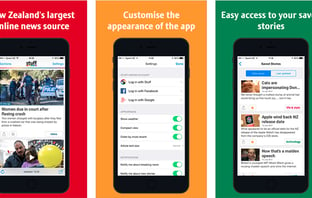
The willingness of Kiwis to adopt new technology means that major publishers have to ensure that their online and mobile interfaces continue to offer a suitable user experience for readers. Failure to do so can lead to frustration that could drive readers to get their news fix on other sites. And given the importance of staying in touch with its readership’s consumption methods, Fairfax recently launched the third version of its Stuff app. PLUS: a look at why apps are important for news publishers.

Snapchat has fast become a popular way for brands to reach out to a younger audience. ASB, Vodafone, Spark the NZTA and a number of other brands and organisations have seen merit in using the platform and have reported successful results. And while a little late in the game, Stuff has just jumped on the Snapchat bandwagon and only three days since launching its account, it already has a few thousand ‘friends’, and counting.

It’s no secret Fairfax is reorienting its business around digital—and, specifically, mobile—with Stuff as the central pillar of that strategy. And while managing director Simon Tong recently told us in a fairly candid interview that the magazine division had largely been left to its own devices, its main magazine brands have now been swallowed by that content-hungry beast stuff.co.nz.