Contagion’s Dean Taylor investigates why Google, Amazon and Apple dominate their respective fields, and what he finds is that these three juggernauts have a lot in common.
Trendsetters trade on being early adopters, whether it’s fashion, technology or creative pursuits. And, in a world where social media has become so important, sharing something before it goes viral has become a form of social validation (check out Kevin Alloca’s TED Talk for a look at some of the reasons). Now Spotify has launched a tool called Found Them First, which shows you how many artists you streamed before they hit the bigtime.
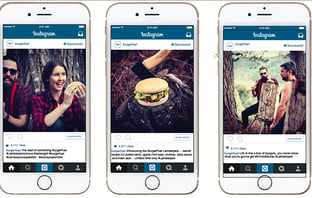
Since taking his post as the head of Facebook in New Zealand, Spencer Bailey has become accustomed to fielding questions about when Facebook-owned photo-sharing app Instagram would be opened to advertisers in the local market. Asked how many times he’s had to sidestep the question since April, he gives a wry smile and says: “Just a few times … every week.” Well, the wait is finally over. Facebook has announced that advertising will now be available to Kiwi advertisers on Instagram.
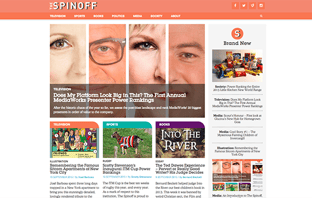
Back in May we sat down for a chat with Duncan Greive, founder, editor and publisher of The Spinoff, “a little TV website which has lately been nursing big dreams”. He mentioned his dastardly plans to expand its editorial coverage and its network of sponsors. And he was confident the model “could end up being a good vehicle for a plurality of native advertisers”. Now, as it celebrates its first birthday, he’s taken a big step in that direction, launching five new sections—sports, books, politics, media and society—and hiring eight new staff to help fill them up.
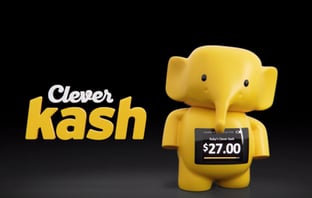
Since 1964, Kashin, the ASB moneybox, has been an inhabitant of countless Kiwi homes, serving as a tool used by parents to teach their kids about the value of money. However, at a time when coins have become something of a rarity, Kashin was becoming a largely unused anachronism—a white elephant, if you will. So, in response, ASB and Saatchi & Saatchi have given Kashin a digital makeover and introduced a new moneybox called Clever Kash.
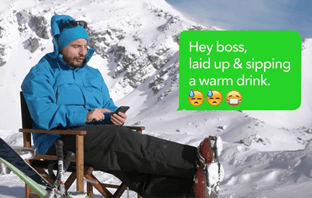
According to Wikipedia, “at least some of the workers who built the tombs of Egyptian pharaohs received paid sick leave as well as state-supported health care”. And ever since 1500 BC, employees who understandably love the idea of getting paid while doing absolutely no work have been claiming they’re ill and taking days off. Now Destination Queenstown is incentivising that behaviour and has enlisted the help of Australian comedian Dan Ilic to teach his countryfolk how to squeeze in a sneaky spring ski trip.
While there’s plenty of excitement about the possibilities of immersive virtual reality headsets like Oculus Rift and Samsung Gear VR at the moment, sometimes the simplest innovations are the best and Google Cardboard, which combines mobile phones and the act of folding to create inexpensive virtual reality goggles, is definitely in that category. Google has made its design open source and while Kellogg’s and shopper marketing and digital activation agency Geometry Global NZ have taken inspiration from this technology and, in what it says is a first for the New Zealand grocery market, turned a box of Nutri-Grain into a virtual reality experience.
When we think about going on holiday often our imagination kicks in. We might picture ourselves on some luscious tropical island, lying on the beach, pina colada in hand, listening to the soothing sound of rolling waves or maybe even off on some big adventure, backpacking across Europe or Asia perhaps. Well, now Contiki is giving prospective travellers the opportunity to truly envision a travel adventure, with the use of virtual reality technology.
Through a content partnership between Marketo and StopPress, we look at how technology is being used to automate marketing processes and what this means for industry. This time we ask Rob Cooke about how automation is changing the way marketers and creatives go about their jobs in the industry.
When you haven’t done something for a hundred-or-so years, you’re unlikely to get it right the first time. So, we might disagree over our favourite designs, or whether the flag should be changed at all, but I’m sure we can all agree that the process has not been a success.
The radio survey period is usually typified by a pair of contrasting situations. On the one side, you have the silence of radio executives who are precluded from saying anything about the survey lest their comments interfere with the accuracy of the results. And on the other side, you have have a flood of loud, in-your-face promotions with the sole purpose of pushing listeners in the direction of MediaWorks and NZME. But does this approach even work? And is radio promo season set to become a thing of the past?
When something has been banned it immediately becomes that little bit more alluring. Why else do teenagers sneak into their parents liquor cabinets and haphazardly smoke cigarettes. Recently Kiwi novel Into the River was banned by the Film and Literature Review Board, so we thought we’d look into this and other outrageous bans and from a marketing perspective, is a ban such a bad thing?
Rugby rash is spreading quickly among the marketing community, with tournament sponsors, team sponsors and filthy ambushers all riding that World Cup train like Tom Cruise in an action movie. We’ve already seen plenty of local activity and here are a few from the host countries.
Being a master in the kitchen requires a bit of creativity – a sprig of this and a pinch of that. IKEA has transferred this idea to its buy and assemble model in its new quirky ad, which shows the core ingredients it takes to create a tasty kitchen.
The New Zealand Defence Force, Western Sydney University, Farmers and Bayleys step up to the podium this week.
Real estate is, typically, all about the money. How much it costs, how much the prices have risen, how ridiculous those prices now are (in Auckland, at least). And there’s been plenty of money around for the real estate companies during a period of high growth. But Bayleys believes “that the true value is in the people and the relationships forged” and it’s trying to illustrate that with its new brand campaign.
You would have to try very hard not to bump into some kind of All Blacks-related product these days, particularly with the Rugby World Cup 2015 drawing closer by the day. One of these brands is Treasures, which has relaunched its ad promoting its All Blacks themed nappies, which screened during the last Rugby World Cup.
In an ongoing series, StopPress talks to a range of newsmakers to find out how those trying to shine lights into dark places are keeping their own lights on and whether commercial realities are leading to editorial compromise. Next up, Ben Fahy talks with Bauer Media’s chief executive Paul Dykzeul.
Whether its the release of the latest version of Call of Duty or a news report on a war, the representation of the military in popular culture is regularly limited to shooting an assault rifle at some or other enemy. And yet, particularly in the New Zealand context, the role of military personnel is more often associated with helping those in need, whether local or abroad—and herein lies the primary focus of Saatchi & Saatchi’s new campaign for the New Zealand Defence Force (NZDF). Featuring scenarios based on real experiences in the forces complemented with behind-the-scenes online films explaining more of the story behind each event, the new campaign makes the point that helping comes naturally to Kiwis. And this message is particularly pertinent at a time when the Syrian crisis is the focus point of local and international debate.
The Block NZ will be returning soon to TV3 for its fourth season ‘The Block NZ: Villa Wars’, which means a new campaign, and as part of it, an ad has been released which is akin to an action movie trailer, with the contestants entering their designated neighbourhood, ready for a DIY war.
Structure, planning and order aren’t words often associated with student radio. And why should they be? The raw spontaneity of these services is exactly what makes them so appealing to the university students who intermittently tune in to listen to ramblings of young radio jocks cutting their teeth on the airwaves. And it was this rawness that FCB aimed to tap into with a series of radio ads and online videos created to promote local documentary Radio Punks: the student radio story, which recently aired on Prime TV.
Subway has released a new campaign via Ripe Solutions about how you get out of your body what you put in, as well a ‘Sub builder’ an online calculator tool designed to help Kiwis make healthier decisions around their sub fillings. Along with a new ad, Subway is also giving consumers some good—albeit obvious— advice via its new slogan, ‘Eat well, go live life’.
Visible across almost every media channel, the name Annabel Langbein has become a brand in its own right. We chat to the woman behind it to find out how she created a media empire that now has its eye on the US market.
Industry happenings at Marketing Association, MediaWorks, TVNZ, Snakk Media, Intelligent Ink and Envy Studios.
Our weekly wrap of good things, strange things, funny things and other things from inside the intertubes.
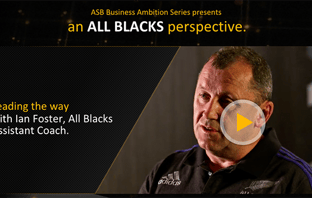
The corporate world has long looked to professional athletes and coaches for guidance on how to perform better, how to create a positive culture and, if they’re being honest, how to grind their opposition into the dust. And ASB has looked to the All Blacks—or, more specifically, the team behind the All Blacks—to provide some pearls of wisdom for Kiwi businesses.
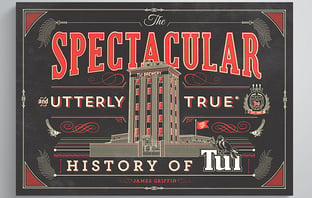
Last year, Tui celebrated its 125th anniversary. And it appears that the celebrations got so rowdy that DB didn’t quite get around to releasing its anniversary book memorialising the history of the brand. So to fill the book-shaped space on coffee tables throughout New Zealand, Tui has now released a book for its 126th anniversary.
A few months back, Radio New Zealand embarked on a bit of a public/private partnership and put its content on NZME’s iHeartRadio platform (before also snuggling up with MSN). Radio Rhema followed suit. And the National Business Review, which moved into online radio in February and added a personalised ondemand option in March, is the latest to add its name to the list.
While most retail advertising released today features little more than price, product and sale shouted through every available megaphone, there are also some examples of retailers returning to a more creative approach when it comes to their advertising. And the most recent example of this is the new Farmers brand ad. PLUS: should marketers focus on the emotional or the rational? Should they be doing more brand or retail ads?
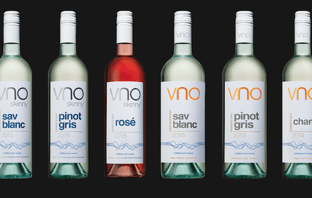
VNO has launched a thermo label on its white wines that that tells the consumer when it’s the correct temperature for drinking. And to give its thermo-labelled wine some personality, it’s released a radio ad where the wine is personified by a breathy, sultry man urging the VNO owner to drink the wine.