Media expert Antony Young rounds up media news from beyond Aotearoa in a regular column for StopPress.
This week:
- Mainstream news media traffic is plummeting due to AI tools, which allow users to receive answers directly without clicking through to publishers
- The global ad industry heads into Cannes Lions with 26,900 award entries, rising focus on social impact, creator-led innovation and strategic deal-making
- Almost half of Gen Alpha are already earning money online through digital side hustles, making nearly double the U.S. minimum wage
- WARC lowers global ad growth to 6.2%, highlighting digital gains and declines in retail, automotive and linear TV ads
- The Wall Street Journal reports ICE raids and immigration crackdowns have reduced Hispanic consumer activity
- Marriott International launched a retail media network for brands to advertise across its hotel digital and physical spaces
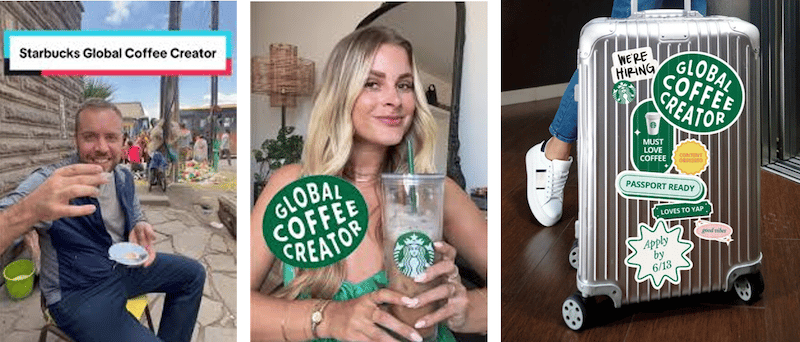
- Starbucks is hiring global coffee content creators to travel and showcase the craft behind every cup
Main news media traffic plummets due to Google AI Overviews
Google’s rollout of AI tools like AI Overviews and AI Mode is drastically cutting traffic to news websites, as users increasingly receive answers directly without clicking through to publishers.
Major outlets like HuffPost and Business Insider have seen organic search traffic plummet by over 50% since 2022, according to Similarweb, with the latter laying off 21% of its staff to manage the fallout.
The Atlantic is preparing for a future where Google traffic may vanish entirely, while The Washington Post and The New York Times are shifting focus to direct reader engagement and new revenue models.
As Google transitions from a search engine to an “answer engine,” many publishers are fighting back with copyright lawsuits – like The New York Times’s case against OpenAI and Microsoft – while others, including The Wall Street Journal, are signing licensing deals.
Bienvenue à Cannes!
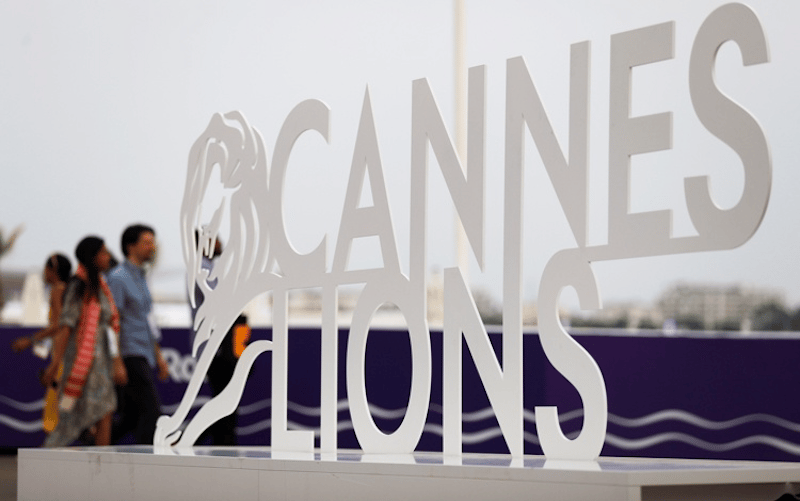
At the same time most of us will be pulling on our fleeces and winter coats the international ad industry will be soaking in the sun and bubbles at the Cannes Lions International Festival of Creativity.
I’ll report on it in the next issue but here’s some of what the industry is expecting this week: Expect a blend of high-stakes awards, creator-led innovation and strategic deal-making. With 26,900 award submissions – up slightly from 2024 – categories like design, B2B and sport entertainment are seeing major growth, while the expanded Glass Lions reflect a broader focus on social impact.
The creator economy will dominate, with influencers increasingly central to marketing strategies, as Publicis leads the charge by making a real lion the star of a live influencer stunt. Expect creative endurance (and banter) to play out across panels, yacht parties and beachside activations from the likes of Meta and TikTok, while marketers juggle economic pressures with the festival’s core spirit: celebrating bold, ground-breaking ideas.
Nearly half of Gen Alpha earning income online
Here’s why young people aren’t mowing lawns anymore. According to a Whop survey of 2,002 Gen Alpha and Gen Z individuals, nearly half (47.1%) of Gen Alpha aged 12-16 are already earning money online through digital side hustles such as reselling clothing, streaming video games and creating social media content – a 15% increase from the previous year.
These young entrepreneurs are averaging $13.92 per hour, nearly double the U.S. minimum wage. With 51.5% aiming to turn these hustles into full-time careers, Gen Alpha increasingly views platforms like YouTube and Twitch as legitimate professional pathways.
Notably, they are also repurposing their screen time – spending 3.5 fewer hours per week on entertainment than Gen Z – and devoting about 20% of that time to income-generating activities.
Global advertising forecast drop over tariffs and tech sector concerns
WARC’s latest global ad spend forecast has been revised down by 0.5 percentage points to 6.2% growth, amid concerns over tariffs and tech sector uncertainty.
Key sectors affected include a 6.1% cut in retail ad budgets and a 4.0% reduction in automotive spend, while technology and CPG (consumer packaged goods) sectors see muted growth.
On the channel front, pure-play internet channels (social, search, display, retail media, classifieds) remain dominant – accounting for 70.8% of Q1 ad spend and projected to grow 9.8%, with platforms like Alphabet, Meta and Amazon claiming over half of that spend.
Retail media leads growth, rising 14.4%, with Amazon’s share expected to climb to 35.4%. Video advertising declines 2.6%, driven by a 6.3% fall in linear TV. But Broadcast Video on Demand advertising grows 13.2%.
Hispanic shoppers stay away due to ICE raids
The Wall Street Journal reports on fears sparked by ICE raids and immigration crackdowns have caused a major retreat in consumer activity among Hispanic shoppers, significantly impacting big brands like Coca-Cola, Walgreens and Home Depot.
Even Hispanic consumers with legal status are avoiding public spaces, curbing visits to stores and restaurants and shifting spending habits due to fear, misinformation and economic strain from job losses and inflation.
This pullback is particularly affecting companies that heavily rely on Latino communities for growth – Coca-Cola saw a 3% drop in North American sales. Walgreens experienced a 10.5 percentage point decline in Hispanic shoppers in the first quarter, while Home Depot had an 8.7 percentage point drop, according to the report, while brands like El Pollo Loco and Shoe Palace report sharp traffic declines.
Hotels enter the media ad sales game
With retail media being one of the fastest growing media channels and a revenue stream for supermarkets chains, hotels look set to follow.
Marriott International has launched its own media network for brands to advertise across its digital and physical spaces throughout its hotel chains, leveraging its first party guest data from its 237 million Marriott Bonvoy members and nearly 9,500 global properties.
The network enables advertisers to reach travellers across Marriott’s app, website and nearly one million in-room TV screens throughout its US and Canadian hotels.
A successful pilot campaign with Gatorade saw an 8.5% lift in brand consideration and increased in-hotel consumption by seven percentage points. While currently focused on North America, Marriott plans to expand the network globally, positioning hospitality media as a premium, data-rich channel for advertisers seeking high-spending travellers.
A coffee lover’s dream job
Tired of wall to wall meetings, office dramas and staring at computer screens all day? This may well be the job for you.
Starbucks are advertising for global coffee content creators “to travel the world and capture the craft that goes into every cup of Starbucks coffee. The job will entail creating reels and posts on social media by visiting Starbucks Hacienda Alsacia coffee farm in Costa Rica to the Starbucks Reserve Roastery Milano to the coffeehouses in Tokyo.
If I’m successful, I’ll have to pass this column onto someone else!