Media expert Antony Young rounds up media news from beyond Aotearoa in a regular column for StopPress.
This week:
- The sequel to the Devils Wears Prada has become a full-funnel playground for marketers.
- Auckland-founded app Letterboxd makes Time’s Global Media Power list.
- Streaming services see TV advertising resurgence.
- Cinema calls on Taika Waititi to win back theatre-goers.
- New study shows that while teens get their news from influencers, local media is still king.
- Brands love working with creators but the money hasn’t caught up.
How The Devil Wears Prada made brand partnerships the real accessory
The Devil Wears Prada 2 has landed to strong reviews (Rotten Tomatoes 77%) and a whopping box office ($233.6 million in its first weekend).
But it’s the scale and deftness of its brand-partnership machine that had Miranda nodding approval.
Twenty years after the first film dropped, the sequel has become a full-funnel playground for marketers spanning TV, social, retail capsules, limited-edition products, red carpet activations. Brands are taking a specific moment or reference from the franchise, turning it into something fans can buy, wear, drink, film or share.
Diet Coke turned a fanny pack faux pas into a red-carpet “Canny Pack” moment, smartwater recoloured its bottles cerulean and built a fan challenge around spotting the shade, while Starbucks leaned into its 2006 cameo with a secret menu and custom coffee-run coats.
Tech brands also got into the act: Samsung used Helen J. Shen, who plays Andy Sachs’ assistant, to show off the Galaxy S26 Ultra’s Circle to Search feature, and Google Shopping put Stanley Tucci and Simone Ashley inside the Runway closet to demo Try On in Search. Elsewhere, TRESemmé, Lancôme, L’Oréal, Grey Goose, and Mercedes-Benz all built campaigns around the film’s fashion-coded universe, from “Runway Ready” hairspray to espresso martinis.
Auckland app makes Time’s Global Media Power list
An Auckland founded social platform is on Time’s list of the world’s 10 most influential media companies. Letterboxd, launched in 2011 by Matthew Buchanan and Karl von Randow, is a social platform that allows users to share reviews and ratings of films. It now has 28 million users across 190 countries, half of them under 35.
NBCUniversal credits it with driving repeat Oppenheimer viewings. Film studio A24 says nearly half of The Brutalist’s opening-weekend audience heard about the film there first.
Others on Time’s media power list include TikTok, which has emerged from under the threat of a US ban to see its US ad revenue projected to hit $17 billion; Publicis that scooped up nearly a third of all media spend that changed hands between agencies globally last year; Patreon, which just passed $10 billion in creator payouts and is reframing its pitch around an “intention economy”; and Nielsen’s new measurement systems covering 75 million devices to produce viewer numbers that have the NFL crying foul and the Media Rating Council quietly reviewing accreditation.
UK TV advertising resurgence thanks to streaming services
Streaming was meant to bury the TV ad. Instead, Netflix, Disney and Amazon are helping make it valuable again. The AA/WARC last week reported addressable TV advertising spend in the UK was up 37% for the year and now makes up 35% of TV budgets.
According to the Financial Times, as subscription growth slows, the major streamers are leaning harder into ad-supported tiers, giving brands a format that blends TV’s emotional storytelling with digital-style targeting. Netflix and Disney introduced ad-supported plans in 2022, Amazon Prime Video followed in 2024, and WARC now forecasts Netflix’s ad revenue will more than double to $3bn in 2026 and pass $8bn by 2030.
Marketers and media buyers are flocking to high-attention viewing, premium content, better brand safety than many social environments, and the ability to tailor creative using first-party viewer data.
Ogilvy vice chairman Rory Sutherland says he’s “starting to see lovely TV ads again” for the first time in years. Warner Bros Discovery is pitching weekly episode drops as an advertiser product, a two-month social conversation brands can ride rather than a dump-and-move-on binge window.
Cinema chain hire Taika Waititi to win back movie theatre goers
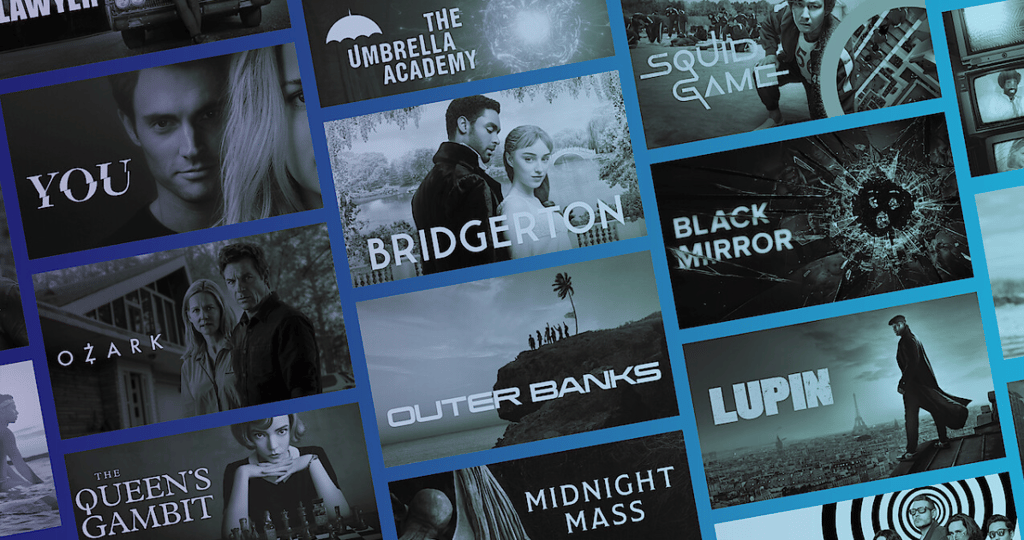
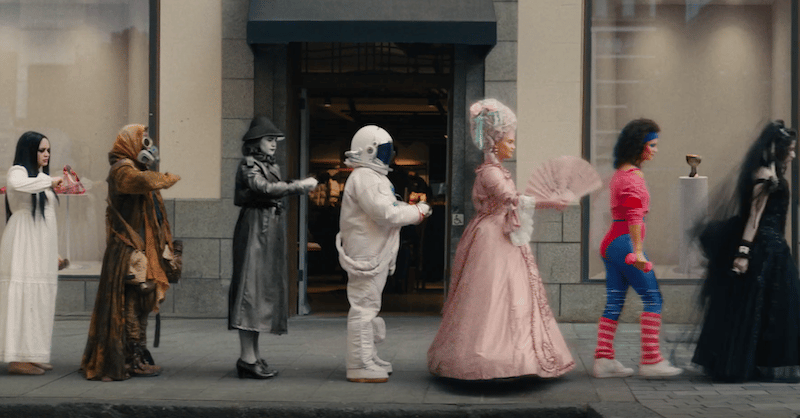
European movie theatre chain Vue wants to get people excited about going to the movies again, soliciting the services of Hunt for the Wilderpeople director Taika Waititi to create a two minute spot for them. Their new ad, “Feel It Forever,” is billed as a love letter to cinema. It follows cinemagoers as they are pursued by characters from the films they’ve watched throughout their lives, spanning rom-com, sci-fi, film noir, and action.
Each character matches their genre and era: an 80s figure carries an analog VHS screen effect and noise, while a Wild West character has a dusty sepia grade evoking Technicolor. The ads will run in theatres prior to the film, connected TV and digital media.
81% of teens get news from influencers but local news still king
A new Media Insight Project study by Northwestern Medill, University of Maryland reports that 81% of American teens now get news and information from influencers or independent creators at least sometimes. For adults, it’s 57%.
That’s not a fringe behaviour anymore, it’s the default pipeline. But here’s the scoop, despite this shift, local news still tops every trust ranking for fact-checking, issue coverage, useful information, across every age group. Teens just find it on social and through local creators rather than a TV set.
Trust in AI as a news source, meanwhile, is close to zero; only one in ten rate chatbots as more reliable than other sources, and two-thirds say they don’t use AI for news at all.
News fatigue is real: only 10% say news leaves them feeling hopeful, and active topic-avoidance (especially politics and celebrity) is widespread.
Brands love creators but the money hasn’t caught up
U.S. advertisers are forecast to spend $43.9 billion on creator content this year, up 18%. But the growth rate is decelerating fast, down from 26% last year and 34% the year before. According to the Wall Street Journal, the distribution of that spend tells the real story: smaller and direct-to-consumer brands still account for more than 94% of sponsored YouTube creator videos.
Unilever is the outlier, moving from 10,000 creator relationships to 300,000 in two years, and pushing toward long-term ambassador deals like naming Paige DeSorbo as TRESemmé’s first brand ambassador. Most brands aren’t there yet.
The concerns by brands: measurement gaps, agencies still asking creators for clickable ads and guaranteed view counts, and a gravitational pull toward one-off deals that can be closed in a week. Meanwhile, the creator population keeps growing, but is frustrated that they are being treated as media buys.