Opinion

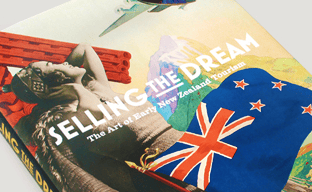
100% Pure dream selling: the art of brand New Zealand
Peter Alsop, author of upcoming book Selling the Dream: The Art of Early New Zealand Tourism, gives an overview of how our publicity pioneers put New Zealand on the map.

Peter Alsop, author of upcoming book Selling the Dream: The Art of Early New Zealand Tourism, gives an overview of how our publicity pioneers put New Zealand on the map.

Some would argue that when complainers fall into the trap of reacting to a purposefully provocative campaign (ginger lovers, wine snobs, conservative religious types etc), they only help inspire more purposefully provocative campaigns. And a similar rule could be applied to flash mobs, because the more often they’re featured, the more someone, somewhere, might think they’re a good idea. Ah well, too bad. Here’s a clip of over 500 people from the Harvey World Travel conference violating Sky City and dancing to terrible music.
Absence, they say, makes the heart grow fonder. And, after the Sanitarium factory was knocked around by the Christchurch earthquakes, passionate yeast spreaders have been pining for their regular slathering of Black Gold. So, in what most see as a company making the best of a bad situation and what some cynics see as a stunt to raise the profile of the brand, Sanitarium and Saatchi & Saatchi launched the Don’t Freak Out campaign to assure eaters Marmite would be back. And it’s continued that approach with a competition asking Kiwis to prove how far they’ll go to protect their stash.

NZ Lotteries is in the money, Metro announces a new art director and Mi9 names one of its own as sales manager for its new ad network.

MSN NZ has launched its new corporate umbrella brand Mi9, a joint venture between Microsoft and Nine Entertainment company, in New Zealand. And, at the same time, it has also officially launched the Microsoft Media Network (MMN), which general manager Liz Fraser claims is already the country’s largest advertising network offering behavioural targeting.

Tile Warehouse opened its doors in 1989 with two staff and a forklift. 23 years later the company has over 100 staff, 28 stores around the country and now a shiny new brand courtesy of Publicis Mojo to “celebrate being New Zealand’s market leader”.
It seemed like such a good idea: Peanuts vs Cashews. Grab a handful, pelt your mates and discover once and for all who’s the real ‘King of the Nuts’. Then things went wrong. A rogue peanut bounced off a lamp-post, caught a cycle courier and tossed him in front of a bus. Luckily the bus swerved, no one was hurt and they only took out a small building. Rogue accident, you wouldn’t read about it (mostly because it didn’t happen). But it could. And the question on the table after a recent Australian Standards Board decision that has put the onus on brands to manage their Facebook pages is where does the buck stop when social goes awry?
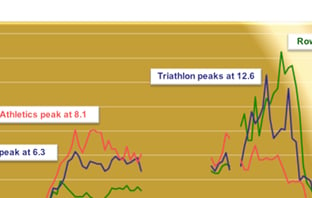
Prime didn’t quite manage to beat TV One’s 2008 ratings for the Olympic opening ceremony, but, not surprisingly, broadcasting the Games has certainly helped steal some eyeballs off the other channels, with Prime’s share and time spent watching numbers increasing substantially over the previous four weeks and all channels except for Prime and Sky losing share.
Griffin’s, Burger King, Tile Warehouse and Cavalier Bremworth make it to the podium this week.
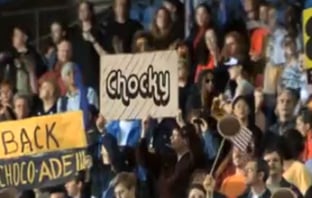
Nostalgia’s not what it used to be. But when it comes to biscuits, it’s obviously still a very powerful force, because the decision to get behind a campaign started by Upper Hutt-based biscuit crusader Amber Johnson to bring back Choco-ades has well and truly paid off for Griffin’s, with AZTEC scan data figures showing it set a new benchmark as the top selling product by value in supermarkets in its first week of sales, beating the Avatar DVD.

If you’re anything like us, you’re wondering how Tom Selleck got involved in shot put coaching, why staying on your bike while waiting for the lights to change isn’t an Olympic sport yet, whether the Sunday Star Times cover was a casualty of coincidence or something more sinister, and what happened to Charlie Brooker to make him think the Olympics are better than they looked on the tin. You might also be wondering how an event like the Olympics develops its visual identity. Luckily, Design Boom has detailed the whole massive process to come up with a cohesive look for the games—and the pretty bloody impressive results.
TVNZ’s Eric Kearley joins Rick Ellis at Telstra, Air New Zealand shifts some troops, Copper prepares for growth with a double, Rory Carter opens the doors of Red Dennis, Getty bolsters its APAC marketing team, CAANZ welcomes a new recruit, Kip Brook heads into academia, and James Mok and Kelly Bennett get the call up for Spikes Asia.
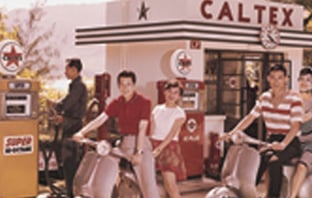
Ambient Group and the Star Metro Retail Partnership have launched a new media portfolio consisting of fuel pump handles, door media at point of entry to the store, floor media in front of the payment till and fins on beverage fridges through 116 Caltex member sites covering Auckland, Hamilton, Wellington, Christchurch and all other major centre and roads networks nationwide.

Breakfast, as the old idiom goes, is the most important meal of the day. Burger King NZ obviously didn’t get the memo and left that segment of the fast-food market to competitors like McDonald’s and Wendys. But, as a new campaign by Colenso BBDO that spans TV, radio, press, online, sampling and PR states, it’s now “woken up to a whole new time”.
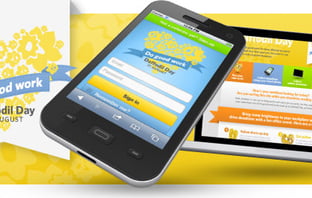
It’s tough out there in charity land at the moment. There are lots of organisations fighting for funding, consumers are still counting their pennies and in EFTPOS-loving New Zealand the cashless society is a very real thing, which means the traditional street appeal doesn’t work quite as well as it once did. So to get around this and drive donations in the lead up to Daffodil Day on 31 August, the Cancer Society and &some have called on the ubiquity of the mobile phone to help smooth the process.

When Colenso BBDO’s head of planning James Hurman decided to expand his horizons and take a role as planning partner at Ogilvy Shangahi, he said he’d probably be back in the homeland eventually. But he’s returned much sooner than expected, with the bearded one cutting short his OE to take up the role of managing director at Y&R, where he will be working alongside one of his old cohorts Josh Moore.
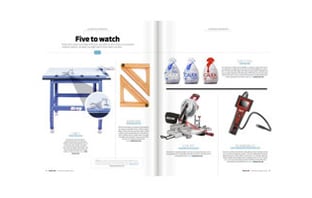
Readers of New Zealand building industry magazine Build can look forward to a new contemporary design in October as part of enhancements that will soon include digital delivery and better access to back articles. And island lovers have also got something to look forward to with the launch of the inaugural Island Destinations annual.

September is shaping up to be a watershed month for APN NZ—and, more broadly, New Zealand’s newspaper publishing sector. The New Zealand Herald is set to reveal its new compact weekday edition on 10 September and the newly redesigned nzherald.co.nz site will go live around the same time. There’s also a new Newspaper Inserted Magazine (NIM) on Mondays about food, health and well-being and readers will also be treated to a one-off premium glossy magazine on launch day called, appropriately enough, The Magazine. But what exactly is a magazine? Why are NIMs so appealing for newspaper publishers? And why is ACP’s Paul Dykzeul so fired up?

The Commerce Commission has warned fruit importer Dole it may be in breach of the Fair Trading Act on three separate counts relating to the company’s Ethical Choice marketing scheme. However, only a court can decide if there has actually been a breach of the Fair Trading Act, with convicted companies liable for fines of up to $200,000.
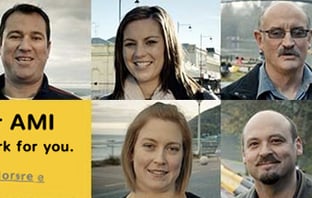
It’s been a difficult 18 or so months for AMI, which required government assistance to stay afloat after the quakes and was eventually bought by IAG. But it isn’t taking the negativity surrounding it lying down and it has launched a new campaign from DDB and Flying Fish that focuses on the fact that its staff are still committed to the cause.
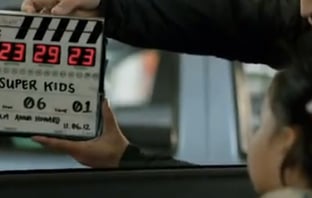
As Sir Peter Blake often said, if it’s not hard, it’s not worth doing. And there’s no doubt trying to get a bunch of young kids to stick to a script is fairly difficult. But one of the major pay-offs of working with children is that you might get to release an out-takes video, like this very entertaining behind-the-scenes number for Z’s latest campaign by Assignment Group and Exposure’s Kevin Denholm.
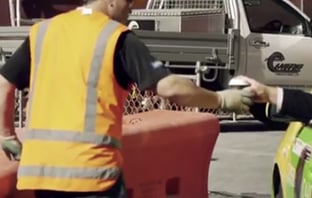
Back in May, Mercury Energy sent its experimental ‘Good Energy Taxi’ onto the streets of Auckland. At the time, Tequila’s main brains Ross Howard said the motorised version of a karma bank was a bit of a double whammee, with the experiential element meaning a range of Kiwis came into contact with the taxi—either in person or via social media—and the footage taken from inside the cab being made into a short documentary that captured some of the Kiwi good sorts. And now you can check that documentary out.

ASB has earned a reputation as one of the world’s most innovative banks, as evidenced by its inclusion on the Financial Brand’s list of ten brands to watch, the Top 35 Banks on Facebook and Top 35 Banks on Twitter. It was the first to launch internet banking in New Zealand in 1997, its virtual ‘Facebranch’ was an award-winning world-first, and its latest development has followed that trajectory by letting users pay Facebook friends through its updated mobile app. So is it digital gimmickry? Or is ASB adhering to its slogan and creating the future? We chat with general manager, brand experience and digital channels Anna Curzon.

The digital age is changing the way we live and work. And whatever your industry or interest, you’re part of the wave, like it or not. And digital media conference The Project, described as “a collision of thought on social media and digital communication”, is your chance to figure out how to ride it.

After a bit of a rough patch, the newly rebranded ‘global boutique’ Y&R NZ has been slowly getting back on the good foot, with some nice work for the likes of HRV, Shapes Roadies and ACC, and some big names being added to the staff roster, among them Josh Moore as executive creative director, Ross Goldsack returning as non-executive director and Scott Henderson manning the fort in Wellington. And now there’s another big change to announce, with the chief executive of seven years Jon Ramage stepping down and being replaced by Moore.

Back in the day, as a young lad living with a flat full of horrible men in Dunedin, we (mostly jokingly) discussed the idea of investing in a flat sheep because it was such a versatile animal, providing warmth, a footstool, lawnmowing services, fertiliser, ‘comfort’ (for the Southlanders) and, eventually, food. And Cavalier Bremworth is equally fond of the humble sheep’s versatility, because they’ve launched a new campaign to remind Kiwis that wool is the best choice for carpet as it has already passed the toughest tests when it was on the beast’s back.

Straight from the starter’s pistol, The Block NZ became TV3’s biggest show of the year. So has it maintained that momentum? How are those cheeky Pluk-ers doing with their mobile app? And what’s TVNZ got in store?

There was a bit of chatter in Australia about viewer numbers for the opening ceremony being the lowest since OzTam ratings began in 1999. So what happened in New Zealand? And how did the numbers compare to Beijing in 2008? And what’s this about the Prime Underclass?
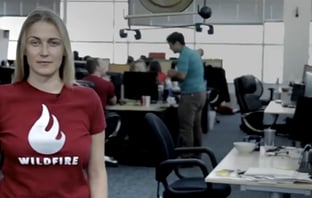
Wildfire, a social media marketing company started by Kiwi Victoria Ransom, has been bought by Google for a reported US$250 million.

The Marketing Association hosted yet another sell-out Brainy Breakfast event last week, with over 300 marketers filling the Crowne Plaza’s conference room ready to listen to international social media expert, Brian Giesen and Jennifer Duval-Smith, executive director at Social@Ogilvy in New Zealand, speak about Pinterest—and how to use it to leverage social media campaigns.