Media expert Antony Young rounds up media news from beyond Aotearoa in a regular column for StopPress.
This week:
- Latest agency research from Australia has painted a bleak picture of the current agency pitch environment
- The influencer fatigue towards paid human endorsements leads to the rise of petfluencers
- Ford motor company has launched a new ad supporting Trump’s America First agenda
- Fox News has seen an increase of new advertisers due to the POTUS’ politics
- 85% of Aussie caregivers back stricter junk food ad rules, adding pressure on governments and questioning industry self-regulation
Life’s a pitch – latest agency research in Oz
The State of the Pitch Australia 2025 report by TrinityP3 paints a bleak picture of the current agency pitch environment across the ditch.
It reveals a decline in quality, increased financial strain on agencies and growing tension in client-agency relationships.
Key findings include:
- Worsening pitch processes – with quality scores dropping from 3.13 to 2.99
- Longer payment terms being demanded – shifting from 30 days to 60+
- Rising influence from global management in local decisions – leading to delays and disconnects
- Client-Agency relationships are becoming more transactional – with pitches used to cut costs rather than foster partnerships.
The report urges marketers to think strategically before initiating a pitch and encourages agencies to be selective.
Yeah right! You can download the full report here.
The rise of petfluencers: advertising’s cutest secret weapon
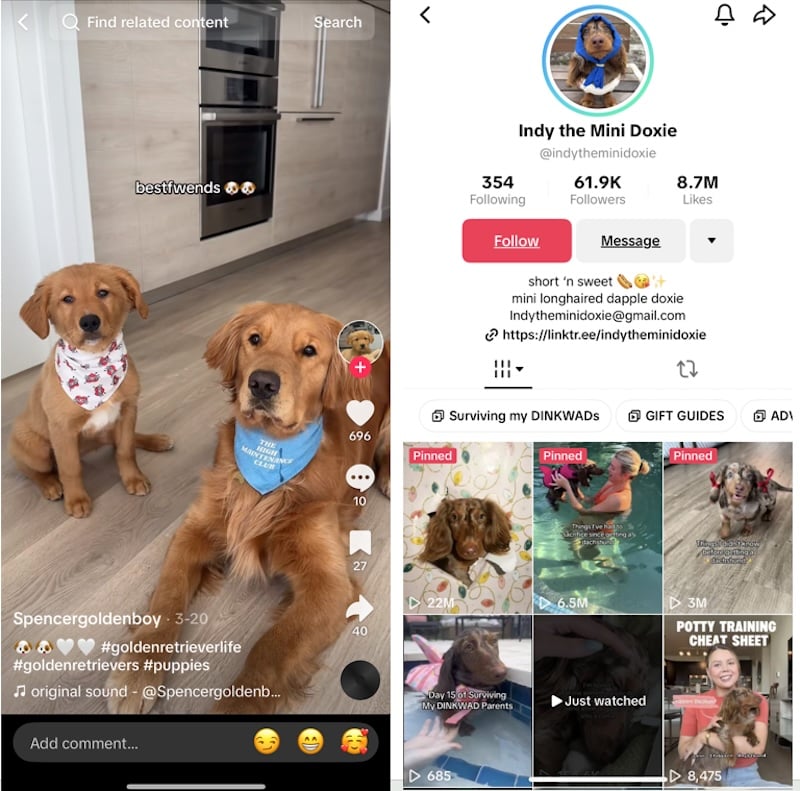
Who needs a celebrity endorsement when you’ve got a pug licking peanut butter or a duck running marathons?
Petfluencers – domestic animals with social media fame – are proving to be surprisingly effective marketing tools.
According to a new study published in The Journal of Advertising Research, it is outperforming human influencers in trust and engagement.
Researchers from the University of Louisville and universities in Scotland tested fictional Instagram ads for products like wine and peanut butter using both human and pet influencers.
The ads featuring pets have reached more viewers and generated better returns on ad spend.
With rising influencer fatigue and skepticism towards paid human endorsements, brands are increasingly turning to furry ambassadors like Nala the Cat and Wrinkle the Duck, whose perceived innocence and lack of personal agenda make them highly persuasive!
Ford motor company launches ‘America First’ ad
You could almost predict this, but Ford is one of the first major brands to jump on to Trump’s new America First agenda.
With global tariffs (depending on what day of the week it is) pausing or taking effect – including a 25% tax on imported vehicles and parts – Ford motor company launched its ad campaign “From America, For America.”
Developed by Wieden+Kennedy and voiced by actor Bryan Cranston, the campaign highlights Ford’s US manufacturing dominance.
80% of its vehicles sold in America are made domestically. Ford contrasts itself with competitors like GM and Stellantis, which rely more heavily on imports.
Brands jump across to Fox News
Another example of a Trump bump is Fox News experiencing a surge in advertising revenue.
Major brands like Gucci, Netflix and Busch Beer are either returning or making a debut on the conservative network.
This reflects a broader shift in corporate strategy due to Donald Trump’s renewed political prominence.
Since the election, Fox has added 125 new large advertisers.
The increase in ad spend is driven by a desire to reach wider audiences without appearing politically biased. This is particularly important as consumer backlash over perceived partisan stances continues to grow.
Fox News marked its most-watched February in the network’s history. Its daytime audiences were up 50% year-on-year, essentially taking viewers away from MSNBC and CNN.

What’s agentic AI and why brands need to take it seriously
Agentic AI is getting a lot of buzz right now as the next evolution of artificial intelligence.
The Drum explains it as the AI that doesn’t just assist. Instead, it acts autonomously on a consumer’s behalf, making decisions, purchases and optimisations in real time.
Often likened to a digital personal assistant, agentic AI understands a user’s preferences, budget and values.
It also eliminates the traditional consumer journey by replacing it with instant, bot-driven decisions.
For example, Amazon’s “Buy for Me” feature uses AI to autonomously complete purchases from third-party websites, streamlining the shopping experience.
For marketers, this could mean a dramatic shift: instead of marketing to people, marketers would focus on marketing to machines that demand clean, structured data and instant relevance.
As the traditional funnel breaks down, brands must be positioned in advance of consumer queries, or risk becoming invisible.
Aussie junk food ad ban. Is New Zealand next?
A new study published in the Australian and New Zealand Journal of Public Health reveals strong support from Australian caregivers for stricter regulations on junk food advertising targeted at children.
The study found that 85% expressing concern over its impact.
It underscores growing calls for government intervention, as childhood obesity continues to rise and junk food marketing saturates public spaces.
As South Australia moves to ban junk food ads on public transport, pressure is building on other regions to follow suit. This includes the possibility of New Zealand adopting similar measures.
The study also strengthens the argument that voluntary industry self-regulation is insufficient. And that bold government action is needed to protect children’s health across the region.
No doubt food and beverage brands and NZ media owners will be watching this development.