
News


Tangible puts itself in the hunt
Continuing Tangible Media’s strategy of special issues and brand extensions seen with the likes of NZ Weddings Planner, Everyday Dish and NZ Rugby World’s First XV, next in line is the hunting market.

Continuing Tangible Media’s strategy of special issues and brand extensions seen with the likes of NZ Weddings Planner, Everyday Dish and NZ Rugby World’s First XV, next in line is the hunting market.
Who’s it for: Freeview by True and Flying Fish
Why we like it: In the final promotional push before the digital switchover begins in four months, the free-ness of Freeview is being hammered home once again, this time with some great animation and a nostalgic and patriotic …

With customers embracing the internet and social media in ever-increasing numbers (the Banking Ombudsman has just released a new guide for online banking), Canstar has embarked on its first review of the New Zealand online banking market and ASB, a bank renowned for its digital chops and social focus, has been named the best of the lot.

It’s getting to the business end of the digital switchover and there’s just four months to go until the first two regions—the West Coast and Hawke’s Bay—pull the plug on New Zealand’s analogue TV signal. So Freeview has launched a campaign with its new agency True starring Pio Terei that aims to capture the 16 percent of homes still to make the leap to digital–and to convince them to choose the newly pimped out Freeview platform rather than its nearest competitor, the soon-to-launch Sky/TVNZ joint venture Igloo.

Penis graffiti is immature—and almost always funny. This effort in Hamilton was able to be seen from space, this effort on the Liteiny Bridge in St Petersberg had some serious scale to it, this one came to life to stop STDs, and then there was the recent effort in Australia where a long-time magazine designer went out with a bang by sneakily putting some cockinballs on the cover of Beat. Now our neck of the woods is abuzz with cartoon genital-related scandal after some unseemly goings on at DDB.
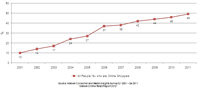
According to Nielsen’s Online Retail Report, the number of online shoppers in New Zealand has now reached over 1.6 million (49 percent of the total population aged 18+), an increase of 122,000 on the previous year and more than double since 2004.

After seeing this classic ad for Hudson Toffee Pops as a young chap at some stage in the early ’90s, I, like many of the nation’s children, instantly developed a crippling fear of red couches and watching it now brings back extremely painful memories. That’s not true, but reliable informants have reliably informed us that the rather artistic male lead is an ad man of some repute. So the first person to tell us who it is will get a copy of Martin Lindstrom’s Brandwashed.

With the recent opening of New World and Countdown Metro in Auckland’s CBD, it seems New Zealand supermarkets are following in the footsteps of their overseas counterparts. While I can’t hide my excitement in having convenience re-enter my life, I do wonder if this may be the start of a slippery slope. Once the supermarket giant shows its face, it’s only a matter of time before the own brand phenomenon takes hold, a development that could mean the bounty of boutique food producers that currently grace our shelves may be squeezed out.

JWT’s Angus Hennah comes home, Rachel Ellerm kicks off her new female-centric strategic consultancy Frock, Pluk continues to grow, Orcon puts its weight behind CanTeen, The PR Shop pulls a deuce, and 2degrees and TBWA\ put their Ad Impact gloves on.

Not surprisingly, Fairfax’s proposal to outsource 66 Australian editorial jobs, including some sub-editing, to New Zealand didn’t go down too well with its staff or the national journalists’ union and led to a 36 hour unprotected strike among staff from The Age, The Sydney Morning Herald, The Australian Financial Review, The Sunday Age, The Sun Herald, the Canberra Times, the Newcastle Herald and Wollongong Illawarra Mercury that finished this morning. News Ltd also recently announced the possibility of up to 400 editorial jobs getting the chop and while the local industry reported some pretty solid numbers recently, some of the big Aussie mastheads are thought to have had their biggest ever drops in circulation in March, so it’s obviously a tough time to be in the newspaper game, both for journos and for publishers. But as if all this wasn’t enough, an article we read recently in Wired shows editorial staff might have another fight on their hands due to the rise of robot reporters, which the chief of pretty frickin’ amazing US company Narrative Science has predicted will be writing 90 percent of the news in 15 years. Let’s hope Gina Rinehart doesn’t get wind of this technology. We demand another strike. Hasn’t anyone seen I, Robot?
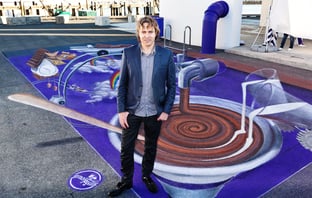
Cadbury’s new global brand campaign Joyville got underway with a big TVC about the secret chocolate ecosystem. And the local branch has launched the first New Zealand iteration of that campaign, something Cadbury’s general manager of marketing Iaan Buchanan calls chapter one of a multi-chapter story that will be told this year.

After officially winning the Vodafone account at the end of February, DraftFCB has sent some of its first work into the wild, with one simple retail ad for “the nakedest ever broadband deal” and another slightly more out-there idea—quite literally—for the launch of the Samsung Galaxy S III.

New Zealand is one of the only markets in the world where Red Bull isn’t the number one energy drink. That title is held by Frucor’s V, and it got there through a combination of savvy NPD and a series of brilliant campaigns. Given what’s come before, it’s always going to be a challenge to raise the bar creatively, but Colenso BBDO and Frucor have given it a good nudge with their latest effort, the V Motion Project.
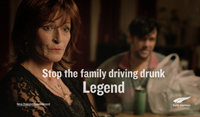
Shared responsibility is an increasingly important part of the road safety programme, as evidenced most recently with the hugely successful Ghost Chips campaign, which, for the first time, specifically targeted young Maori and used humour to equip them with the tools required to speak up when one of their mates was too drunk to drive. And NZTA, Clemenger BBDO and The Sweet Shop have followed up that pop cultural phenomenon with a new campaign that tries to convince family members to do the same.
Colmar Brunton has just released some survey results that show 60 percent of New Zealanders follow a brand on social media and more than two thirds think a social media presence adds to the brand’s appeal. But what those consumers say when they’re talking to those brands is another, very different question. So we thought we’d republish a column by The Research Agency’s Andrew Lewis that ran in the last issue of NZ Marketing and detailed the interesting results of a survey on how people interact with brands on social media.
Kiwis of all ages are prolific users of social media but, according to a recent Colmar Brunton survey, it’s not just to keep up to date with family and friends. Nearly 60 percent of Kiwis follow at least one brand and over one third (37 percent) say a social media presence makes a brand more appealing to them.

MediaWorks TV has confirmed it will be not be renewing its output deal with CBS and is instead shifting the funds into the creation of local content. And Sky’s free-to-air channel Prime has taken over the rights and signed up for its first ever output deal.

We called it in late April, and now the official word is out: Westpac New Zealand has appointed DDB Group as its sole creative advertising agency.

Newspapers, according to the latest readership and circulation figures, are still holding on and, in some rare cases, adding readers. So why, when the commonly held view is that newspapers are dead—or at least dying—does New Zealand appear to be bucking an international trend?

Auckland-based dairy producer The Collective has embraced social media as its major marketing channel in an effort to better connect with its ‘herd’ and, in many cases, get them to assist with product creation. And that strategy has been vindicated, not just because it is one of the fastest growing companies in New Zealand, but because it was also named as the first and only New Zealand brand to feature in The Social Brands 100 list—”the authoritative ranking of brands leading the way in the social age”—coming in at number 57 ahead of brands like Dell, Groupon and Intel.

We wrote about Colenso’s win of the Tourism Fiji account back in early April, and the island nation has added another Kiwi agency to its roster after Auckland-based full service web agency Sparks Interactive was named as its new website partner.
Who’s it for: Sony by Frontage, Flying Fish and Blockhead
Why we like it: ‘Tis a beautiful piece of film, with New Zealand in a starring role. David Attenborough himself would probably rather stay inside to watch nature than venture into the real world after seeing this …

Adam Good returns to the region, Y&R bolsters its Welly offering, prodigal Prodigy returns, Unlimited chooses its new editor, AWARD school opens for its second year of business in New Zealand, Eleven PR loses one of its flock to Mt Maunganui, and TVNZ names its Olympic team.
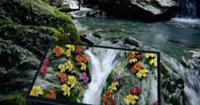
Sony has a history of making beautiful ads to sell its TVs, with bouncing balls, paint and rabbits all clocking up millions of views on YouTube. And Flying Fish director Luke Savage and local effects house Blockhead have built on that tradition with a brilliant TVC for agency Frontage Inc in Japan to promote the qualities of Sony’s X-reality picture engine.
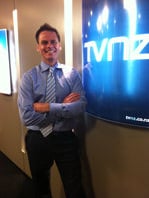
After the defection of TVNZ’s ex-head of sales and marketing Paul Maher to MediaWorks recently, general manager of media solutions Jeremy O’Brien has taken over half of that role and been announced as the new head of sales.

Special Group is the first New Zealand ad agency ever to be asked to talk at the Semi-Permanent creativity conference, which packed out the Aotea Centre in Auckland for a few days recently and featured headline acts like New York artist Ron English, UK digital agency Hi-Res, San Francisco-based Industrial Light & Magic and Wallpapermagazine. The local lads opened proceedings in front of around 2000 people with a talk centred around the eight things they do to make their work more effective that showcased the diverse range of work they have produced over their four years of existence—including the Best Award-winning packaging work for ecostore and the 2011 AXIS-award winning AXIS opening film. So here’s a summary of their presentation.

The NZRU will no doubt be hoping the All Blacks’ Rugby World Cup win might put a bit more lead in its commercial pencil to help get through a fairly difficult time for the national sport. And it’s managed to retain five of the team’s major sponsors, with Coca-Cola, Unilever, Sanitarium, Barkers and Bvlgari re-signing as All Blacks sponsors for undisclosed sums.
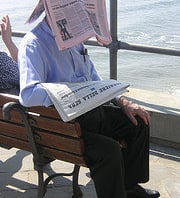
The magazine sector had some pretty good news to report in the latest round of readership and circulation figures and, given what’s happening internationally, the New Zealand newspaper sector should also be fairly pleased with the results, which show there’s still plenty of life in the old dogs yet.

You can read all about it here, and you can see all about it here.

It’s time to get back to our ABCs. And our Nielsens.
For only the second time, the new magazine circulation methology has spewed its quarterly data, coinciding with the Nielsen Magazine Comparatives Q2 2011 – Q1 2012 readership results.
And the news: it’s all up for most and a …