Media expert Antony Young rounds up media news from beyond Aotearoa in a regular column for StopPress. This week: Aotearoa is one of the first regulators to raise potential concerns about the proposed Omnicom and Interpublic Group merger; is Trump about to step in against Australia’s News Media Bargaining Code?; and print isn’t dead, it’s trending!
NZ just threw a wrench in the Omnicom-IPG mega merger
New Zealand’s Commerce Commission has become one of the first regulators to flag potential concerns over the proposed global merger between Omnicom and Interpublic Group (IPG) that could see them consolidate the media buying of OMD, PHD Media, Hearts & Science, FCB Media and Initiative under one entity.
In a statement of preliminary issues, the Commission outlined fears that the deal could lessen competition in New Zealand’s advertising and media buying markets – raising the prospect of higher prices, reduced service quality, or diminished innovation. While Omnicom and IPG argue that strong competition from players like WPP, Publicis, and local independents will remain, ComCom’s scrutiny could set the tone for how other regulators worldwide assess the deal.
With nearly 20 jurisdictions currently reviewing the merger, including the U.S., EU, and Australia, a challenge from New Zealand could complicate or delay global clearance. Submissions from interested parties are due by April 9, with a decision targeted for May 1.
Tech titans v.s. Australia media: Is Trump about to step in?
Meta, Google, and other tech giants are now seeking help from the Trump-led U.S. administration to push back against Australia’s News Media Bargaining Code, which forces digital platforms to pay local publishers for using their content. The code, introduced in 2021, has already redirected about $200 million annually to Australian media companies.
The tech companies claim the law is a “coercive and discriminatory tax” on U.S. firms, and hope Trump’s protectionist stance will support their cause. This leaves NZ media companies in limbo, as Media and Communications Minister Paul Goldsmith had put a hold on its Fair Digital News Bargaining Bill to watch how similar Australian legislation plays out.
New bill threatens location-based ads
If California lawmakers pass the AB 1355 bill this month, it could significantly restrict advertisers’ ability to use location data for targeted marketing. The bill would ban collecting or using consumers’ location information without explicit consent and prohibit selling or inferring data unless necessary to provide a requested service.
Ad industry groups argue this would severely limit personalised advertising and make it harder and costlier for businesses to deliver relevant, local content – impacting both advertisers and consumers. On the other side, privacy advocates say the bill would protect Californians from data misuse and predatory targeting practices by data brokers. The bill’s broad definition of location data could have sweeping implications across the digital advertising ecosystem.
Gen Z chooses influencers over Hollywood
With people averaging six hours of daily screen time, the battle for attention is fierce – and creators are winning by forging deeper, more authentic connections with niche audiences.
According to Deloitte’s 19th annual Digital Media Trends report, 56% of Gen Z and 43% of millennials find social content more relevant than legacy entertainment, with half of each group feeling more personally connected to influencers than to actors.
Print isn’t dead – It’s trending!
Fashion print magazines are making a comeback, much like point-and-shoot cameras, vinyl records, and retro phones – driven largely by Gen Z’s nostalgia-fueled appetite for all things vintage. According to The Guardian, the relaunch of iconic fashion title i-D back on UK newsstands is emblematic of this trend, with young audiences embracing indie and luxury print publications as cultural artifacts and design objects.
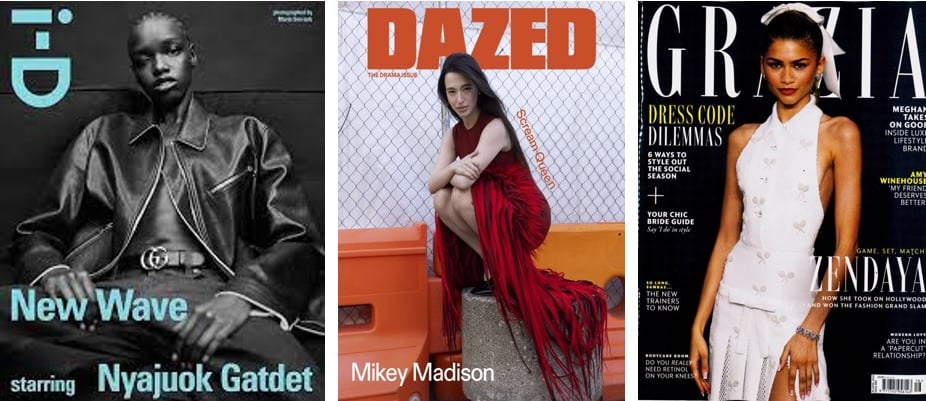
While mainstream print continues to decline, titles like Dazed and Grazia are gaining momentum. Twenty years after launching as Britain’s first weekly glossy, Grazia has seen a 46% year-on-year surge in circulation, with soaring demand sparking the release of standalone biannual editions focused on beauty and interiors.
Paws, claws, and billboards
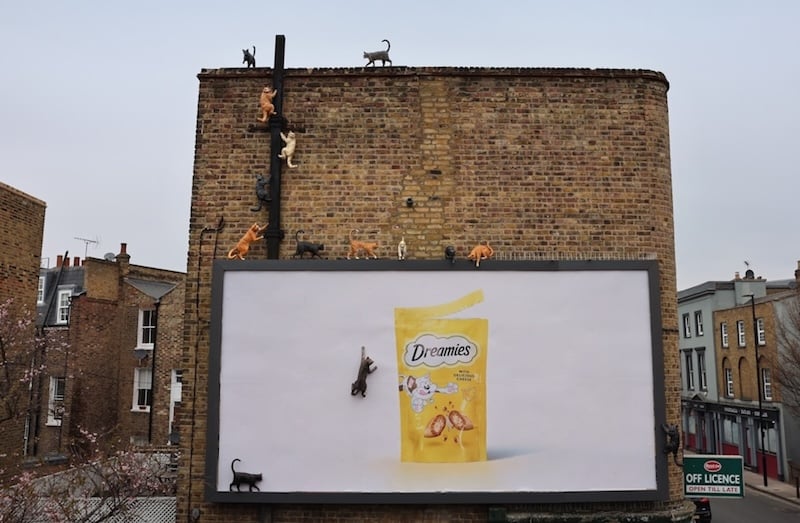
Petfood brand Dreamies and their UK agency Adam&Eve DDB let the cats out of the bag with this London billboard campaign that lands on its feet!
Italy just printed a fully AI-made paper
Italian newspaper Il Foglio has claimed to be the first in the world to publish an entire print edition generated entirely by artificial intelligence, including the writing, headlines, summaries, quotes, and even ironic commentary. Dubbed Il Foglio AI, the four-page supplement aims to explore how AI could impact journalism and daily life, with journalists acting only as prompt-creators and readers.
The AI-generated paper covered topics ranging from Trump and Putin to young Europeans’ relationship trends.
Meta revives ‘Facebook classic’ vibes
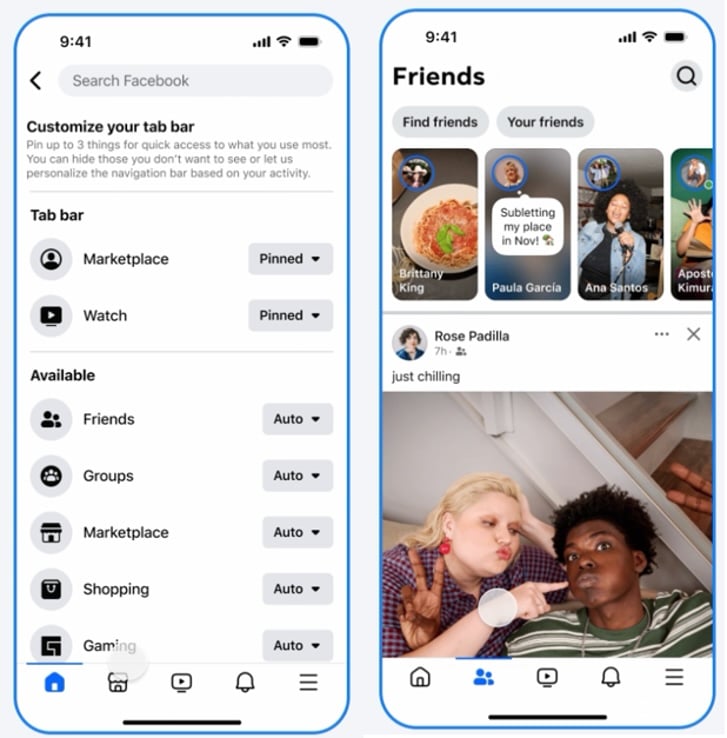
Facebook is going back to its roots with a new “Friends Tab,” bringing user feeds back to what made the platform popular in the first place: updates from friends and family. Rolling out in the U.S. and Canada, the new feed offers a separate space for personal posts – photos, birthdays, stories – replacing the current friend request tab.
Meta says the move is part of a broader effort to make social media feel social again, following years of algorithm-driven content from influencers and brands dominating feeds. While recommended content isn’t going away, the Friends Tab marks a return to “Facebook Classic” vibes in an era dominated by creator-led entertainment. I’m in!!