When you think about advertising, it’s easy to fall into the “more is more” mindset. More screens. More impressions. More revenue. Sounds logical, right? But in the world of retail media, that’s not really the case.
A perfect NZ weekend often includes soaking up the sun at the beach, followed by icecreams from the dairy.
It’s simple, laid back and enjoyable.
So, Kiwis value simplicity, relevance and campaigns that make their shopping experience easier. In-store advertising is important, but filling every corner with screens isn’t the solution. That’s why the most effective retail media strategies focus on quality over quantity and prioritise understanding the customer journey before the number of views.
More doesn’t mean better
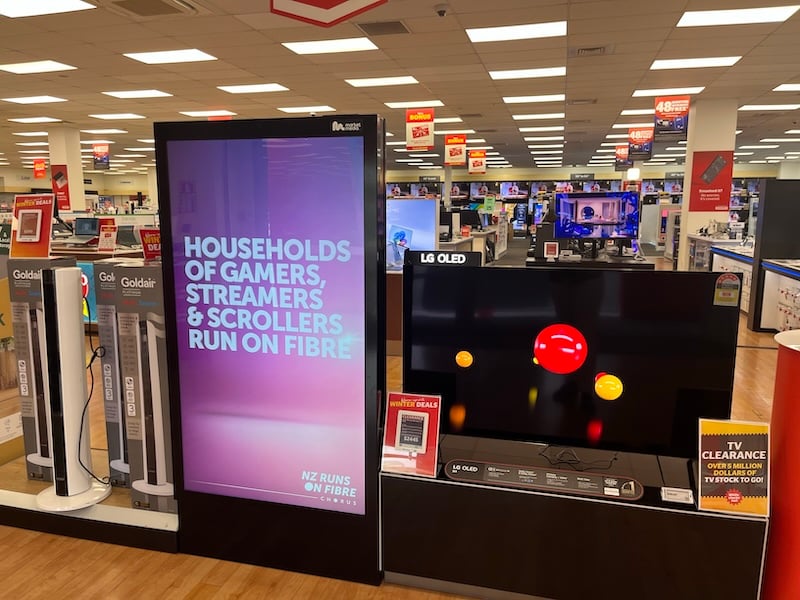
Picture yourself pushing a cart of groceries through your local New World or Woollies, and every wall is covered with screens showing the same ad on repeat. It’s not helpful, it’s simply background noise. And when every screen is shouting, nothing is being heard.
This oversaturation can lead to consumer blindness, where lack of context leaves shoppers numb to advertising – a loss for everyone from the brand to the retailer, and even the shopper.
The truth is the number of screens in-store doesn’t directly translate to more foot traffic. What truly matters is the placement of those screens and how effectively they communicate and engage your target audience.
Retailers in New Zealand – including convenience stores, petrol stations, grocery chains, shopping centres and liquor stores – are actively investing in expanding their in-store digital infrastructure. While Vistar Media has seen a rise in screen count across its supply-side platform (SSP) network, the broader trend is clear: leading NZ retailers, like The Warehouse Group, are investing in building their own media networks to offer more sophisticated, context-aware experiences.
The journey matters more than the placement
Rather than asking, “How many screens can we fit in?” Instead, the right question is: “How can each screen earn its place?”
The content itself is what drives impressions and actual in-store foot traffic. Being relevant, responsive and respectful of the customer’s journey is imperative. That’s where programmatic digital out of home (pDOOH) comes into play, allowing retailers to guide shoppers through their experience, rather than distract them from it.
From entry to purchase
Retailers already design store layouts to guide shoppers from entry to checkout. pDOOH mirrors that path with media, turning the in-store journey into a full-funnel experience.
It starts at the entrance. Every shopper passes through this zone, making it the perfect place for high-impact brand storytelling or daily promotions. From there, pDOOH can tailor messaging across key decision zones – fresh produce, seasonal displays, endcaps – right down to final prompts at checkout.
With tools like dynamic creative and real-time campaign adjustments, content can automatically adapt based on day, time, weather or even product availability. Sunny Saturday in Auckland? Push BBQ specials. Low stock on an item? Pause the ad instantly. And these capabilities aren’t future-facing – they’re already live and operational across the New Zealand market.
Measure your impact
Another advantage of pDOOH is its measurability. Retailers in NZ can access clear metrics across the funnel, including brand lift, foot traffic and web impact. While sales lift metrics are not yet standardised across the board, they’re on the horizon and though New Zealand awaits a unified audience measurement system, advanced metrics are available via Vistar’s platform.
Whether your goal is to drive consideration at entry, inspire product discovery mid-aisle, or close the sale at checkout, the tools are there to track the impact every step of the way.
Smarter advertising, greater impact
By focusing on strategic placements and measurable outcomes, programmatic DOOH ensures that every screen counts. The most effective campaigns don’t shout, they show up strategically.
At the end of the day, it’s not about how many screens you have. It’s about how you use them to create a smarter, more engaging in-store experience for Kiwis.