Get the latest direct to your inbox twice a week. Sign up today. 
‘Creative confidence is waning,’ says The State of Creativity 2025 survey

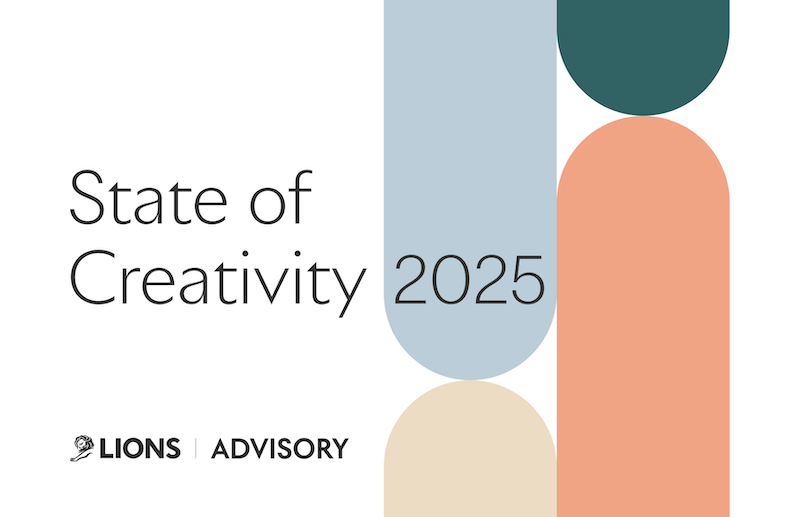
According to The State of Creativity 2025, businesses creative confidience is on the decline.
Creative confidence is the belief that bold, original ideas can drive business success.
The report, released by LIONS, reveals that this confidence has been knocked by challenges in generating strong insights and adapting to different cultures.
The annual study serves as a practical tool helping marketers understand the key challenges, trends and opportunities for creativity in 2025.
Now in its fifth year, this latest The State of Creativity edition is based on a global survey with over 1,000 marketers and creatives. The survey was conducted between November 2024 and January 2025, along with one-on-one interviews with industry leaders.
Why creative risk-taking matters
The research highlights that risk aversion is holding businesses back. It defines ‘creative risk-taking’ as bold, unconventional ideas that challenge norms and engage audiences in unexpected ways.
Only 13% of respondents view their companies as risk-friendly, whilst 29% of brands admit to being highly risk-averse.
Meanwhile, research by WARC and Kantar shows that risk-taking brands generate 4 times higher profit margins. Deloitte also reports that brands with a high appetite for creative risk are 33% more likely to see long-term revenue growth.
Patrick Jeffrey, VP LIONS Advisory, says: “The State of Creativity report is a unique window into the global creative landscape.
“The findings from this latest research show that largely due to a lack of solid insights and cultural relevance, we are seeing less ‘creative risk-taking’, which involves stepping outside traditional boundaries and surpassing category conventions.
“Addressing these two key barriers will unlock creative confidence and drive better long-term business results,” Jeffrey adds.
The barriers to take creative risks
The State of Creativity survey reveals that companies with stronger insight development capabilities are far more open to taking creative risks.
Meanwhile, half (51%) of the companies surveyed rate their ability to develop high-quality insights as poor. And only 13% rate their ability to develop high-quality insights as good or excellent.
The challenges to developing high-quality insights are:
- Lack of understanding and clarity of what makes a good quality insight
- Not enough priority placed on insight development
- Insufficient time allocated for deep insight exploration
The survey also highlights that the stronger the brand-agency relationship, the better the brand sees its ability to develop strong insights.
To build these insights effectively, teams and methods should be diverse – ensuring a focus on real consumer needs rather than personal opinions.
Additionally, AI and synthetic data can boost efficiency and help reduce bias in the creative process.
Most brands struggle to react quickly to cultural moments
The findings also show that a lack of insights slows brands down in reacting to cultural moments, hurting their creative confidence.
It points to a positive correlation between brands’ perceived ability to react to cultural shifts and their appetite for risk.
Yet 57% of brands struggle to react quickly to cultural moments, with only 12% rating their ability to do so as excellent.
The challenges to cultural agility are:
- Too many layers in the approval process
- Limited resources and investment
- Difficulty aligning brand insights with cultural trends
To overcome the challenges, the survey advises companies to build structures that: enable swift, strategic action, respond with resonated creativity and shape culture rather than chase it.
True agility comes from brand-building
In addition, this year’s survey found that brands are increasingly shifting toward short-term activities, increasing from 53% in 2023 to 63% in 2025.
While short-term gains may be tempting, true agility comes from brand-building, which creates opportunities for spontaneous moments.
Jeffrey adds: “To boost creative confidence, we advise to invest in additional training to enhance teams’ skills and capability. As teams upskill and confidence grows, so will the appetite for bigger, bolder work.”
The State of Creativity 2025 report, authored by LIONS Advisory, includes quantitative and qualitative data analysis, expert commentary and advice from industry leaders, creatives and brand marketers.