Get the latest direct to your inbox twice a week. Sign up today. 
Trust in news up as readers turn away from AI slop


Trust in the news is increasing in Aotearoa, according to the results of AUT's latest report.
Trust in the news is on the rise in Aotearoa, according to the Auckland University of Technology’s latest report.
The Trust in News in Aotearoa New Zealand 2026 survey asked 1,000 Kiwis 19 questions about news media, trust, editorial independence and AI.
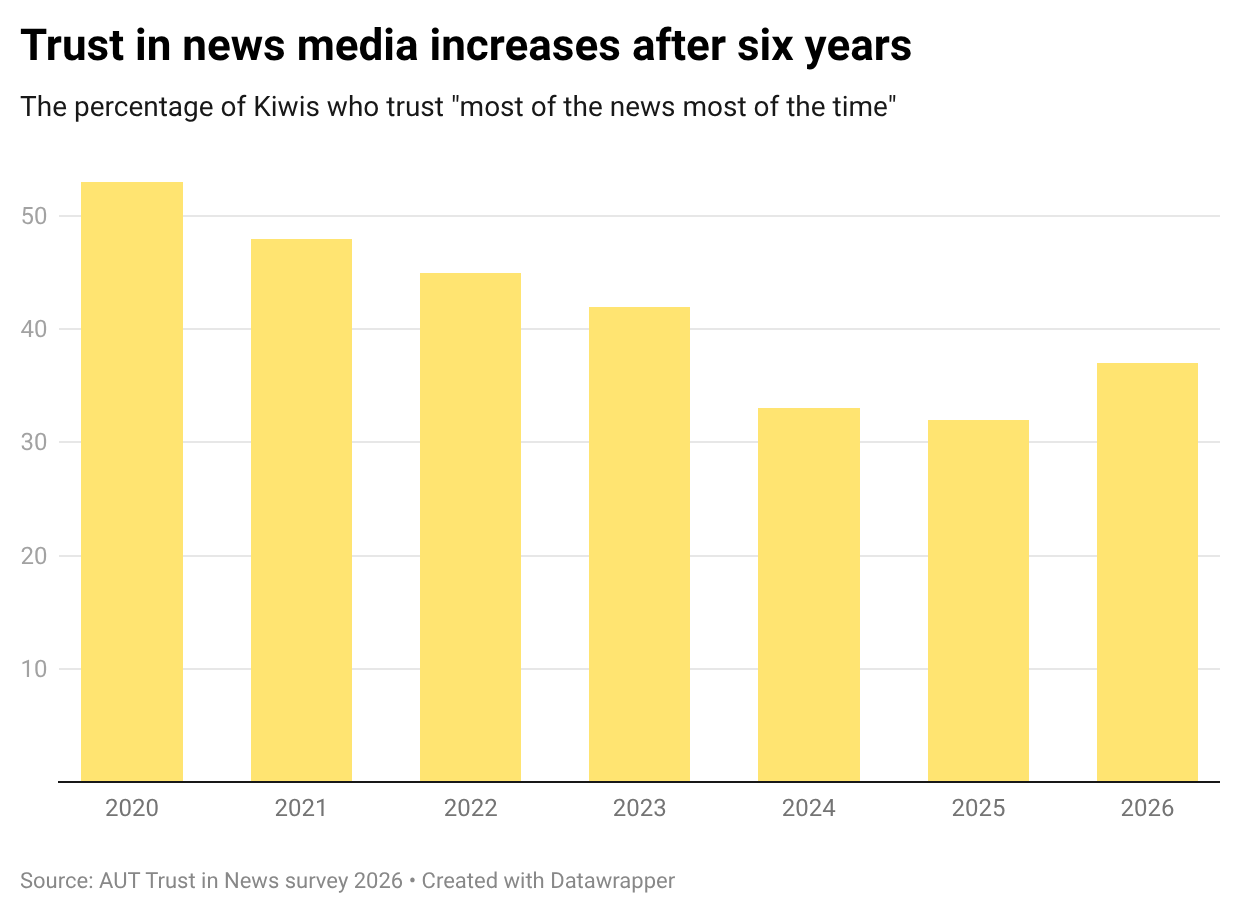
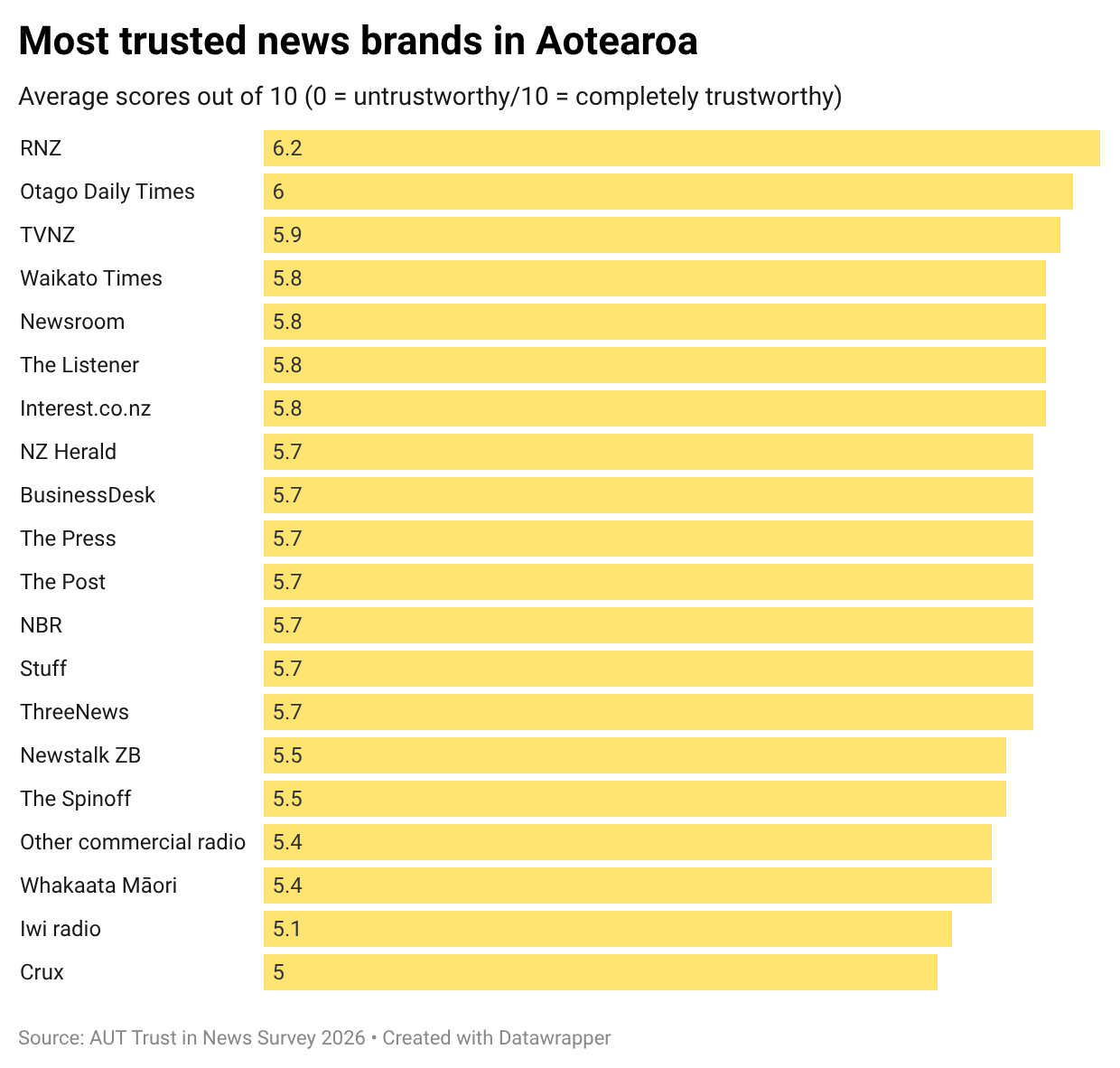
New Zealanders’ general trust in the news increased from 32% in 2025 to 37% in 2026, with RNZ, the Otago Daily Times and TVNZ perceived as the top three most trusted news brands.
Newsroom, Interest.co.nz, the Listener and the Waikato Times came in fourth equal.
The uptick follows six years of declining trust in news media in Aotearoa. While the numbers are not quite back at pre-Covid levels, the report’s co-author Merja Myllylahti says this year’s results reflect the importance of these media outlets to sift through the noise.
“As social media and video platforms are flooded with influencers, disinformation, and AI content, people are increasingly using news media for information verification,” says Myllylahti.
Interest and avoidance
The report found an improvement in trust for all news brands in 2026. The list of 18 outlets includes national radio broadcaster RNZ, print and digital outlets New Zealand Herald and Stuff, as well as other digital outlets such as The Spinoff and NBR.
Despite survey respondents detailing a high interest in news at 91%, the number of people who said they actively avoid the news also increased from 73% in 2025 to 78% in 2026.
People said this was because the news negatively affects their mood and that they felt exhausted by it.
Social sources
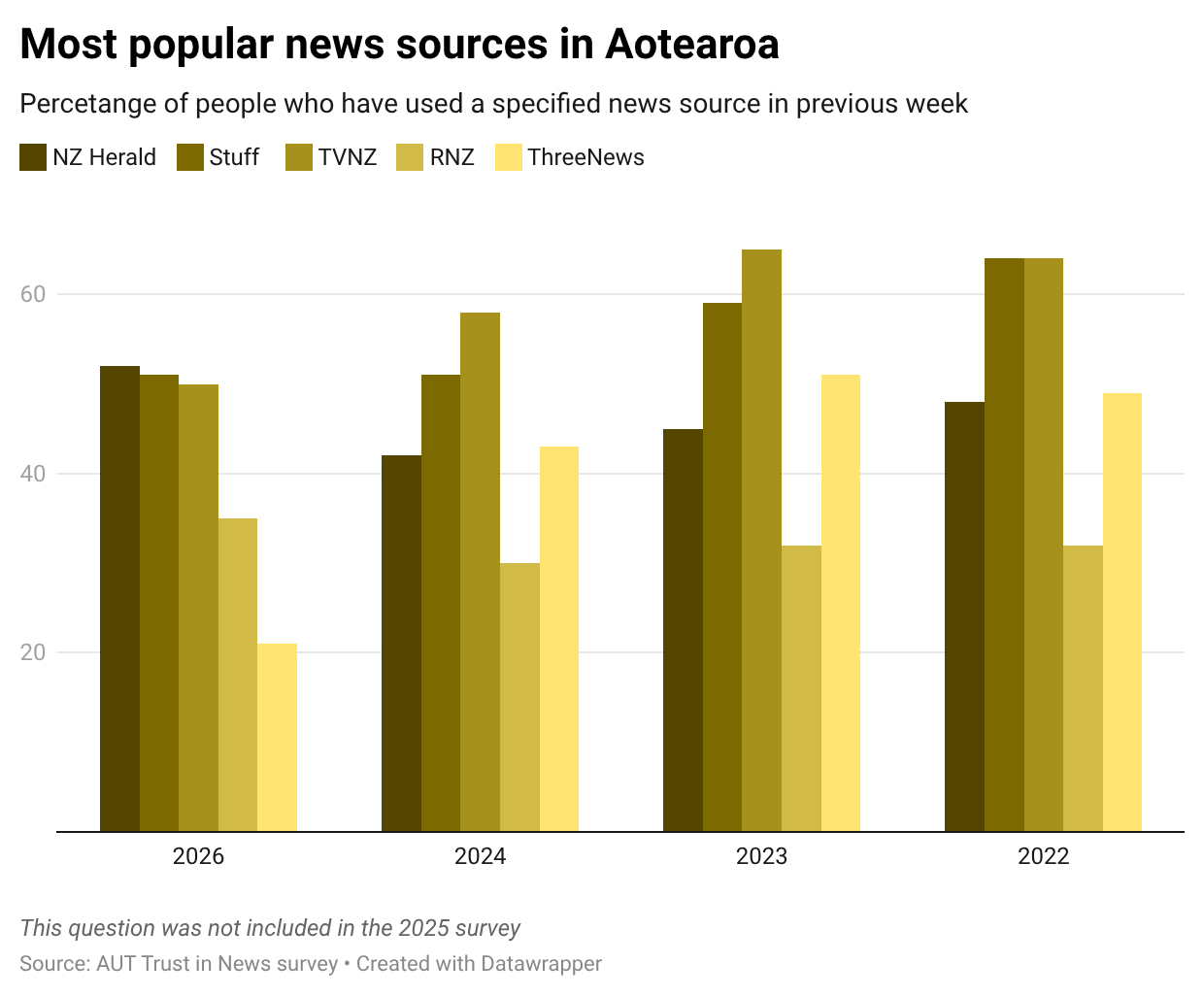
Trust in news on social media also saw a leap from 13% last year to 17% this year. About 19% of Kiwis are consuming news via social media platforms, with most using Facebook, followed by YouTube and Instagram. Interestingly, TikTok, often cited anecdotally by young Kiwis as a news source, didn’t make the list.
One in five people cited TV as a key source of news, but the largest group (38%) said they get their news online via the outlet’s website or app.
While AI tools are being used throughout newsrooms to increase efficiencies in reporting, most people still hold reservations about the use of AI in actually producing the news.
The survey asked people how they feel about news produced “mostly by AI but with some human oversight”. The majority, 60%, said they felt uncomfortable about this, a figure unchanged from the 2025 results.
Room for growth
This is the seventh year AUT’s Journalism, Media and Democracy research centre has produced the Trust in News in Aotearoa New Zealand report.
It acts as a good comparison to Reuters Institute’s Digital News Report 2025, which looked at media markets across the world but didn’t include Aotearoa.
Reuters found that trust in the news was stable at 40% across the 48 countries surveyed, where Finland had the highest trust overall at 67%, and Greece and Hungary were the lowest at 22%.
With Aotearoa sitting at 37%, there is still room for improvement, says co-author of the AUT report, Dr Greg Treadwell.
He notes that previous accusations against journalists of political bias and producing opinion rather than news remain.
But overall, says Treadwell, the survey respondents also showed the value Kiwis place in professional journalism and its commitment to accuracy and ethical standards.